

Blog
Faux Leather vs Fabric Dining Chairs for 6 Seater Sets

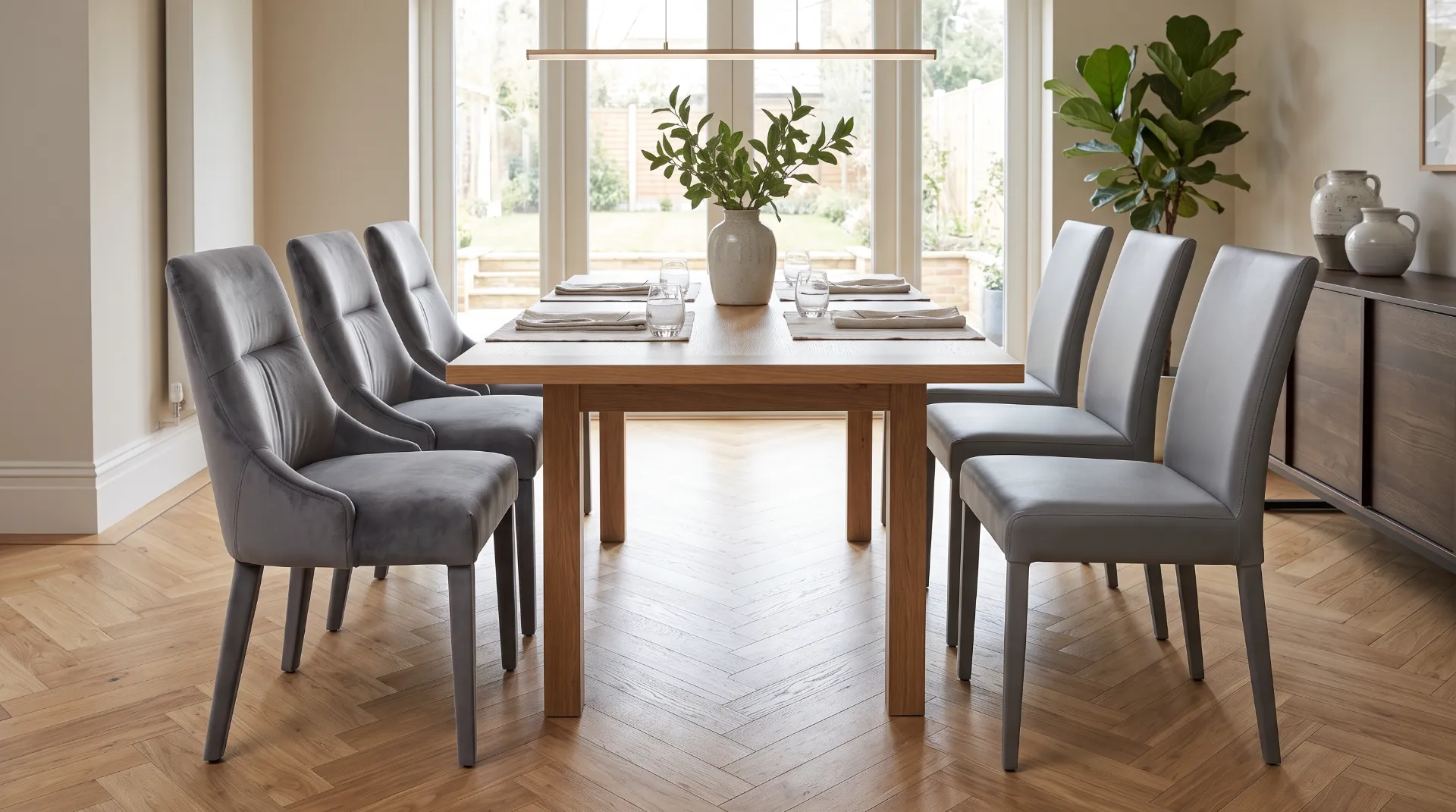
Choosing a chair material for two seats is a small decision. Choosing it for six is not. Whatever you pick gets multiplied across every seat at your table, which means the trade-offs between faux leather and fabric matter more here than they do for a smaller set.
This guide compares the two materials specifically at 6 seater scale, using real products and real prices rather than general advice. If you have not yet chosen your table itself, our complete 6 seater buying guide covers shape, size and material in full.
Quick answer: faux leather wipes clean in seconds and suits a busy household seating six people daily. Fabric, usually velvet on UK dining chairs, feels warmer and more comfortable for longer meals, at the cost of more regular care. The price difference is real and adds up across six chairs, often £50 to £70 more for a full set of six in fabric compared with the same table in faux leather. Neither is wrong. The right choice depends on how your household actually uses the table, not which one looks better in a single photo.
Faux Leather vs Genuine Leather: A Quick Clarification
Before going further, it is worth clearing up a common mix-up. Faux leather is a synthetic material designed to look and feel like leather, made from a fabric backing coated in polyurethane or similar material. It is not the same as genuine leather, which comes from tanned animal hide and carries a considerably higher price alongside different care needs.
Almost every dining chair sold as “leather” in the UK mid-market, including our own range, is genuinely faux leather rather than the real thing. This is worth knowing specifically because faux leather and genuine leather behave differently in a few respects covered later in this guide, particularly around temperature and long-term wear.
What Faux Leather Actually Offers
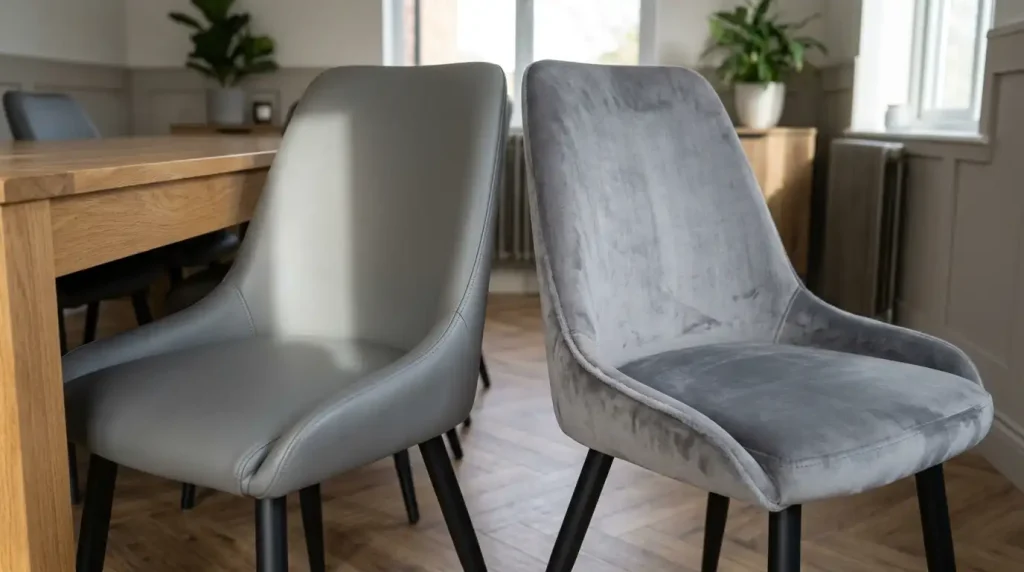
Faux leather’s core advantage is how quickly it deals with daily mess. A spill wipes away with a damp cloth in seconds, and the surface does not absorb liquid the way fabric does, which matters considerably at a table seating six people for every meal.
It also holds its shape well over time, resisting the sagging or flattening that can happen to a fabric seat cushion under repeated daily use. Our dark grey dining table with six grey faux leather chairs shows this material well, giving a full six-seat set a smart, consistent finish that stays looking sharp with minimal upkeep.
What Fabric Actually Offers
Fabric, almost always velvet on UK dining chairs at this price point, brings genuine warmth and comfort that faux leather cannot fully match. It feels softer to sit on, particularly for a longer meal, and it does not carry the slight stickiness faux leather can develop against bare skin in warm weather.
Velvet also tends to read as a more considered, elevated choice visually, with a tactile depth that faux leather’s smoother surface does not replicate. Our dark grey dining table with six grey velvet chairs uses the same table as the faux leather version above, letting you compare the two chair materials directly on an otherwise identical set.
Durability: What the Martindale Rub Test Actually Tells You
This is a detail almost no consumer buying guide explains properly, and it is worth understanding if durability genuinely matters to your decision.
Fabric upholstery in the UK is commonly rated using the Martindale rub test, which measures how many rubs, or abrasion cycles, a fabric withstands before visible wear appears. According to The Millshop Online’s guide to the Martindale test, a higher rub count generally indicates better resistance to the repeated contact and movement that dining chairs see daily, and the test gives a genuinely useful way to compare two fabrics that might look similarly durable but perform very differently under real use.
Faux leather does not use this same rating system, since it is a coated synthetic material rather than a woven fabric. Its durability instead comes down to the quality of the coating and backing, which is harder to compare numerically across products, but which generally holds up very well to the specific type of wear a dining chair sees, spills and wiping rather than abrasion from movement.
Key note: if you are comparing fabric dining chairs specifically, and a Martindale rating is listed, a figure of 15,000 rubs or higher is a reasonable minimum for genuine daily dining use, based on the ranges most UK upholstery guides recommend for this kind of furniture.
Cleaning Routines at Six-Chair Scale
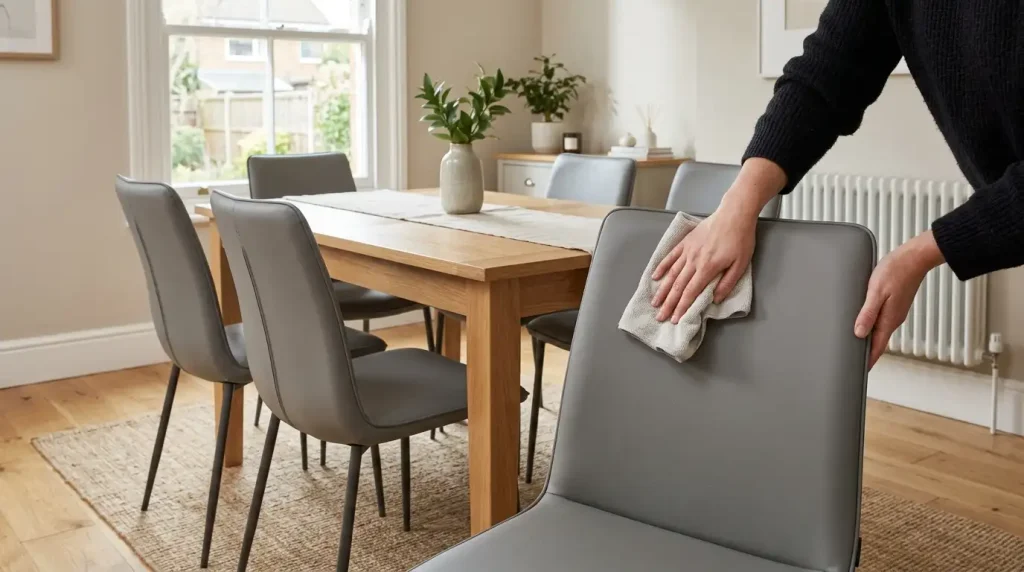
Cleaning becomes a bigger consideration once you are maintaining six chairs rather than two or four, simply because there is more surface area and more opportunity for at least one chair to need attention after a busy meal.
For our own faux leather chairs, we recommend regular cleaning with a soft, damp cloth, avoiding harsh chemicals or abrasive materials that can dull the surface over time. For fabric chairs, we recommend gently vacuuming or spot cleaning with a mild solution when needed, and avoiding placing the chairs in direct sunlight or near heat sources, which can affect the colour and finish of the fabric over time. This same basic guidance applies across our full range, and is worth following regardless of which material you choose.
Key note: multiply the time cost of your chosen material’s care routine by six before deciding. A faux leather wipe-down across six chairs takes a few minutes. A more involved fabric spot-clean, while still simple, takes proportionally longer across a full set.
The Real Cost Difference Across Six Chairs
This is where the decision becomes genuinely concrete, and every price below was checked directly against live listings before writing this guide.
Our oak effect dining table with six grey faux leather chairs costs £199.99. The equivalent oak effect dining table with six grey velvet chairs costs £264.99, a difference of £65 for the same table with fabric chairs instead of faux leather. This pattern holds fairly consistently across our range, and is worth checking specifically for any two sets you are directly comparing, since the exact gap varies by finish.
Key note: at six chairs, this price difference is genuinely meaningful, more than double what the same material choice would add to a 4 seater set with two fewer chairs. Factor this into your budget planning specifically, rather than assuming the material choice is a minor line item.
Comfort and Temperature
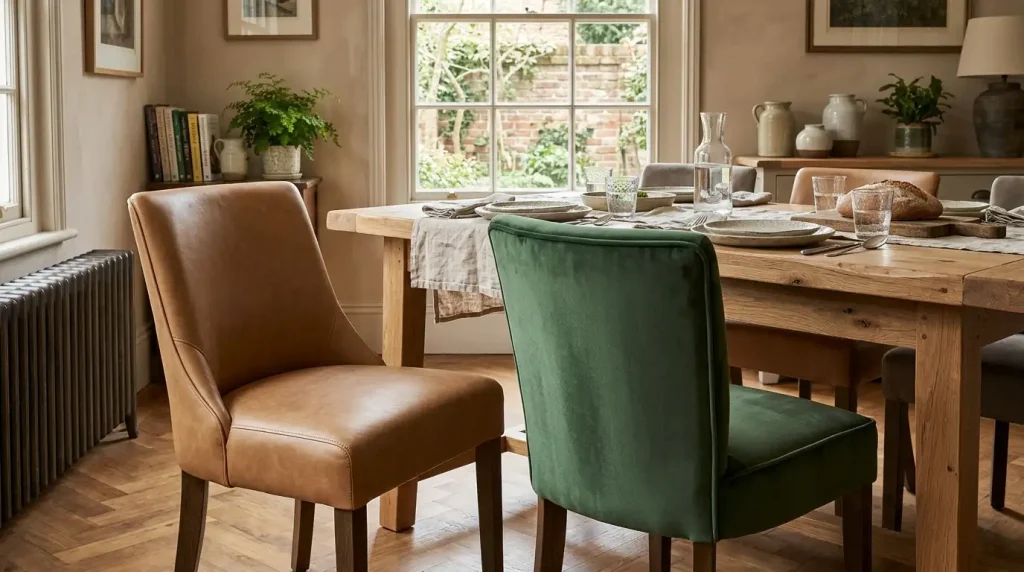
Faux leather can feel cool to sit on initially, warming slightly with body contact, and in warmer weather or a well-heated room, it can feel slightly sticky against bare skin during a longer meal. Fabric does not carry this issue, staying comfortable across a wider range of temperatures and skin contact.
For a household that spends longer at the table, weekend lunches, extended family meals, entertaining guests, fabric’s comfort advantage becomes more noticeable. For quick, everyday meals, this difference matters considerably less, since the total seated time is shorter.
Colour Consistency Across Six Chairs
This is a detail worth checking specifically when buying six of anything, since dye lot variation becomes more visible across a longer run of chairs than it would across just two or four.
Buying a matched set of six chairs together, rather than sourcing them individually or in smaller batches, is the most reliable way to avoid this issue entirely, since a full set is produced and dyed together. This is one of the practical advantages of buying a genuine 6 seater set as a single purchase, rather than combining chairs from separate orders or retailers.
Allergies, Pets and Households With Both
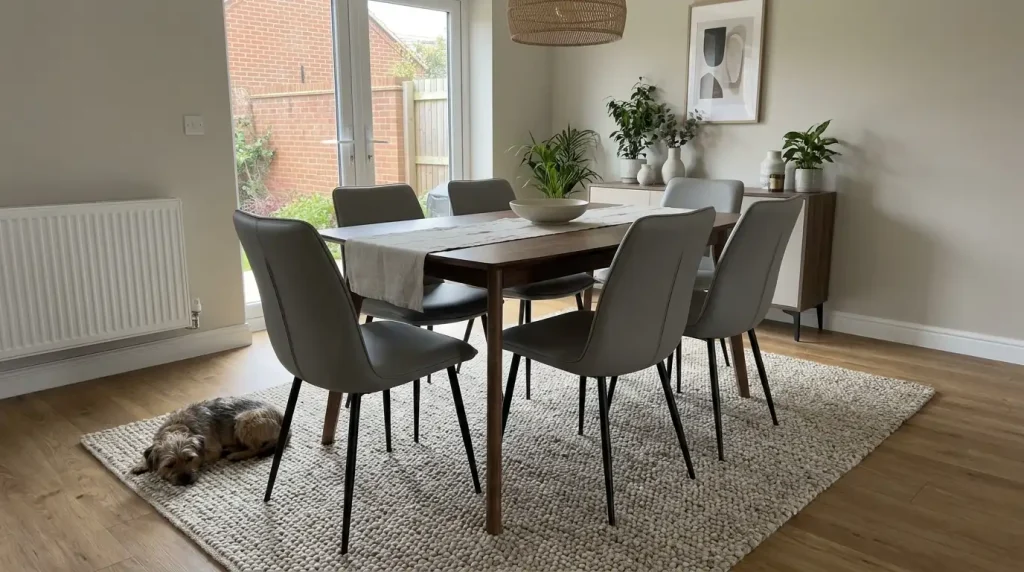
Fabric upholstery, particularly a deeper pile like velvet, can hold onto pet hair and dust more readily than a smooth faux leather surface, which wipes and vacuums clean more easily. For a household with pets, allergies, or both, faux leather is generally the more practical choice across all six seats, simply because it gives allergens and pet hair less surface texture to cling to.
This does not rule out fabric entirely for a pet-owning household, but it is worth weighing alongside the comfort and style benefits fabric otherwise offers, particularly if allergies are a genuine, active concern rather than a minor consideration.
Which Material Suits Which Household
- Busy families with children, where faux leather’s easy-clean surface handles daily spills without the extra care fabric requires across all six seats.
- Households with pets or allergy sufferers, where faux leather’s smoother surface holds less hair and dust than a fabric weave.
- Households prioritising comfort for longer meals, where fabric’s softer feel genuinely improves the experience of sitting for an hour or more.
- Anyone on a tighter budget for a full 6 seater set, where faux leather’s typically lower price makes a meaningful difference once multiplied across six chairs.
- Households wanting a more elevated, tactile look for entertaining, where velvet’s depth and texture reads as more considered than a smoother faux leather finish.
Mixing Materials: Bench Plus Chairs
If your 6-seater set pairs chairs with a bench, you do not need to choose the same material for both. A faux leather bench alongside fabric chairs, or the reverse, is a genuine option worth considering, particularly if different people use each piece of seating differently. Our guide to 6 seater sets with a bench covers this configuration in more depth, including how material choice interacts with the bench’s specific wear patterns.
Common Mistakes
- Assuming faux leather and genuine leather are the same thing: They behave differently, particularly around price and temperature, so check which one a specific listing actually offers.
- Choosing fabric without checking the Martindale rating: if one is listed, particularly for a household with heavy daily use across six chairs.
- Underestimating the total price difference across six chairs: rather than the smaller gap a single chair comparison might suggest.
- Ignoring pets and allergies when choosing fabric: particularly a deep pile velvet that holds onto hair and dust more than a smooth faux leather surface.
- Buying chairs from separate batches or orders: risking a visible colour mismatch across a full run of six.
A Quick Decision Framework
- How messy are your typical meals? Faux leather suits frequent spills and a busy household better than fabric.
- How long do your meals typically last? Fabric’s comfort advantage matters more for longer, more relaxed meals.
- Do you have pets or allergy concerns? Lean toward faux leather for easier cleaning and less surface for allergens to cling to.
- What is your budget for a full set of six? Check the specific price difference for your shortlisted sets, since it is often more significant than a single-chair comparison suggests.
- Are you buying all six chairs together? This avoids the colour consistency risk that comes with sourcing chairs separately.
Longevity: How Each Material Ages Over Years of Use
Beyond day-to-day cleaning, it is worth thinking about how each material looks after several years of genuine daily use, since a dining set is rarely replaced on a short cycle.
Faux leather tends to show its age through surface changes rather than structural wear, a slight dulling of sheen, or in rare cases, minor cracking at points of repeated flex such as the front edge of the seat. This is more likely to happen gradually over years rather than suddenly, and a well-made faux leather chair, cared for with the cleaning guidance covered earlier, generally holds up well through normal family use.
Fabric ages differently, typically through gradual fading if positioned in direct sunlight, or a slight flattening of pile in velvet specifically, most noticeable in the exact spot people sit most often. Rotating chairs occasionally, where practical, can help even out this kind of wear across a full set of six, since not every seat necessarily gets used equally in a typical household.
Neither material is inherently longer-lasting than the other in every case. Both depend heavily on how they are cared for and how much daily use they genuinely see, which is why the cleaning routines covered earlier in this guide matter as much for long-term appearance as for day-to-day tidiness.
Frequently Asked Questions
Is faux leather the same as genuine leather?
No. Faux leather is a synthetic material designed to look and feel like leather, generally at a lower price and with different care needs. Genuine leather comes from tanned animal hide and is considerably more expensive.
How much more does a fabric 6 seater set cost compared to faux leather?
Based on directly comparable sets in our own range, the difference is typically £50 to £70 for the full set of six chairs, though this varies by specific product.
Is fabric or faux leather easier to clean on dining chairs?
Faux leather is generally easier and faster to clean, wiping clean with a damp cloth. Fabric needs gentle vacuuming or spot cleaning with a mild solution, which takes a little more time and care.
What Martindale rating should I look for in fabric dining chairs?
A rating of 15,000 rubs or higher is a reasonable minimum for genuine daily dining use, based on general UK upholstery guidance for this type of furniture.
Is faux leather a good choice for households with pets?
Generally yes. Faux leather’s smooth surface holds less pet hair and dust than a fabric weave, making it easier to keep clean in a pet-owning household.
Can I mix faux leather and fabric within the same 6 seater set?
Yes, particularly if your set includes a bench alongside chairs. Choosing different materials for each is a genuine option worth considering based on how each piece of seating is actually used.
Does faux leather crack or wear out faster than fabric?
Not necessarily. Faux leather tends to show age through gradual surface dulling or, rarely, minor cracking at flex points, while fabric more commonly shows fading or pile flattening. Both depend heavily on care and how much daily use they see.
Should I rotate which chairs get used most in a 6 seater set?
It is a reasonable habit, particularly for velvet, since it helps even out wear across all six seats rather than concentrating it on the chairs used most often by the same household members.
Choosing the Material That Suits Your Table
Faux leather and fabric both have a genuine place in a 6 seater dining set, and the right choice comes down to how your household actually eats, not which material photographs better. Faux leather earns its place through easy cleaning and a lower price across six chairs. Fabric earns its place through comfort and a more elevated feel for longer meals.
For the fuller picture on choosing your table alongside your chairs, our 6 seater dining set buying guide covers the wider decision in depth. When you are ready to compare faux leather and fabric options directly, browse the full 6 seater dining set range at Kosy Koala.
Five Kosy Koala 6 Seater Chair Options Compared
Every price below was checked directly on our site before this guide was published. Prices can change, so always confirm the current figure on the product page before ordering.
Dark Grey Dining Table With 6 Grey Faux Leather Chairs
Price: £199.99 (was £229.99) Faux leather
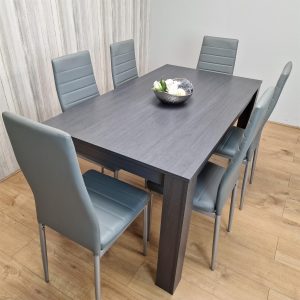
The wipeable, budget-friendly option on this popular table design, suited to a busy household seating six daily.
Shop: Dark Grey Dining Table With 6 Grey Faux Leather Chairs
Dark Grey Dining Table With 6 Grey Velvet Chairs
Price: £264.99 (was £299.99) Fabric (velvet)
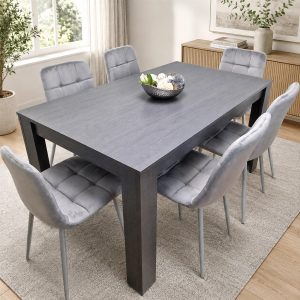
The same table as above, in genuinely comfortable tufted velvet, for a household prioritising comfort over easy-clean practicality.
Shop: Dark Grey Dining Table With 6 Grey Velvet Chairs
Oak Effect Dining Table With 6 Grey Faux Leather Chairs
Price: £199.99 (was £229.99) Faux leather
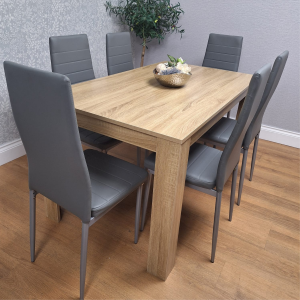
A warmer, wood-effect table paired with easy-clean faux leather, suited to a traditional room that still needs practical, low-maintenance seating.
Shop: Oak Effect Dining Table With 6 Grey Faux Leather Chairs
Oak Effect Dining Table With 6 Grey Velvet Chairs
Price: £264.99 (was £299.99) Fabric (velvet)
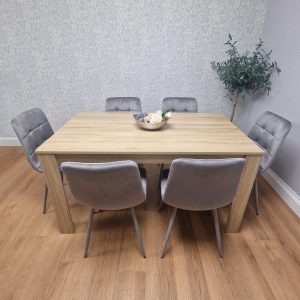
The velvet version of the same oak effect table, for a household wanting genuine comfort alongside a traditional, warm finish.
Shop: Oak Effect Dining Table With 6 Grey Velvet Chairs
Black Glass Rectangle Dining Table With 6 Black Velvet Chairs
Price: £254.99 (was £289.99) Fabric (velvet)
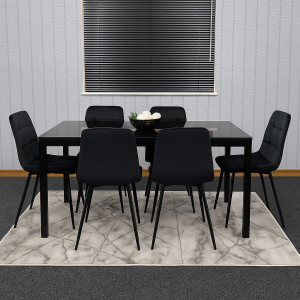
A more premium statement option, pairing a glass top with tufted velvet chairs for a household that hosts longer, more considered meals.
Shop: Black Glass Rectangle Dining Table With 6 Black Velvet Chairs
Browse the full range at kosykoala 6 seater dining-set.
About the author
This article was written by the Kosy Koala team. We design and source furniture for UK homes, with a focus on practical details that actually matter once a piece is in your room. Have a question about any product on this page? Get in touch through our about us page.


 Dining Tables
 Dining Chairs

 Bed Frames
 Mattresses
 Bunk Beds
 Sofa & Sofa Beds


