

Blog
6 Seater Dining Sets With a Bench: Pros and Cons

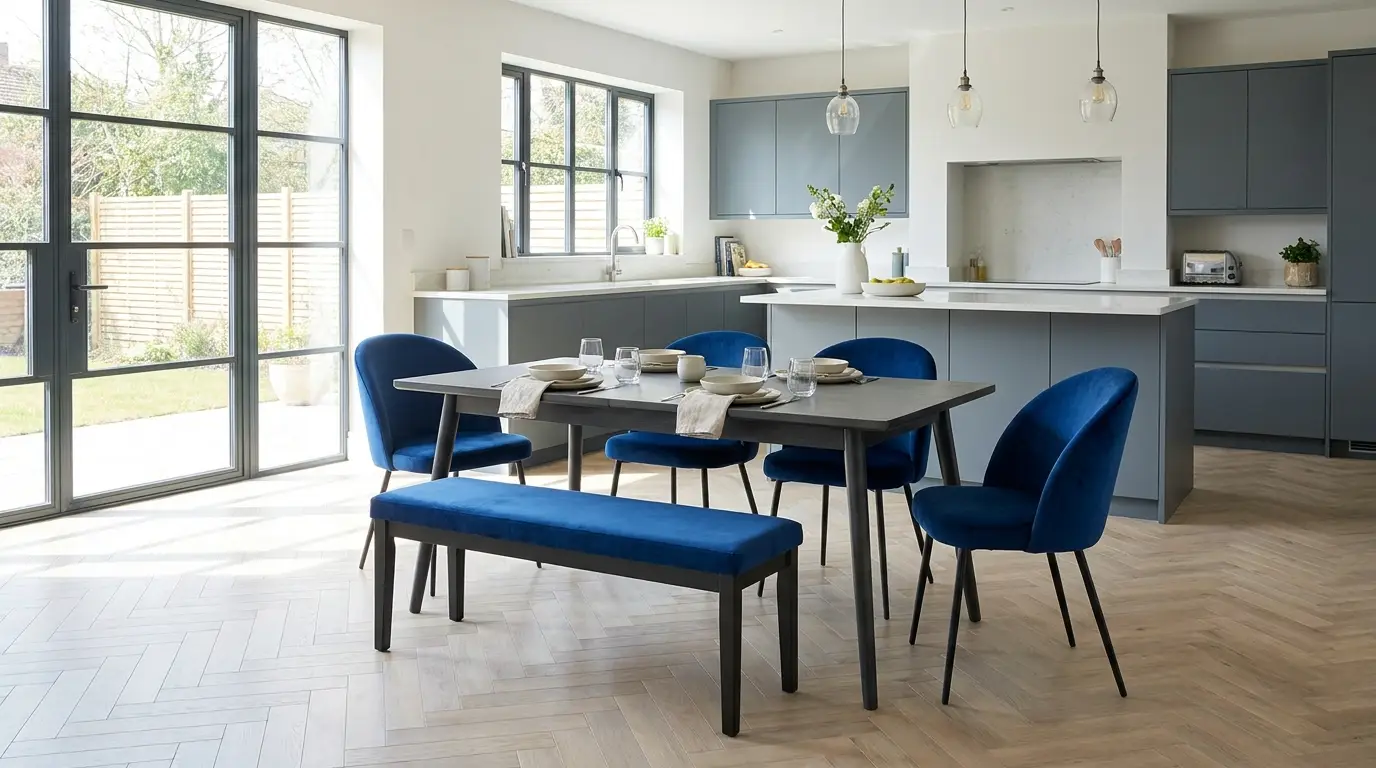
Most 6-seater sets give you a choice. Six individual chairs, or four chairs paired with a bench. The decision looks simple until you actually compare what changes: cost, floor space, flexibility, and how the table feels to use every day.
This guide focuses specifically on that decision at six-seat scale. For the broader question of bench versus chairs in general, including getting in and out, backrest comfort, and cleaning, our dining bench versus chairs guide covers those fundamentals in depth. This article picks up from there, focused on what changes once you are specifically choosing a 6-seater set.
Quick answer: A 6-seater set with a bench typically costs a little less than an equivalent all-chair set, tucks away more floor space when not in use, and copes better with a fluctuating headcount. The trade-off is reduced back support for whoever sits on the bench, and slightly less flexibility for that person to leave the table independently. For most households, the deciding factor is not cost or space alone, but whether the people using the bench regularly are children, who tend to manage it easily, or adults settling in for longer meals, who often prefer a proper chair.
The Two Standard 6-Seat Bench Configurations
Bench-inclusive 6-seater sets in the UK market almost always follow one of two layouts, and it is worth knowing the difference before you compare specific products.
Four chairs and one bench: The most common configuration. Four individual chairs sit around three sides of the table, with a single bench, seating two, along the fourth. Our dark grey dining table with four blue velvet chairs and a bench follows this layout, keeping four proper seats with backrests while still gaining the bench’s flexibility on one side.
Two chairs and two benches: Less common, but genuinely useful in a narrower room. Two chairs sit at each end of the table, with a bench running along each long side. Our wooden dining table with two black velvet chairs and two benches, at a more compact 117cm long, uses this layout, and suits a household that wants a shorter table without sacrificing the full six-seat count.
Pros of a 6 Seater Set With a Bench
- Genuine floor space saved. A bench tucks fully under the table when not in use, unlike a row of chairs, which always protrudes slightly even when pushed in.
- Flexible seating for a changing headcount. Nobody is confined to a fixed seat width on the bench. People shuffle along to fit one more in, which matters during a busy family meal.
- Easier cleaning underneath. One continuous bench is quicker to move and clean around than three individual chair legs on the same side.
- Often a lower price than an equivalent all-chair set, since a bench is generally cheaper to produce than the two additional individual chairs it replaces.
- A more relaxed, casual feel, which suits a family kitchen diner better than a fully matched formal chair arrangement in some households.
Cons of a 6 Seater Set With a Bench
- No back support on the bench itself: This is the single biggest trade-off, and it matters more for longer meals than quick everyday ones.
- Reduced independence for whoever sits centrally: Getting up mid-meal means asking others on the bench to shuffle out first, which can be a genuine inconvenience with young children who eat quickly.
- Less formal presentation for entertaining: A bench reads as more casual, which may not suit a household that wants a fully matched, symmetrical look for guests.
- Fixed length: Unlike a set of individual chairs, which can be added to or replaced one at a time, a bench is a single unit that needs replacing as a whole if it is ever damaged.
Real Cost Comparison: Bench Sets vs All-Chair Sets
This is worth checking with real numbers rather than assuming a bench always saves money. Every price below was checked directly against live listings before writing this guide.
Our dark grey dining table with four grey faux leather chairs, a full all-chair 6-seater in a similar finish, costs £199.99. Our grey glass dining table with four grey chairs and a matching bench costs £194.99. The difference here is modest, a few pounds, rather than a dramatic saving.
Key note: do not assume a bench-inclusion set is always cheaper. Compare the specific listings you are considering directly, since the price gap varies by finish and retailer, and is sometimes smaller than buyers expect.
Space Saved at Six-Seat Scale
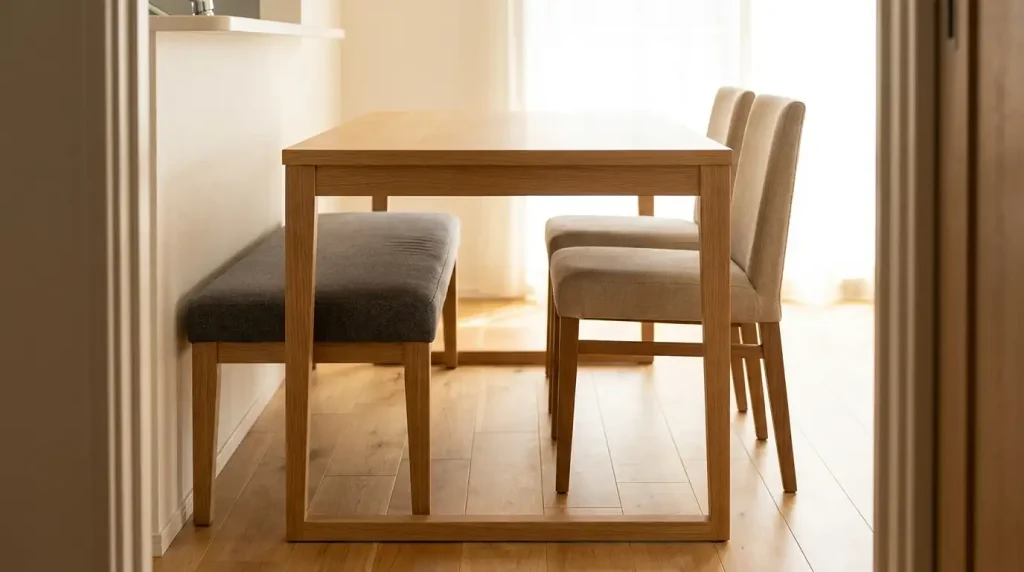
The genuine space saving from a bench shows up most clearly once the table is not in use. Six individual chairs, even pushed fully in, still occupy roughly 40 to 50cm of depth from the table’s edge on every side, since a chair frame cannot slide as far under the table as its backrest allows. A bench, by contrast, slides completely flush, freeing that depth back to the room.
This matters most in a smaller dining space or an open-plan kitchen diner, where every centimetre of reclaimed floor space genuinely counts. Our guide to how much room a 6 seater table needs covers the exact clearance figures this space-saving applies to, worth reading alongside this guide if room size is a genuine constraint for your household.
Flexibility: Can a Bench Set Really Seat More Than Six?
Some retailers market bench-inclusive sets as capable of seating more than their stated capacity in a pinch, since people can shuffle closer together along a bench in a way six fixed chairs simply cannot accommodate. This is genuinely true to a point; a bench built for two can often take three at a squeeze for a casual, informal meal.
It is worth treating this as an occasional bonus rather than a planning assumption. A bench squeezed beyond its comfortable capacity works for a short, casual gathering, but is not a substitute for genuinely sizing your table correctly if you regularly need more than six seats. Our guide to choosing a 6-seater set for entertaining covers hosting-specific seating decisions in more depth.
Who a Bench-Inclusion 6 Seater Suits
- Families with young children, who generally shuffle along a bench with ease and rarely miss the backrest during a quick everyday meal.
- Households with a fluctuating headcount, where the bench absorbs an extra person occasionally without needing a spare chair.
- Smaller kitchen diners, where the floor space reclaimed when the bench tucks away genuinely matters.
- Budget-conscious buyers, where the modest cost saving, though not guaranteed, is a welcome bonus alongside the other benefits.
Who Should Choose All Chairs Instead
- Households that regularly host longer, more relaxed meals, where the lack of back support on a bench becomes genuinely noticeable over an hour or more.
- Anyone prioritising a formal, symmetrical look, particularly for entertaining guests who expect a fully matched table setting.
- Households with elderly relatives or anyone needing to stand and sit independently, since individual chairs allow this without disturbing others.
- Buyers who want the flexibility to replace or add chairs individually over time, rather than committing to a single fixed bench unit.
Choosing Between the Two Bench Configurations
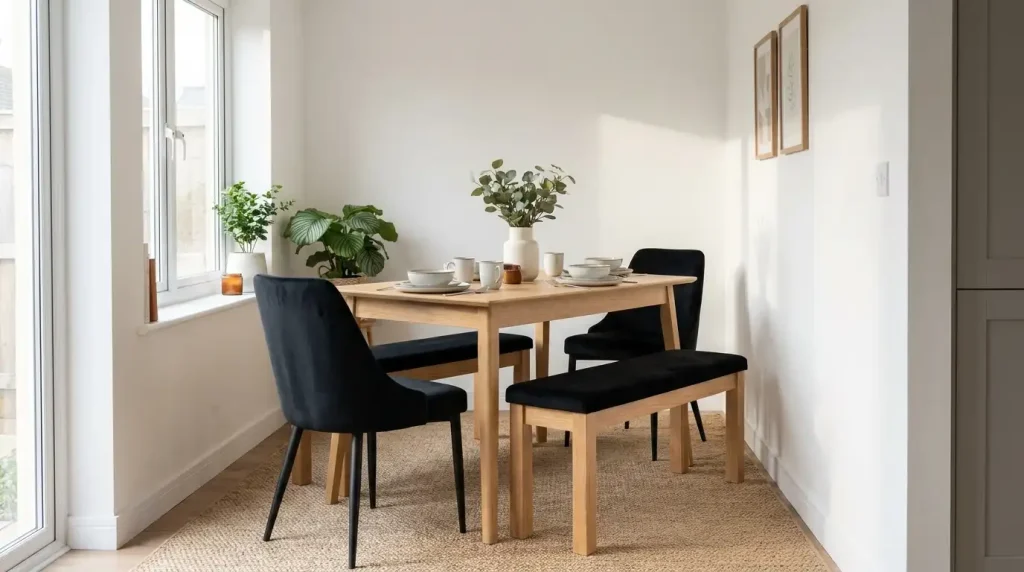
If you have decided a bench suits your household, the choice between four chairs plus one bench, or two chairs plus two benches, comes down to room shape and how your household actually uses the table.
The four-chair, one-bench layout gives more people a proper backrest, which suits a household where only a fluctuating one or two extra guests need the bench’s flexibility. The two-chair, two-bench layout suits a narrower room, since our own 117cm example runs notably shorter than the standard 140cm table, while still seating six in total. It also suits a household happy to have most of the table’s seating on benches, prioritising the relaxed, communal feel over individual backrests for the majority of seats.
Material and Maintenance at Bench Scale
A bench sees slightly different wear patterns to individual chairs, worth knowing before you choose a finish. Because more than one person shares the same continuous seat, a fabric or velvet bench can show wear unevenly, more compressed in the middle where people tend to sit centrally, than at the ends. A faux leather or wipeable bench top largely avoids this concern and wipes clean easily after a spill in a way a fabric surface cannot.
If your household includes young children, who are more likely to climb, kneel, or spill on a bench than sit neatly throughout a meal, a wipeable finish is worth prioritising over a fabric one, regardless of which configuration you choose. This is a small but genuine factor in the four-chair-one-bench versus two-chair-two-bench decision too, since a two-bench layout means more of the total seating surface is exposed to this kind of daily wear compared with a layout that keeps four seats on individual chairs.
A Worked Example
Consider a family of five, two adults and three children, who eat together most evenings and occasionally host grandparents for Sunday lunch. Their meals are typically quick on weekdays, but longer and more relaxed at weekends.
For this household, the four-chair-one-bench configuration works well. The three children can share the bench comfortably on weekday evenings, shuffling along without any fuss, while the two adults keep proper chairs with back support for their own seats.
On the weekend, when a grandparent joins for a longer lunch, that guest takes one of the remaining chairs rather than the bench, keeping the longest-seated adults in the seats best suited to extended comfort. This is a genuine, practical reason the four-chair-one-bench layout remains the most common configuration in the UK market: it lets a household allocate comfort where it is needed most, rather than treating all six seats identically.
Common Mistakes
- Assuming a bench-inclusion set is always cheaper. Always compare the specific listings, since the price gap is sometimes smaller than expected.
- Choosing a bench without checking the table’s apron height, resulting in a bench that cannot tuck fully under the table. Our general bench versus chairs guide covers this check in more detail.
- Overestimating how many people a bench can comfortably seat, treating an occasional squeeze as a reliable everyday capacity.
- Choosing a fully bench-based layout for a household that hosts long, formal meals regularly, where the lack of back support becomes a genuine daily drawback rather than an occasional inconvenience.
- Not considering who will actually sit on the bench. A layout that suits young children may suit them less well once they grow older and prefer a proper chair.
A Quick Decision Framework
- How long do your typical meals last? Quick, everyday meals suit a bench well. Longer, more relaxed meals favour individual chairs.
- Does your household include young children? They generally manage a bench with ease, which can make this an easy decision in a family household.
- How tight is your dining space? If floor space is a genuine constraint, the space a bench reclaims when tucked away is a real, measurable benefit.
- Do you entertain formally? A fully chaired set generally presents a more considered, symmetrical look for guests.
- Compare actual prices for your shortlisted sets. Do not assume a bench is cheaper without checking the specific listings.
Frequently Asked Questions
Is a 6 seater dining set with a bench cheaper than an all-chair set?
Sometimes, but not always by a large margin. Always compare the specific listings you are considering, since the price difference varies and is sometimes only a few pounds.
How many people can a 6-seater bench set actually seat?
It’s the stated capacity, generally six with a four-chair and one-bench layout. A bench can often squeeze in one extra person occasionally, but this should be treated as a bonus rather than a reliable planning figure.
Do children manage a bench better than adults?
Generally yes. Children tend to shuffle along a bench easily and rarely miss the backrest during a quick meal, while adults settling in for a longer meal often prefer the support a proper chair provides.
What is the difference between a four-chair-one-bench and a two-chair-two-bench layout?
The first gives more people a proper backrest, suited to a household where only occasional extra guests need the bench. The second suits a narrower room and a household happy to prioritise a relaxed, communal feel over individual backrests for most seats.
Does a bench really save floor space at six-seat scale?
Yes, genuinely. A bench slides completely flush under the table, while six individual chairs, even pushed in, still occupy roughly 40 to 50cm of depth on every side they occupy.
Should I choose a bench if I host dinner parties regularly?
It depends on the tone of your gatherings. A casual, family-style dinner suits a bench well. A more formal dinner party generally suits individual chairs, both for comfort over a longer meal and for a more considered, symmetrical presentation.
Does a bench wear differently to individual chairs over time?
Yes. A shared bench can show more concentrated wear where people tend to sit centrally, particularly with fabric or velvet upholstery. A wipeable faux leather bench avoids this concern and cleans more easily after daily use.
Can I mix which seats get a bench versus a chair based on who sits where?
Yes, and this is exactly why the four-chair-one-bench layout remains the most popular configuration. It lets a household put children or occasional guests on the bench while keeping chairs for those who benefit most from back support.
Weighing the Trade-Off Properly
A 6 seater set with a bench is not simply a cheaper or more casual version of an all-chair set. It is a genuine trade-off between floor space, flexibility and cost on one side, and back support and formality on the other. Consider who will actually sit on the bench, how long your typical meals run, and how tight your dining space genuinely is, and the right configuration becomes clear.
For the fuller picture on choosing a 6-seater set overall, our complete 6-seater buying guide covers room size, shape and chair material in depth. When you are ready to compare bench and all-chair options directly, browse the full 6 seater dining set range at Kosy Koala.
Five Kosy Koala 6 Seater Options: With and Without a Bench
Every price below was checked directly on our site before this guide was published. Prices can change, so always confirm the current figure on the product page before ordering.
Dark Grey Dining Table With 4 Blue Velvet Chairs and 1 Bench
Price: £239.99. Table: H75 x L140 x W80 cm. Bench: L90 x W30 x H45 cm. Best Classic Bench Configuration
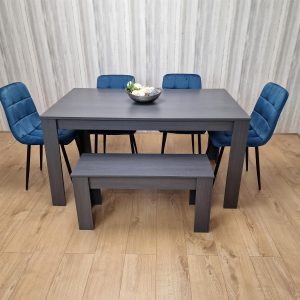
The most common bench layout: four proper seats with backrests plus a flexible bench for a fluctuating headcount.
Shop: Dark Grey Dining Table With 4 Blue Velvet Chairs and 1 Bench
Grey Glass Dining Table With 4 Grey Chairs and Grey Bench
Price: £194.99. Table: rectangular, grey tempered glass. Bench: matching grey finish. Best Value Bench Set
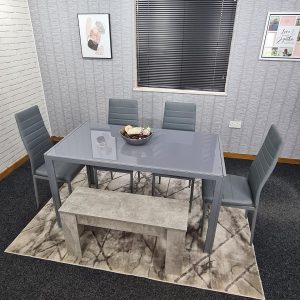
A genuinely competitive price point for a full 6-seat bench-inclusive set, paired with a wipeable glass top for daily practicality.
Shop: Grey Glass Dining Table With 4 Grey Chairs and Grey Bench
Wooden Dining Table With 2 Black Velvet Chairs and 2 Benches
Price: £259.99 (was £289.99). Table: 117cm long. Seats: 6, via 2 chairs and 2 benches. Best for a Casual, Communal Look
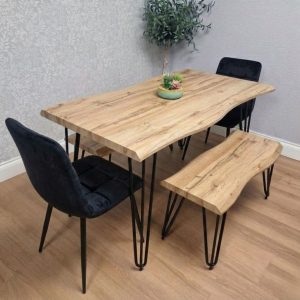
The shorter, two-bench layout, suited to a narrower room and a household happy to prioritise a relaxed feel over individual backrests for most seats.
Shop: Wooden Dining Table With 2 Black Velvet Chairs and 2 Benches
Black Clear Glass Dining Table With 6 Black Chairs
Price: £184.99 (was £214.99) Table: H75 x L140 x W80cm, tempered glass. Chairs: faux leather. Best All-Chair Alternative:
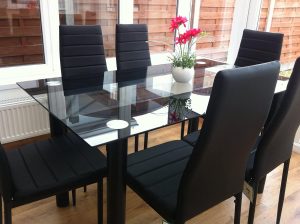
For comparison, a full six-chair set at a similarly accessible price, worth considering if back support and formal presentation matter more to your household than bench flexibility.
Shop: Black Clear Glass Dining Table With 6 Black Chairs
Dark Grey Dining Table With 6 Grey Velvet Chairs
Price: £264.99 (was £299.99) Table: H75 x L140 x W80cm, melamine laminated finish. Best Premium All-Chair Option
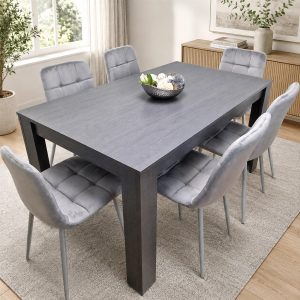
A more premium all-chair alternative, with genuinely comfortable tufted velvet seating on every one of the six seats, for a household that has decided individual chairs suit them better.
Shop: Dark Grey Dining Table With 6 Grey Velvet Chairs
Browse the full range at Kosy Koala 6-seater dining set
About the Author
This article was written by the Kosy Koala team. We design and source furniture for UK homes, with a focus on practical details that actually matter once a piece is in your room. Have a question about any product on this page? Get in touch through our About Us page.


 Dining Tables
 Dining Chairs

 Bed Frames
 Mattresses
 Bunk Beds
 Sofa & Sofa Beds


