

Blog
Faux Leather vs Fabric vs Wood Dining Chairs: Which Lasts Longest?

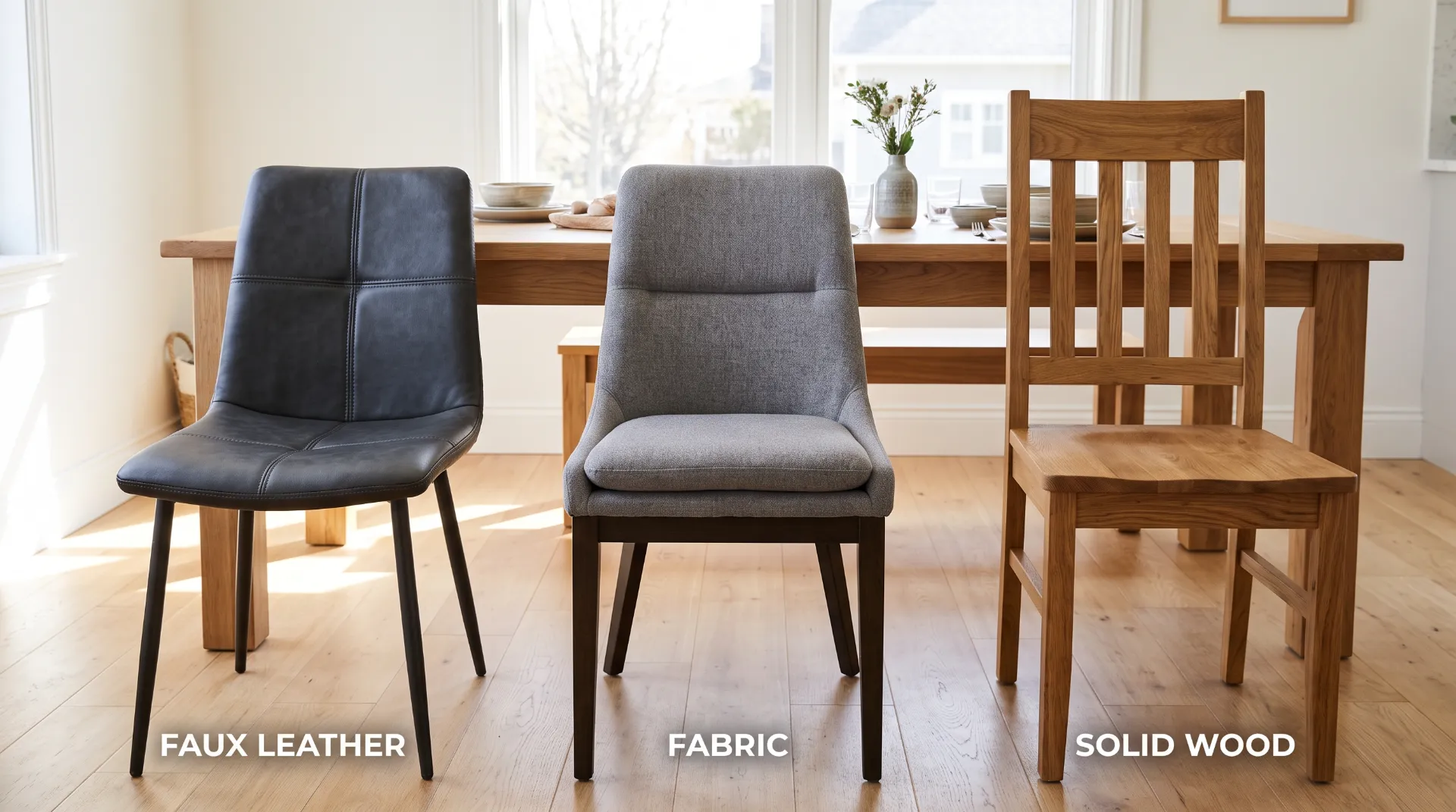
Everyone asks which dining chair material lasts longest. It is a fair question. Chairs get sat on, scraped, wiped and dragged every day. The wrong material can look tired in two years. The right one can look good for ten.
There is no single winner. The best material for dining chairs depends on how you live. A chair that survives a family of five may not suit a quiet couple. This guide shows how each material wears out, what to check before you buy, and which one fits your home.
For the wider buying picture, such as size, style and price, read our complete UK dining chairs buying guide. Here, we focus on materials and how long they last.
Quick answer: solid wood is usually the toughest overall, and a worn seat can often be repaired. Fabric lasts well when it has a high rub count, which is a number that shows how much wear it can take. Faux leather is the easiest to wipe clean, but its coated surface is the part that wears out first. For a busy family home, faux leather or a plastic seat with padding is often the most practical. For comfort, choose a good fabric or velvet.
What “Lasts Longest” Really Means
Chairs do not wear out in one way. They fail in several ways. Each material has its own weak spot.
| How a chair fails | What causes it | Most at risk |
| Surface cracking or peeling | Heat, damp, harsh cleaners, daily rubbing | Faux leather |
| Fabric wearing thin | Daily sitting and friction | Fabric with a low rub count |
| Stains that will not lift | Spills left to dry | Pale fabric |
| Fading | Strong sunlight | Fabric, velvet and some faux leather |
| Loose joints | Rocking, tipping, heavy use | Wood and any frame |
| Dents and scratches | Knocks, bags, pets | Softer woods |
| Flat, sagging seat | Foam breaking down | Any padded seat |
So “which lasts longest” is really a question about which weak spot you can live with. A wipe-clean seat that cracks is no good. A hard-wearing fabric that stains in a day is no good either. Think about your own life first.
Note that no single number gives the lifespan of a chair. Estimates you see online vary a lot, and most are not tested. We have kept to facts we could check.
The Best Material for Dining Chairs: A Short Verdict
Start here if you want a fast answer.
| If this sounds like you | Choose | Why |
| You have young children | Faux leather or a plastic seat with padding | Spills wipe off |
| You want the toughest option | Solid wood | Strong frame and often repairable |
| You sit for long meals | Padded fabric or velvet | Softer seat |
| You have pets | Smooth faux leather | Hair brushes off |
| You are on a tight budget | Faux leather | Lowest cost per chair |
| You host often | Faux leather or tough fabric | Handles busy evenings |
| You want a warm, soft look | Velvet | Rich colour and texture |
If you are still unsure, read the sections below. Each one explains the pros, the weak spots and the care.
Faux Leather Dining Chairs
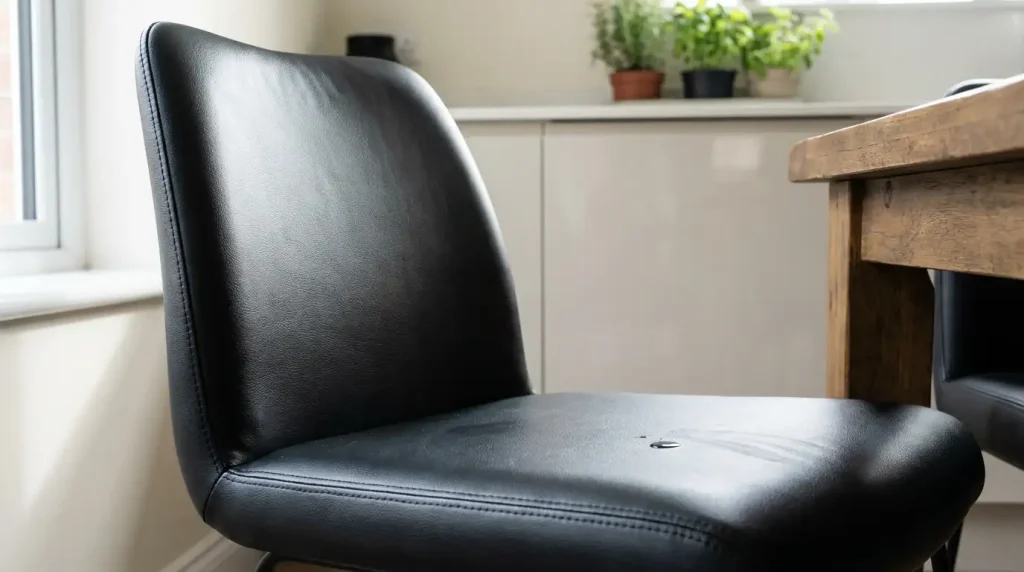
Faux leather is a coated material. It copies the look of leather at a lower price. Most faux leather is made from polyurethane (PU) or vinyl.
Why people choose it. Spills sit on the surface. A damp cloth does the job. It resists most everyday stains, and it comes in plenty of colours. It is also usually the cheapest option.
Where it wears. The weak spot is the coating. Heat and moisture can weaken the bond between the coating and the base. Over time, the surface can dull, crack or peel at the points where it flexes the most. Once it starts, it is hard to repair. Harsh cleaners can speed this up. Vinyl can also crack under long, strong heat and fade in direct sun.
How to make it last:
- Wipe spills straight away with a damp cloth and mild soap.
- Avoid bleach, spirits and strong sprays.
- Keep chairs away from radiators and strong sunlight.
- Do not let people kneel or stand on the seat.
Good to know. Real leather is a different thing. It costs much more. It is durable and tends to age well. Most mid-priced “leather” chairs are faux leather. Read the product description before you buy any chair sold as “leather”.
If you are choosing between faux leather and fabric for a bigger set, our faux leather vs fabric guide for 6 seater sets goes into more detail.
Fabric and Velvet Dining Chairs
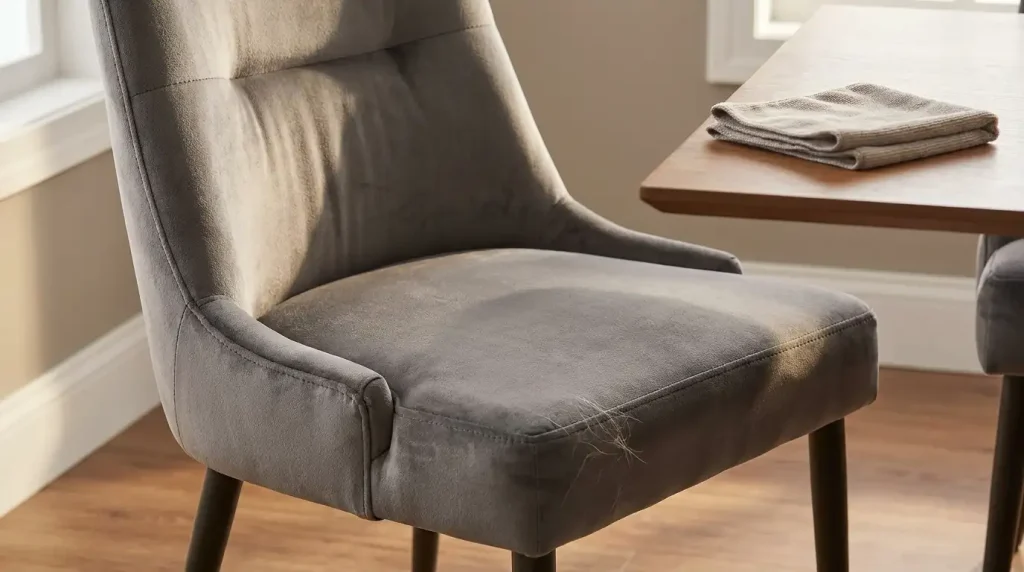
Fabric chairs feel softer and warmer. Velvet adds colour and depth. For long meals, they are hard to beat.
Why people choose it. The seat is gentle on your back. Fabric comes in many colours and textures. A good fabric can last well and can be freshened up with a clean.
Where it wears. Fabric wears from friction. It also soaks up spills if left, shows pale stains and can fade in strong sun. Velvet tends to collect dust and pet hair.
What to check: the rub count. The Martindale test rubs a fabric until it wears. The higher the number, the tougher the fabric. Fabric supplier Plumbs puts general domestic use at 15,000 to 25,000 rubs. Another fabric supplier suggests 15,000 to 20,000 for dining chairs. Light domestic fabrics sit lower, at 10,000 to 15,000.
| Rub count | Use |
| 10,000 to 15,000 | Light domestic, such as an occasional chair |
| 15,000 to 25,000 | General domestic, such as daily dining chairs |
| 25,000 to 30,000 | Heavy duty |
For daily dining chairs, aim for at least 15,000. If a seller does not list a rub count, ask. If they cannot say, treat that as a warning.
Fibre matters too. Polyester is long-lasting and resists fading. Cotton absorbs spills. A blend of cotton and polyester can balance the two.
How to make it last:
Our set of 2 grey velvet chairs comes with rubber-capped legs. That helps protect your floor.
Solid Wood Dining Chairs
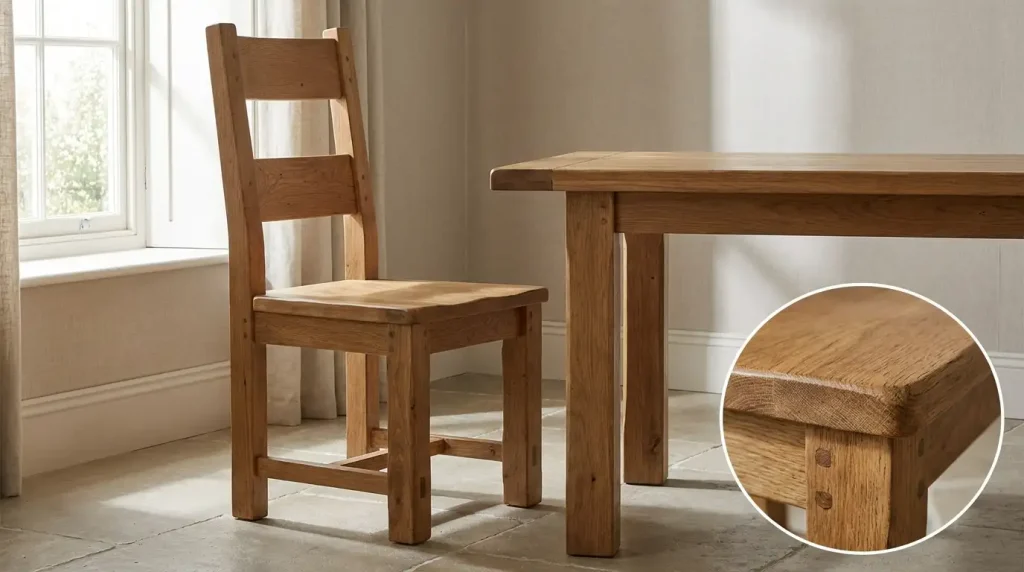
Wood is the classic choice. It is strong, easy to live with and often repairable.
Why people choose it. A solid wood frame can take years of use. Grain gives each chair its own character. If a surface gets scratched, it can often be sanded and refinished. A loose joint can often be re-glued.
Where it wears. Wood fails at the joints. Rocking back on two legs puts stress on them. They can loosen over time. Wood is also sensitive to moisture and sudden changes in heat. A hard seat can feel tiring on a long evening, so many people add a cushion.
Not all wood is equal. Hardness varies a lot. The Janka test measures the force needed to press a steel ball halfway into the wood. It shows how well a wood resists dents. According to Wikipedia’s Janka list, English oak scores 5,000 N. Eastern white pine scores 1,700 N. So an oak chair will dent far less easily than a pine one.
| Wood | Janka hardness | What it means |
| English oak | 5,000 N | Hard, resists dents |
| Eastern white pine | 1,700 N | Soft, dents more easily |
How to make it last:
- Dust often and wipe spills quickly.
- Keep chairs away from radiators and damp walls.
- Tighten loose fixings.
- Use felt pads under the feet.
- Sit on the chair with all four legs on the floor.
What about Kosy Koala? Our current chair range uses faux leather, velvet and plastic seats. Our grey plastic set has solid beech wood legs. We do not list a full solid wood chair at the moment. We include wood here because it is a common choice and you deserve a fair comparison.
Plastic Seats With Padding
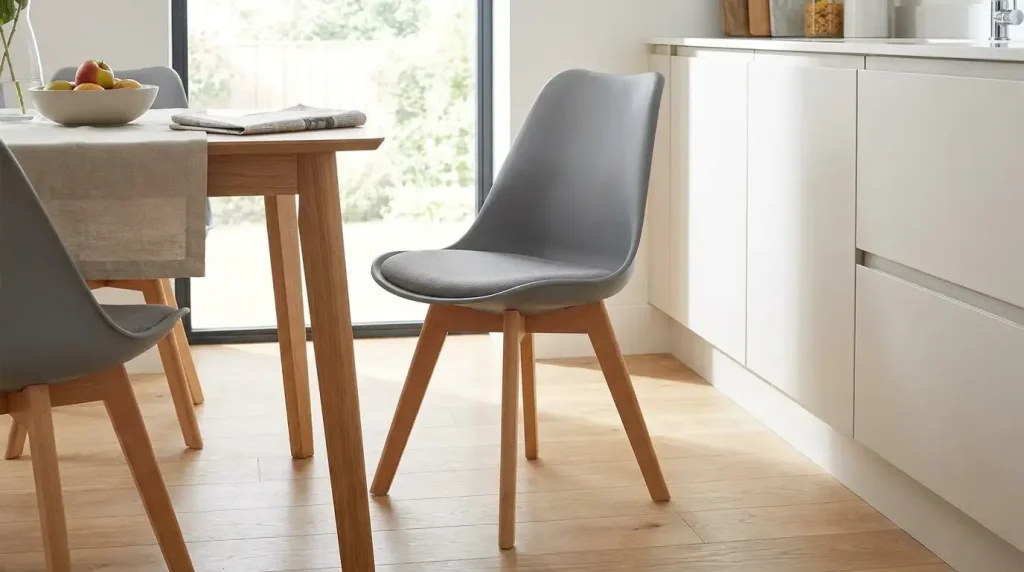
This is a fourth option worth knowing about. Many modern chairs have a moulded plastic seat with a soft cushion. They are light, easy to move and quick to wipe.
Our grey plastic set uses a polypropylene seat with soft padding and solid beech wood legs. That mix gives you a wipe-clean seat with a sturdy wooden base. These suit family kitchens and small rooms. They look more casual than velvet.
Before you buy any plastic chair, check the legs and the join between seat and frame. These are the parts that take the strain.
Faux Leather vs Fabric vs Wood: Side by Side
| Faux leather | Fabric or velvet | Solid wood | |
| Wear | Surface coating wears first | Depends on rub count | Joints and finish wear first |
| Stains | Wipe clean | Blot fast, can stain | Wipe clean, avoid soaking |
| Comfort | Firm, smooth | Soft and warm | Hard without a cushion |
| Repair | Hard to repair | Can be cleaned or re-covered | Often repairable |
| Sunlight | Can fade or crack | Can fade | Can darken or fade |
| Care effort | Low | Medium | Low to medium |
| Cost | Lowest | Middle | Usually highest |
No material wins every row. That is why the right choice is personal.
What Each Material Costs in Our Range
Price per chair is a useful comparison. Here is what our range looks like. We checked every price on 21 October 2026.
| Material | Sets in our range | Price per chair |
| Faux leather | Sets of 4 from £84.99 to £114.99, sets of 6 from £124.99 | About £21 to £29 |
| Velvet | Set of 2 at £74.99, sets of 4 at £114.99, sets of 6 at £174.99 | About £29 to £37 |
| Plastic with padded seat | Set of 4 at £99.99 | £25 |
Velvet costs a little more than faux leather. For a set of six, grey velvet adds £50 compared with black faux leather. That is a modest gap. It may be worth paying if you want a softer seat.
Cost per year matters too. A cheap chair that you replace every few years can cost more over time. But a pricey chair that does not suit your home is no bargain either. Pick the one that fits your life.
Match the Material to Your Household
| Your home | Best pick | Watch out for |
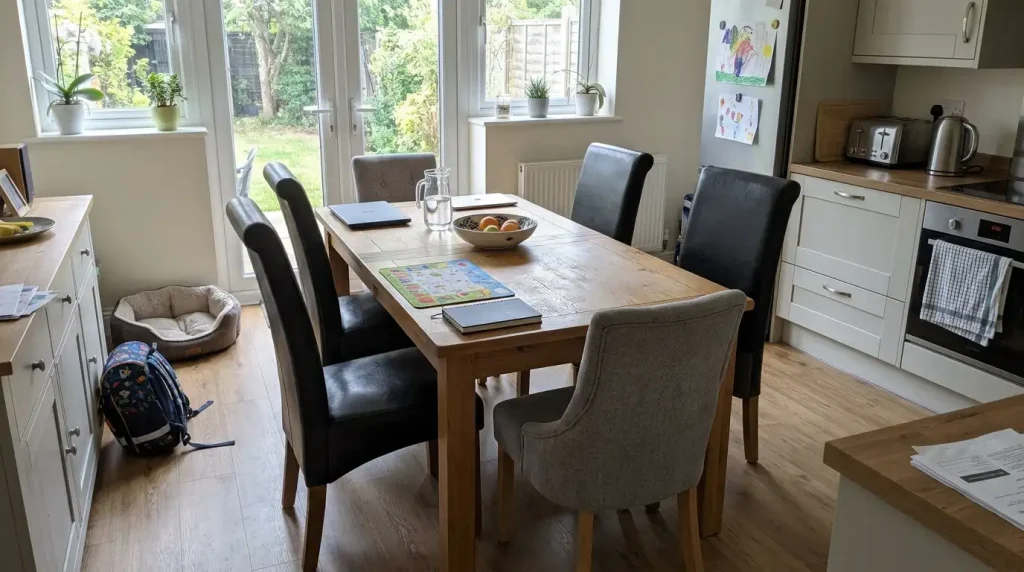
| Young children | Faux leather or plastic with padding | Sharp objects on the seat |
| Pets | Smooth faux leather | Claws on any surface |
| Long meals and homework | Padded velvet or fabric | Spills, so act fast |
| Frequent hosting | Faux leather or high-rub fabric | Scuffs from busy nights |
| Small kitchen | Plastic with padding or faux leather | Heat near the cooker |
| Sunny room | Darker, fade-resistant fabric | Fading on any material |
| Tight budget | Faux leather | Surface wear over time |
If you also use a bench, choose a wipeable finish. Our guide to 6 seater sets with a bench explains how benches and chairs work together.
How Your Home Changes the Answer
Materials behave differently in different rooms. Think about these things.
Heat. Radiators, cookers and sunny windows dry out and weaken surfaces. Faux leather can crack. Wood can dry out or warp. Keep chairs a little way from heat.
Damp. Steamy kitchens and damp walls are tough on wood and on faux leather coatings. Good airflow helps.
Sunlight. Strong sun can fade fabric and velvet. It can also harm vinyl and wood finishes. Curtains or blinds help.
Pets. Velvet collects hair. Claws can mark faux leather and wood. A smooth surface is easiest to clean.
Children. Spills, crayons and school bags are normal. A wipe-clean material saves a lot of effort.
How to Make Any Dining Chair Last Longer
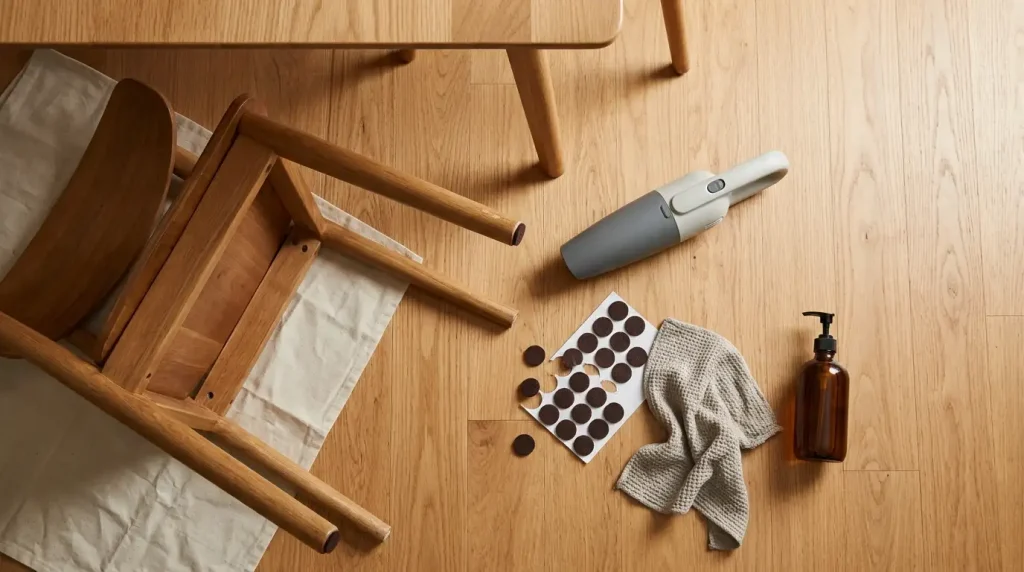
Care is as important as the material. A few simple habits can add years.
-
- Clean spills fast. Most stains lift easily when fresh.
- Use the right cleaner. Check the care label. Never use bleach.
- Protect your floor and your chair feet. Use felt pads or rubber caps.
- Rotate your chairs. Move them around so that one seat does not take all the wear.
- Stop chair rocking. Rocking stresses joints on every material.
- Tighten the fixings. Check them after the first few weeks, then now and then.
- Keep chairs out of strong sun and away from heat.
Our chairs arrive flat-pack with clear instructions. Finish the final tightening by hand so you do not overtighten.
What to Check Before You Buy
Look beyond the photo. Check these details.
- The material name. Is it real leather, faux leather, fabric or velvet? The product description should say.
- The rub count. Ask for it on any fabric chair.
- The weight limit. Check the product page. If it is not shown and it matters to you, ask the seller.
- The legs and frame. Look for a sturdy base, rubber caps or felt pads.
- The padding. A padded seat and back are more comfortable for longer meals.
- The care advice. It should say how to clean the material.
- The standard. In the UK, BS EN 12520 sets minimum safety, strength and durability requirements for domestic seating for adults. The British Standards Institution lists it. It does not cover upholstery wear, so the rub count is a separate check.
Common Mistakes
- Choosing on looks alone. A pale chair is lovely until the first spill.
- Ignoring the rub count. Soft fabric with a low rub count wears fast.
- Assuming “leather” means real leather. Always read the description.
- Putting chairs by a radiator. Heat is hard on most materials.
- Using harsh cleaners. They can strip surfaces.
- Skipping floor protection. Scratches are easy to prevent.
- Mixing materials with different seat heights. Check the height first.
Quick Checklist Before You Buy
- Decide who will use the chairs and how often.
- Pick a material to match your household.
- Check the rub count for any fabric.
- Read the product description for real or faux leather.
- Check the frame, legs and feet.
- Look for padding and a supportive back.
- Check the weight limit on the product page.
- Plan your cleaning routine.
- Order felt pads for the feet.
Frequently Asked Questions
What is the best material for dining chairs?
There is no single best choice. Solid wood is usually the toughest overall. Faux leather is the easiest to wipe clean. Fabric and velvet are the most comfortable. Pick the one that fits your home.
Which dining chair material lasts longest?
Solid wood frames usually last longest, and they are often repairable. A good fabric with a high rub count can also last well. Faux leather is hard to repair once the surface starts to crack or peel.
Is faux leather or fabric better for dining chairs?
Faux leather is easier to clean. Fabric is softer and warmer. Faux leather suits busy homes with children. Fabric suits long meals and a cosy look.
What is a good rub count for dining chair fabric?
Aim for at least 15,000 Martindale rubs for daily use. Plumbs lists 15,000 to 25,000 as general domestic use.
Does faux leather crack?
It can. The coated surface can dull, crack or peel over time, especially with heat, damp and harsh cleaners. Gentle care helps.
Are velvet dining chairs hard to keep clean?
They need more care than faux leather. Blot spills, brush gently and vacuum the seat each week. Velvet also collects dust and pet hair.
Are wooden dining chairs better for families?
They are strong and often repairable. The seat can feel hard, so you may want a cushion. Wipe spills quickly.
What is the easiest dining chair material to clean?
Faux leather and plastic seats are the simplest. A damp cloth and mild soap are enough.
How can I stop my dining chairs wearing out?
Clean spills fast, use felt pads, keep chairs away from heat and sun, stop rocking, and tighten the fixings now and then.
Can I mix chair materials?
Yes. Keep the seat height the same and repeat one colour or finish.
Choosing a Material You Will Still Like in Five Years
The best material for dining chairs is the one that suits your home, not the one with the longest claim on a label. Think about spills, pets, sun and long meals. Check the rub count. Read the description. Then add a little care.
For the full buying picture, read our dining chairs buying guide. When you are ready to order, browse our full range of dining and kitchen chairs at Kosy Koala. Every set is flat-pack, with clear instructions.
Five Kosy Koala Dining Chair Sets by Material
Every price below was checked directly on our site on 21 October 2026. Prices can change, so always confirm the current figure on the product page before ordering.
Dining Chairs Set of 4 Black Leather Kitchen Chairs
Price: £84.99 (was £99.99). Best faux leather for a tight budget: four padded black chairs.
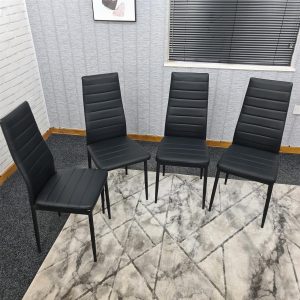
The description lists the seat as faux leather padded. Seat height is 44cm. Listed size is H96 x L40 x W40cm.
Shop: Dining Chairs Set of 4 Black Leather Kitchen Chairs
Dining Chairs Set of 6 Black Faux Leather Kitchen Chairs
Price: £124.99 (was £129.99). Best faux leather for busy households. Six wipe-clean chairs in one box.
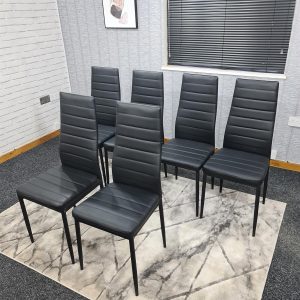
Seat height is 44cm. Listed size is H96 x L40 x W40 cm.
Shop: Dining Chairs Set of 6 Black Faux Leather Kitchen Chairs
Dining Chairs Set of 4 Grey Velvet Kitchen Chairs
Price: £114.99 (was £124.99). Best velvet for comfort. Soft grey velvet with a padded seat and back.
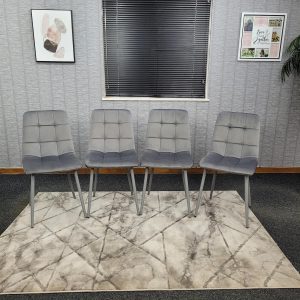
Seat height is 45cm. Listed size is H87 x L59 x W44cm.
Shop: Dining Chairs Set of 4 Grey Velvet Kitchen Chairs
Dining Chairs Set of 2 Grey Velvet Kitchen Chairs
Price: £74.99 (was £99.99). Best velvet for a smaller table or a top-up.
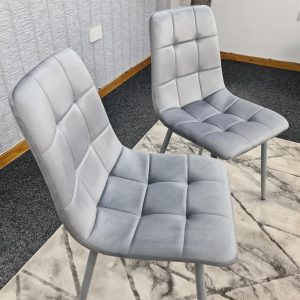
Two chairs with rubber-capped legs. Seat height is 45cm. Listed size is H87 x L59 x W44cm.
Shop: Dining Chairs Set of 2 Grey Velvet Kitchen Chairs
Dining Chairs Set of 4 Grey Plastic Kitchen Chairs
Price: £99.99 (was £109.99). Best mix of wipe-clean seat and wooden legs.
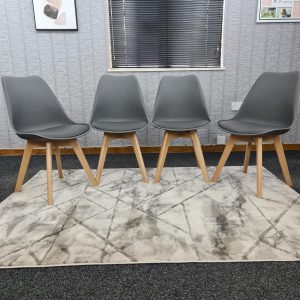
A polypropylene seat with soft padding and solid beech wood legs. Seat height is 44cm. Listed size is H83 x L57 x W49cm.
Shop: Dining Chairs Set of 4 Grey Plastic Kitchen Chairs
Browse the full range at Kosy Koala dining and kitchen chairs.
About the author
This article was written by the Kosy Koala team. We design and source furniture for UK homes, with a focus on practical details that matter once a piece is in your room. Have a question about any product on this page? Get in touch through our About Us page.


 Dining Tables
 Dining Chairs

 Bed Frames
 Mattresses
 Bunk Beds
 Sofa & Sofa Beds


