

Blog
Solid Wood vs Veneer Dining Tables: What’s the Difference?

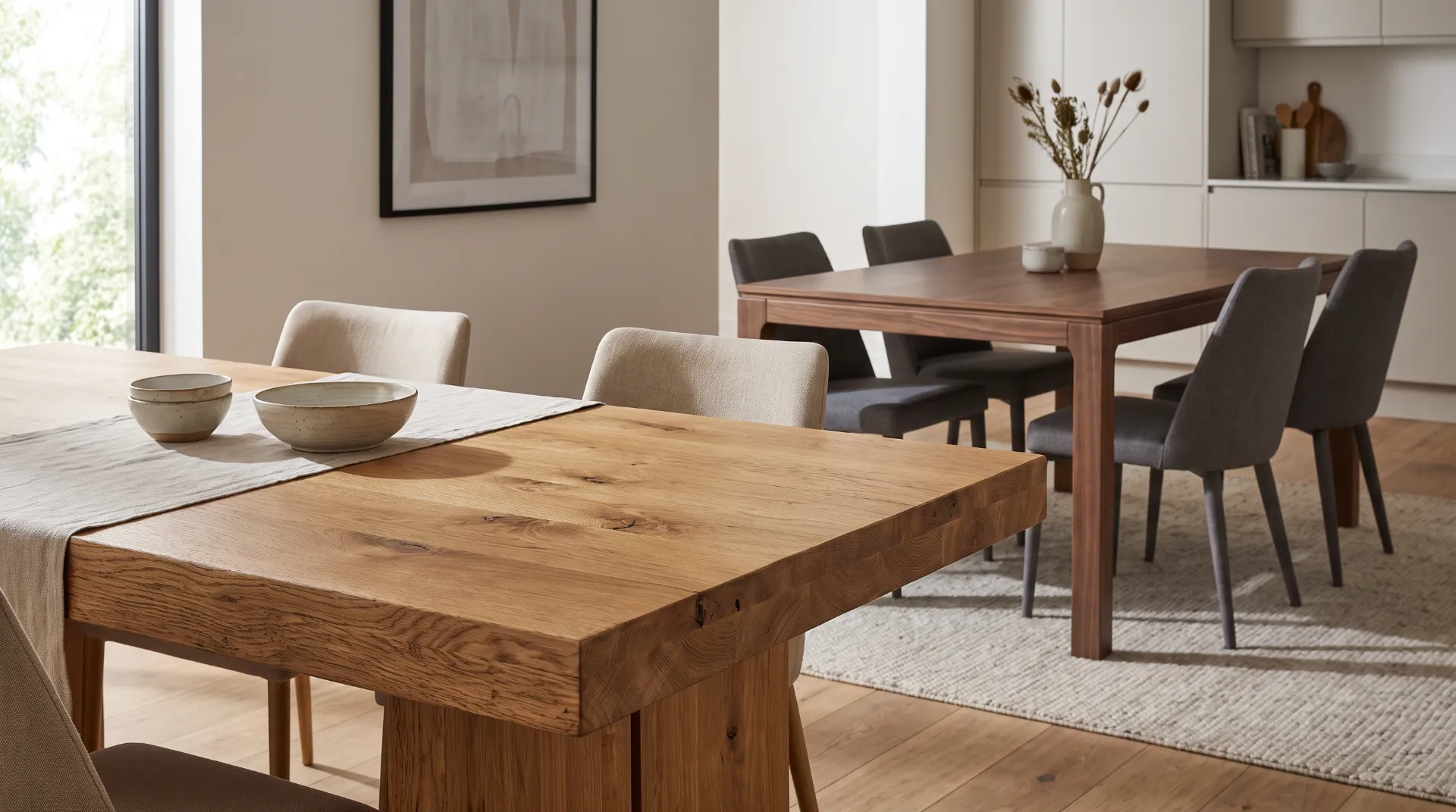
You find a dining table you love. The listing says “oak”. The price looks fair. But is it solid oak, a thin layer of oak over a board, or just a printed look? The answer changes how long the table lasts and how you care for it.
This guide explains the solid wood vs veneer dining table question in plain English. It covers cost, durability, repairs and warping. It also shows you how to spot each type before you buy. For the wider picture, our wooden dining table buying guide covers styles, finishes and sizes.
Quick answer: Solid wood is real timber all the way through. It lasts longest and can be sanded and refinished. It is heavier, usually costs more and moves with the air. Veneer is a thin slice of real wood glued to a board core. It is more stable and often cheaper, but it can only take very light sanding. A third type, wood-effect, is a printed surface. It is the lowest-priced and easiest to wipe, but it is not real wood.
What Is Solid Wood?
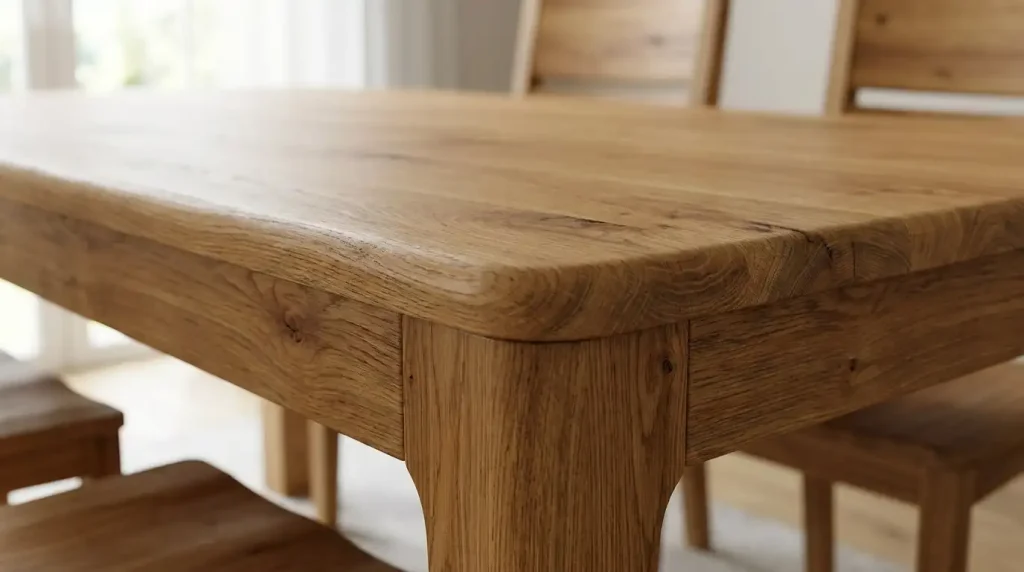
Solid wood is cut from planks of timber. The same wood runs from the top surface to the underside. Oak, walnut, ash and pine are common choices.
The big plus is repair. A scratch or ring can often be sanded out. The table can then be oiled or sealed again. Some shallow dents can be lifted with a damp cloth and steam.
The trade-offs are weight, cost and movement. Timber swells a little in damp weather and shrinks when the heating is on. A well-made table allows for this. A poorly made one can crack or warp.
Key note: Read the listing closely. “Solid oak” may describe only the legs or the frame. The top is the part that matters most.
What Is Veneer?
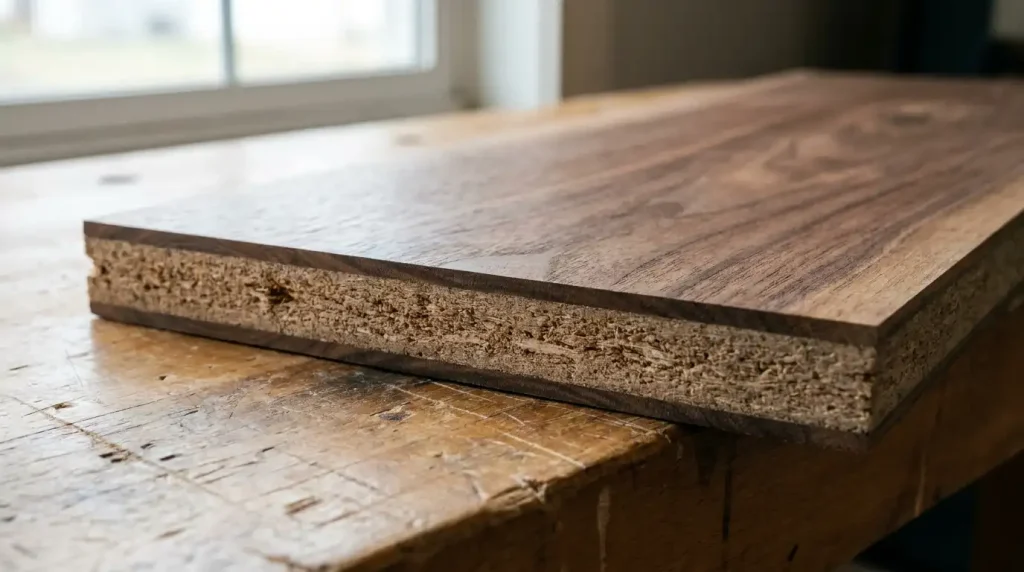
Veneer is a real slice of wood. It is usually well under 2 mm thick, and often under 1 mm. It is glued onto a core board. The core is often MDF, plywood or chipboard.
Veneer is not fake wood. The grain on top is genuine. Makers often use it because it behaves well. A board core does not twist as much as a plank.
The core matters. Plywood holds screws well and stays stable. MDF is smooth and flat, but it swells if water gets in at the edges.
Quality varies a lot. Good veneer is carefully matched, so the grain flows across the top. Budget veneer can look flat and repeated.
Where Wood-Effect Fits In
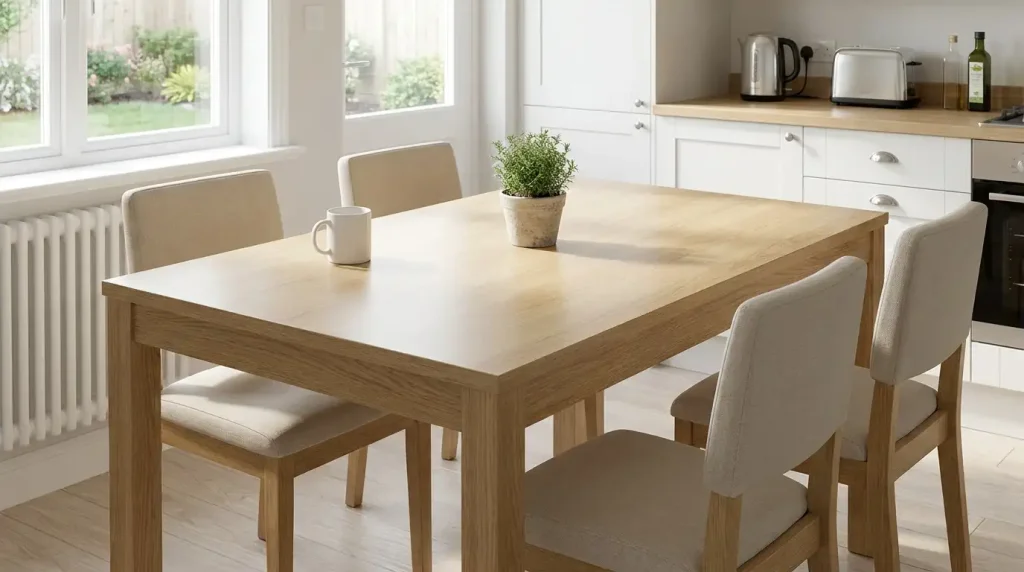
Many people mix up veneer and wood-effect. They are not the same.
Wood-effect is a printed paper pattern sealed under a hard layer. This layer is often called melamine or laminate. It sits on an engineered board such as MDF. There is no real wood on the surface.
The tables sold by Kosy Koala in this guide are wood-effect. They use an MDF top with a melamine finish. We say so plainly because the label matters. Words like “oak effect” or “wood grain finish” mean wood-effect. They do not mean solid wood or veneer.
What Is Under the Surface? Core Boards Explained
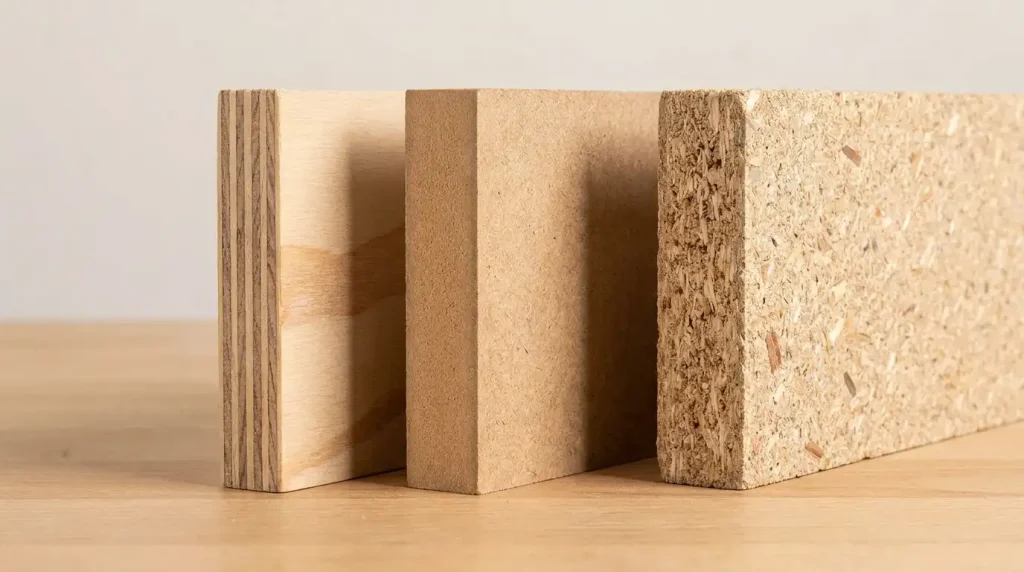
Veneer and wood-effect tables both hide a core. That core decides a lot about how the table behaves.
|
Core |
What it is | Strengths |
Weak spots |
| Plywood | Thin wood layers glued in alternate directions | Strong, stable, holds screws well | Costs more than other cores |
| MDF | Fine wood fibres pressed with resin | Very flat and smooth, good for printed finishes | Swells if water reaches it |
| Chipboard | Wood chips pressed with resin | Low cost | Weaker screw hold, chips at edges |
A good core with a good surface can serve you well. A weak core under a nice surface will let you down. This is why the material line in a listing is worth reading.
Solid Wood vs Veneer Dining Table: Side by Side
|
Feature |
Solid wood | Veneer |
Wood-effect |
| What the top is | Real timber all the way through | A thin real wood layer on a core board | Printed pattern under a sealed layer |
| Stability | Can move with humidity | More stable | Stable, but the board dislikes water |
| Weight | Heavy | Lighter | Medium |
| Refinishing | Can be sanded and refinished | Very little sanding | Cannot be refinished |
| Scratch repair | Often sanded out | Shallow only | Deep marks usually stay |
| Heat and water | Rings can be sanded out | Rings can lift the surface | Heat can discolour the surface |
| Typical cost | Highest | Middle, but good veneer is not cheap | Lowest |
| Best for | A long-term table | Stable, good-looking tops | Budget homes and easy cleaning |
How to Tell Solid Wood From Veneer
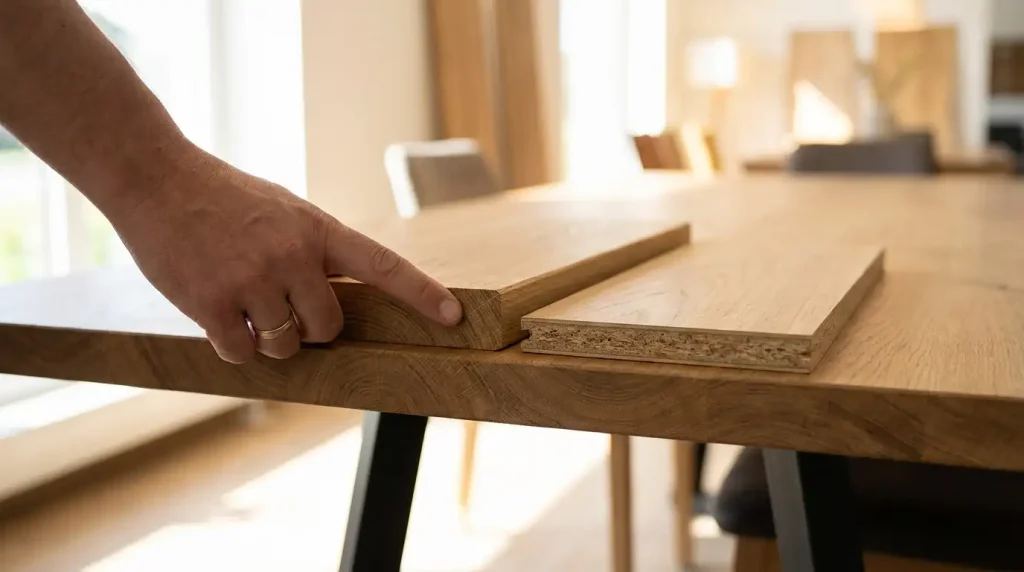
You can check a table in a shop. You can also check a listing online. Use these tests.
- Read the material line. “Solid oak top” is clear. “Oak finish”, “oak effect” and “wood grain” are not.
- Look at the edge. On solid wood, the grain wraps over the edge and around the corner. On veneer, you may see a thin line or a separate edge strip.
- Look at the underside. Solid wood shows the same timber underneath. A veneer table often shows a pale, even board.
- Check the screw holes. The inside of a hole can show the core layer.
- Look at the end grain. The ends of a solid plank show growth rings. Veneer does not.
- Ask the seller. If the answer is vague, treat that as a warning.
Weight is a weak clue. A heavy table can still have a board core under the veneer. Do not rely on it alone.
In the UK, sellers must not mislead you in product descriptions. A clear material line is a good sign. A vague one is worth questioning.
Mixed Builds Are Common
Many tables mix materials. A table may have a veneer top and solid wood legs. Or it may have a solid top with a veneered edge. Neither is a trick, as long as the listing says so.
Check each part: the top, the edge, the legs and the frame. Ask which part is solid. That one question clears up most confusion.
Durability in Daily Life
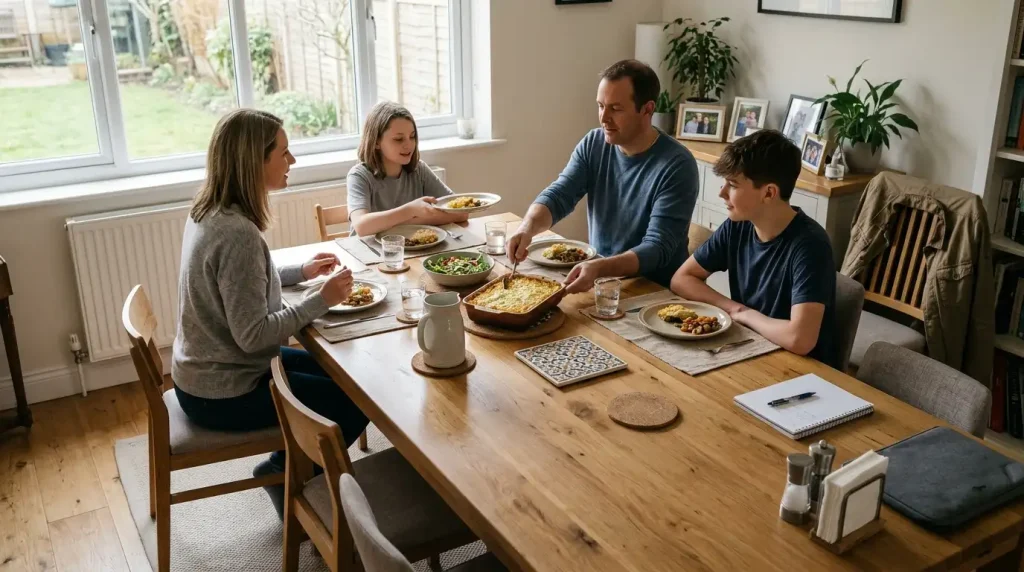
Dining tables take a beating. Here is how each type copes.
Scratches and dents. Solid wood can be sanded and refinished. This is its biggest strength. Veneer has only a thin wood layer, so heavy sanding can expose the core. Wood-effect cannot be sanded at all.
Heat. Hot dishes can mark every type. A white ring can appear on wood. On wood-effect, long contact with heat can discolour the surface. Use trivets every time.
Water. Spills are fine if you wipe them fast. The risk is standing water at an edge. On an MDF core, it can cause swelling. Veneer on MDF and wood-effect on MDF share this weakness.
Warping. Solid wood moves most. Keep it away from radiators. Veneer and engineered boards stay flatter. That helps in a warm flat with strong central heating.
Ageing. Solid wood gains character. Marks can blend into the grain. Veneer can chip or lift at an edge if it is knocked hard. Wood-effect keeps its look until the surface is damaged.
What Can You Repair?
Damage happens, so repair matters. Here is what usually works.
|
Problem |
Solid wood | Veneer |
Wood-effect |
|
Light surface scratch |
Sand and refinish | Light polish, or a touch-up |
Touch-up pen, may still show |
|
Shallow dent |
Steam can lift it | Hard to lift |
Cannot be lifted |
|
White heat ring |
Often sanded out | May lift the surface |
Likely permanent |
|
Deep gouge |
Sand or fill | Needs a specialist |
Usually stays |
|
Chipped edge |
Fill or sand | Re-glue or patch |
Usually stays |
The pattern is clear. Solid wood forgives the most. Veneer sits in the middle. Wood-effect forgives the least, but it also needs the least upkeep.
Does the Finish Matter as Much as the Wood?
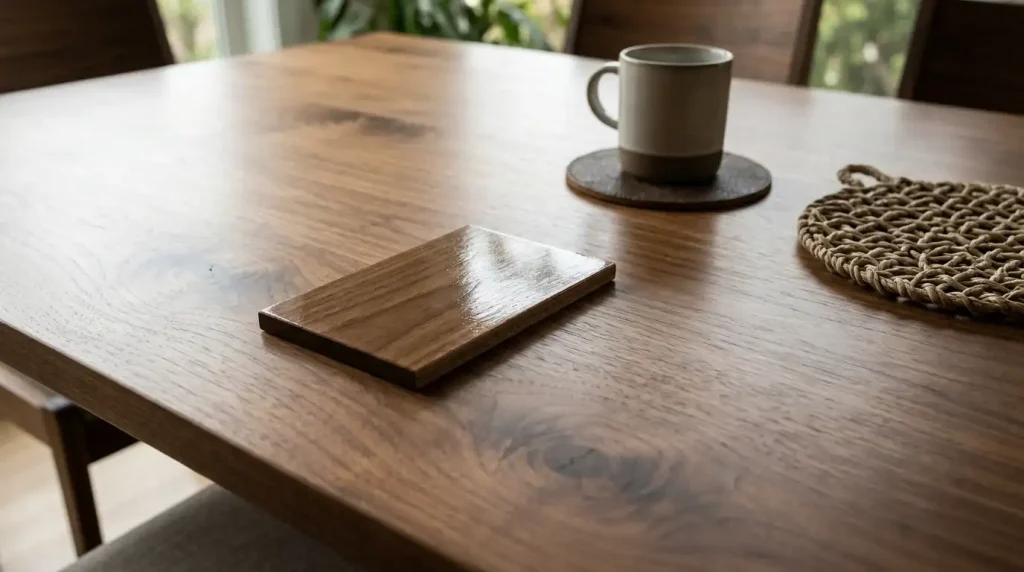
Yes, more than most people expect. The finish is the coat that meets every plate and elbow. A tough lacquer on veneer can resist spills better than a thin oil on solid wood.
Oil gives a natural, matt feel and can be refreshed. Lacquer forms a harder shield and wipes clean, but deep scratches may need a full refinish. Our wooden dining table buying guide compares finishes in more detail.
What Do They Cost?
Solid wood usually costs the most. You pay for the timber and the time it takes to make. Veneer often costs less. But premium veneer, with careful grain matching, is not cheap.
For wood-effect, we can share checked figures. On 13 October 2026, our wood-effect tables sold on their own were priced from £89.99 to £109.99. Sets with chairs or benches in this guide ranged from £174.99 to £254.99.
Cost is not only the price tag. A table you can refinish may be cheaper over twenty years. A budget table you may replace when you move or restyle may suit you better today. Both can be sensible choices.
Questions to Ask Before You Order Online
Photos can hide a lot. A short list of questions helps you check what you are really buying.
- What is the top made from: solid wood, veneer or wood-effect?
- What is the core board, if there is one?
- Which parts are solid, such as the legs or the frame?
- How thick is the top?
- What finish is on the surface?
- Does it arrive flat-packed, and is a second person needed to build it?
- What does the warranty cover?
- What are the returns terms, and who pays for postage?
If a seller cannot answer the first three, think twice.
Weight, Moving Home and Delivery
Weight affects daily life more than people expect. A solid wood top is heavy to carry up stairs. It is also harder to move if you rearrange the room or change home.
Lighter engineered tables are easier to handle. Many are flat-packed, so you build them in the room where they will live. The table frame often takes around 30 to 45 minutes to assemble, and a second pair of hands helps when you turn it upright.
Which One Suits Your Household?
|
If this sounds like you |
Look at |
|
You want one table for decades |
Solid wood |
|
You want real wood on top with less movement |
Veneer |
|
You have strong central heating |
Veneer or a stable engineered top |
|
You have young children and want easy wiping |
A sealed wood-effect top |
|
You may move or restyle within a few years |
Wood-effect |
|
You love sanding and oiling a table yourself |
Solid wood |
If you are weighing wood against glass, see our guide to glass vs wooden dining tables. If you are choosing a full set, our dining table and chairs set guide helps with sizes and seating.
Two Worked Examples
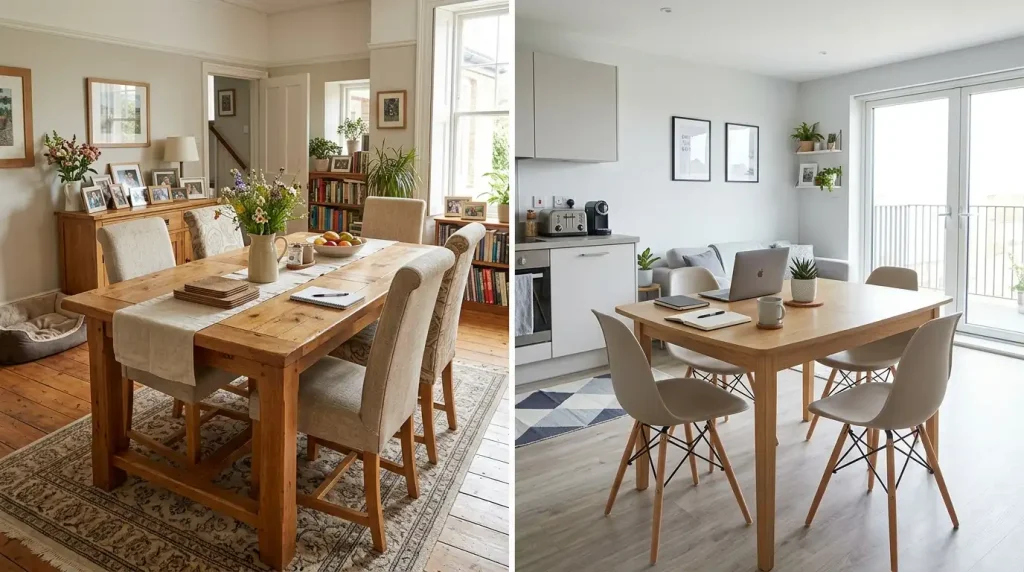
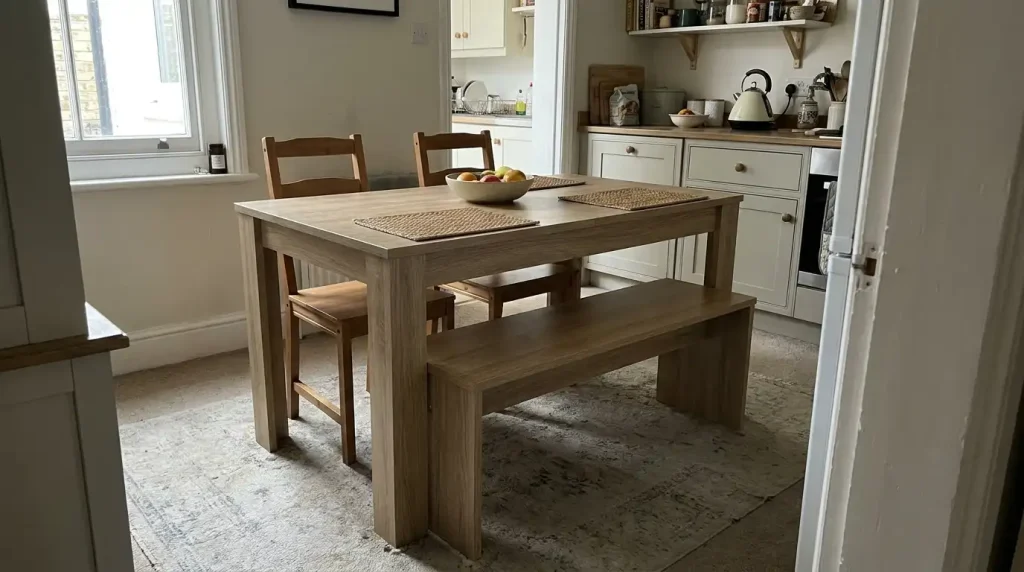
The long-term buyer. Sam wants a table for the next twenty years. She expects marks from homework and dinners. She chooses solid wood with a hard-wearing finish. It costs more, but she can sand it back later.
The first-flat buyer. Priya is in her first flat. She wants a warm oak look and a low price. She may move in three years. She picks a wood-effect table with an easy-wipe top. She uses trivets and mats and keeps it away from the radiator.
Four Myths Worth Dropping
“Veneer is fake wood.” It is real wood, cut very thin.
“Solid wood never fails.” It can crack or warp if it is dried out or soaked.
“Heavy means solid.” A thick board core can feel heavy too.
“Veneer peels within a year.” Good veneer, well glued and well finished, can last far longer. Poor quality and rough treatment are the real causes of peeling.
Looking After Each Type
The basics are the same. Wipe spills fast. Use mats and trivets. Keep the table away from heat and direct sun. Skip harsh sprays and rough pads.
Beyond that, solid wood may need re-oiling or waxing from time to time. Veneer needs gentle cleaning and no soaking at the edges. Wood-effect needs only a soft, damp cloth. The care notes on our product pages say to avoid harsh chemicals, abrasive materials, direct sunlight and heat sources.
Common Mistakes to Avoid
- Assuming “oak” in a title means solid oak.
- Judging a table by weight alone.
- Treating veneer as fake wood. It is real wood, just thin.
- Placing a hot pan straight on any top.
- Putting a solid wood table next to a radiator.
- Sanding veneer as hard as you would sand solid wood.
- Ignoring the core, especially if water may reach an edge.
Quick Checklist Before You Buy
- Find the exact material of the table top.
- Check whether “solid” refers to the top or only the legs.
- Look at the edge and the underside in photos.
- Decide whether you want to refinish the table one day.
- Check the care notes, warranty and returns terms.
- Read our guide to caring for a wooden dining table before it arrives.
Frequently Asked Questions
Is veneer real wood?
Yes. Veneer is a thin slice of real timber. It is glued to a core board, so the table is not solid wood all the way through.
Is solid wood always better than veneer?
Not always. Solid wood is easier to repair. Veneer is more stable and can suit warm homes better. Quality matters in both.
Is a veneer dining table cheaper than solid wood?
Often, yes. But good veneer with matched grain can still be pricey. Check the material and the finish, not only the price.
Can you sand a veneer table?
Only very lightly. The wood layer is thin, and hard sanding can reach the core. Solid wood can take far more sanding.
What is the difference between veneer and wood-effect?
Veneer has a real wood surface. Wood-effect has a printed pattern under a hard layer. Wood-effect is usually the lowest price.
Is an MDF dining table any good?
It can be, if you treat it well. It is flat and stable. It dislikes standing water, so wipe spills quickly and protect the edges.
Which is best for a family with young children?
A sealed top that wipes clean is the easiest. That can be solid wood with a tough finish, or a wood-effect top. Use mats for hot dishes either way.
Does solid wood warp?
It can, if it dries out or gets damp. Keep it away from radiators and out of strong sun. Good construction helps.
Choosing Construction That Matches the Way You Live
There is no single winner in the solid wood vs veneer dining table debate. Solid wood is the repairable, long-term option. Veneer is the stable, real-wood-surface option. Wood-effect is the easy, affordable option.
Start with the material line, not the colour name. Then think about heat, children, budget and how long you plan to keep the table. For the full picture, see our wooden dining table buying guide. When you are ready to shop, the five picks below are a good place to start.
Five Kosy Koala Wood-Effect Dining Tables and Sets
Every price below was checked directly on our product pages on 13 October 2026. Prices can change, so always confirm the current figure before ordering. All five have an MDF top with a melamine wood-effect finish. None is solid wood or veneer.
Dining Table Beige Wood Kitchen Place for 4 Seats, Dining Table Only (Beige H 75 x L 117 x W 77 cm)
Price: £89.99 (was £94.99). Size: 117 x 77 x 75 cm. Finish: light oak wood grain.
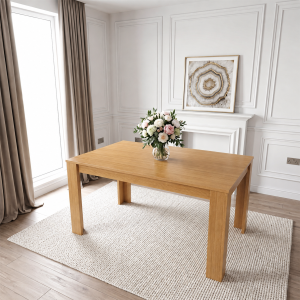
Best for: a low-cost first table. The surface wipes clean with a soft, damp cloth.
Shop: Dining Table Beige Wood Kitchen Place for 4 Seats (117 cm)
Dining Table Dark Grey Wood Kitchen Place for 6 Seats, Dining Table Only
Price: £109.99 (was £114.99). Size: 140 x 80 x 75 cm.
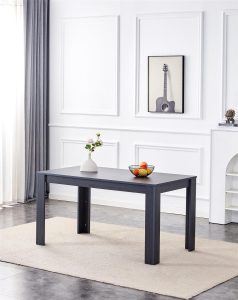
Finish: dark grey with a charcoal hint. Best for: a bigger table in a modern room. It is table only, so you add your own chairs.
Shop: Dining Table Dark Grey Wood Kitchen Place for 6 Seats
Dining Table and 2 Benches Oak Effect Table With 2 Black Velvet Benches Dining Room Furniture
Price: £174.99 (was £199.99). Table: 117 x 77 x 75 cm. Benches: 90 x 36 x 47 cm each.
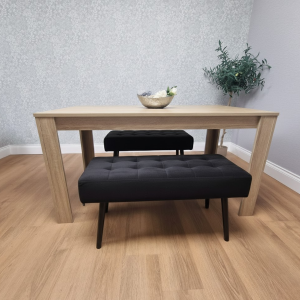
Best for: small spaces. The benches tuck under the table.
Shop: Dining Table and 2 Benches Oak Effect Table With 2 Black Velvet Benches
Dining Set of 4 Oak Effect Dining Table With 4 Grey Gem Patterned Chairs
Price: £184.99 (was £199.99). Table: 117 x 77 x 75 cm. Chairs: grey faux leather with diamond stitching.
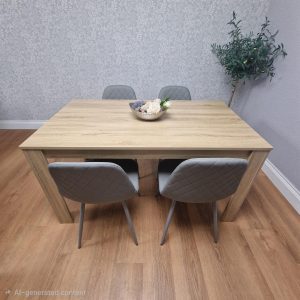
Best for: a ready-made four-seat set with a light oak look.
Shop: Dining Set of 4 Oak Effect Dining Table With 4 Grey Gem Patterned Chairs
Dining Set Of 5 Dining Table Set with 4 black Velvet Chairs And 1 Black Bench Dining Room Furniture
Price: £254.99 (was £289.99). Table: 117 x 77 x 75 cm, with powder-coated iron X-shaped legs.
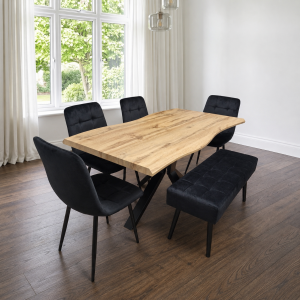
Best for: a mixed seating set, with four chairs and a bench. It is the largest set in this list.
Shop: Dining Set Of 5 Dining Table Set with 4 black Velvet Chairs And 1 Black Bench
Browse the full range in our wooden dining set collection.
About the author
This article was written by the Kosy Koala team. We design and source furniture for UK homes, with a focus on practical details that actually matter once a piece is in your room. Have a question about any product on this page? Get in touch through our About Us page.


 Dining Tables
 Dining Chairs

 Bed Frames
 Mattresses
 Bunk Beds
 Sofa & Sofa Beds


