

Blog
Glass vs Wooden Dining Table: Which Is Right for Your Home?

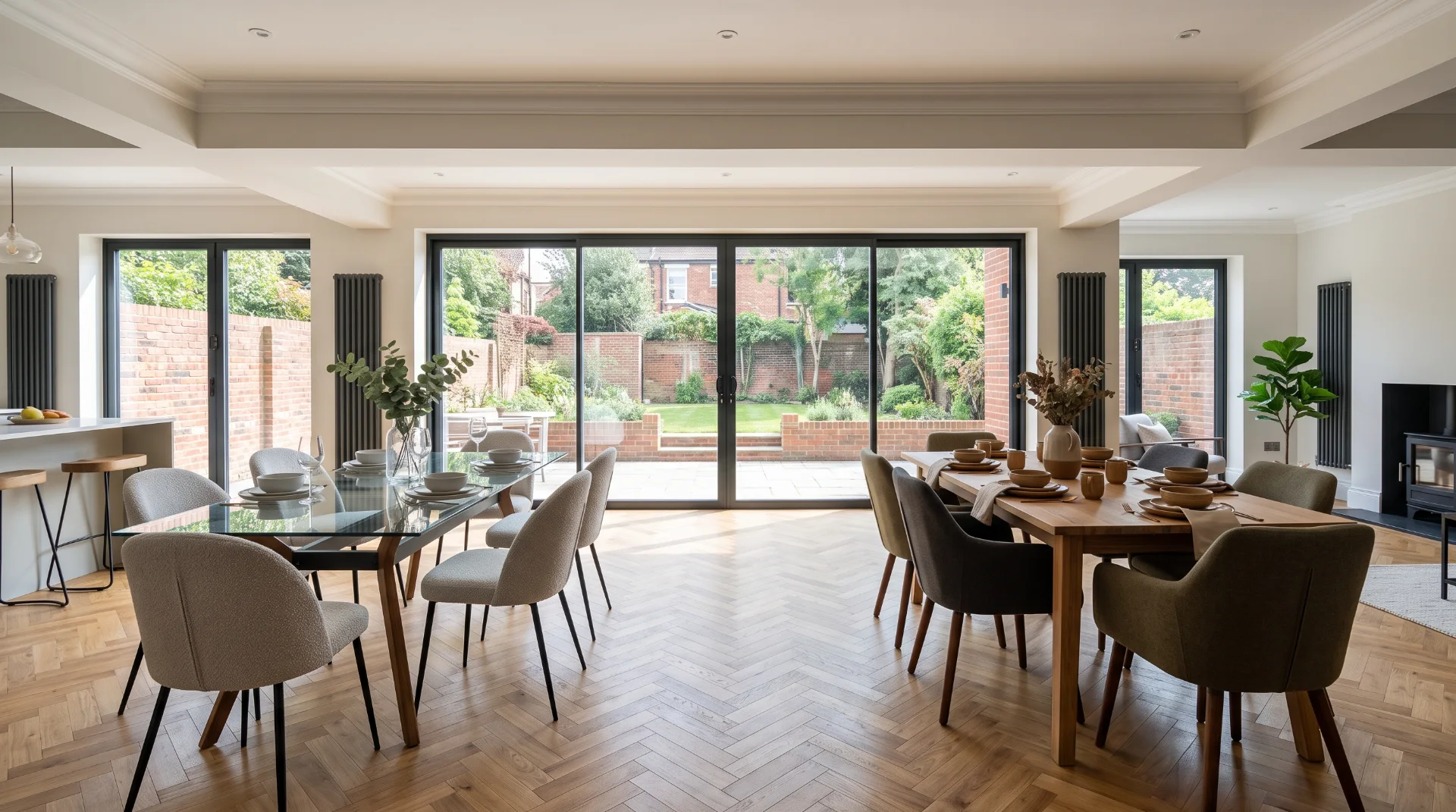
A dining table is one of the few pieces of furniture a household actually gathers around. Get the material wrong and you notice it every single day, in how the table looks, how it feels underfoot when a chair scrapes back, and how much time you spend wiping it down.
Glass and wood are the two most popular choices for UK dining rooms, and both do genuinely different jobs. This guide compares them properly, on space, durability, cleaning, safety, style and real UK prices, so you can choose based on how you actually live, not just how a showroom photo looks.
Quick answer: glass suits smaller rooms, darker spaces, and households that want an easy-clean, contemporary look. Wood suits larger rooms, households with young children or a busy daily routine, and anyone who wants a table that feels warm and permanent rather than sleek. Most genuine glass or wood dining sets in the UK market, table and matching chairs, fall between £160 and £310, depending on size and finish.
Who Each Material Actually Suits
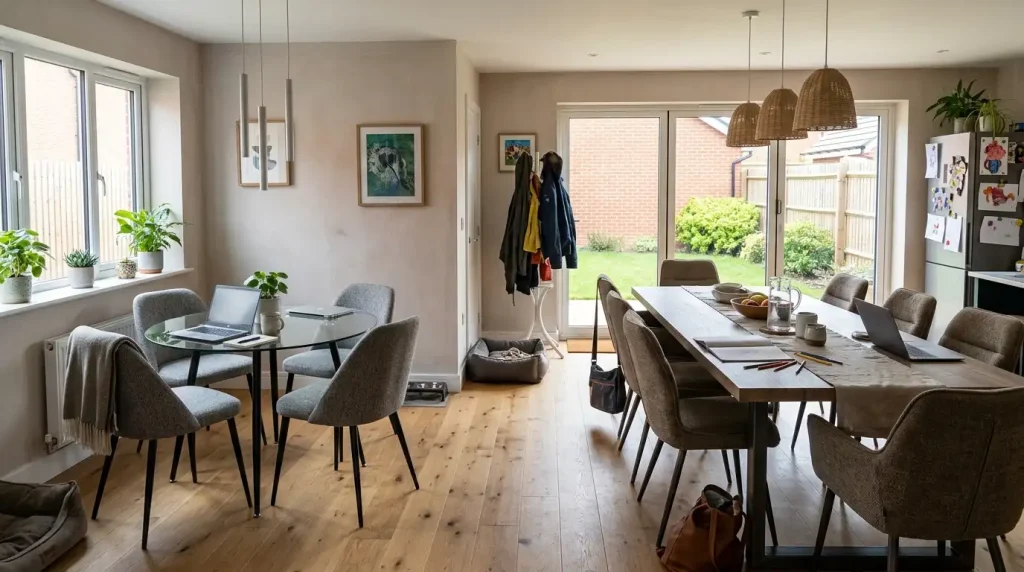
Neither material is objectively better. Each one solves a different problem, and the right choice depends on your room, your household, and your daily habits rather than a single design trend.
A glass dining table suits you if:
- Your dining space is small, narrow, or part of an open-plan kitchen diner where visual space matters
- Your room doesn’t get much natural light and you want the table to feel light rather than heavy
- You want a surface that wipes clean in seconds, without much upkeep
- You prefer a contemporary, modern look over a traditional one
A wooden dining table suits you if:
- You have a larger dedicated dining room where a substantial table feels right, not oversized
- You have young children, a busy household, or pets, and want a surface that’s more forgiving of knocks
- You want a warmer, more traditional look that ages naturally over years of use
- You’d rather deal with the occasional scratch than worry about a fragile surface
If you’re still deciding on the size you need before the material, our dining table and chairs buying guide is a good starting point, since seat count and room size usually narrow things down before material does.
Glass vs Wood at a Glance
Before going into detail on each factor, here’s how the two materials actually compare side by side.
|
Factor |
Glass |
Wood / Wood-Effect |
| Best suited to | Smaller or darker rooms | Larger, well-lit dining rooms |
| Daily cleaning | Quick wipe, but shows marks more often | Less frequent wiping, marks less visible |
| Resistance to knocks | Good against scratches, weaker against hard impact on an edge | More forgiving of drops and daily bumps |
| Family households | Fine once past toddler stage, with rounded corners | Slightly more forgiving for very young children |
| Style | Contemporary, visually light | Warm, traditional or transitional |
| Typical UK price (4 seater) | £160 to £230 | £175 to £230 |
| Typical UK price (6 seater) | £185 to £310 | £220 to £270 |
No single row decides the whole choice on its own. It’s worth reading them together against your own room and household, rather than picking whichever material wins the most rows in isolation.
Space and Light: Where Glass Genuinely Wins
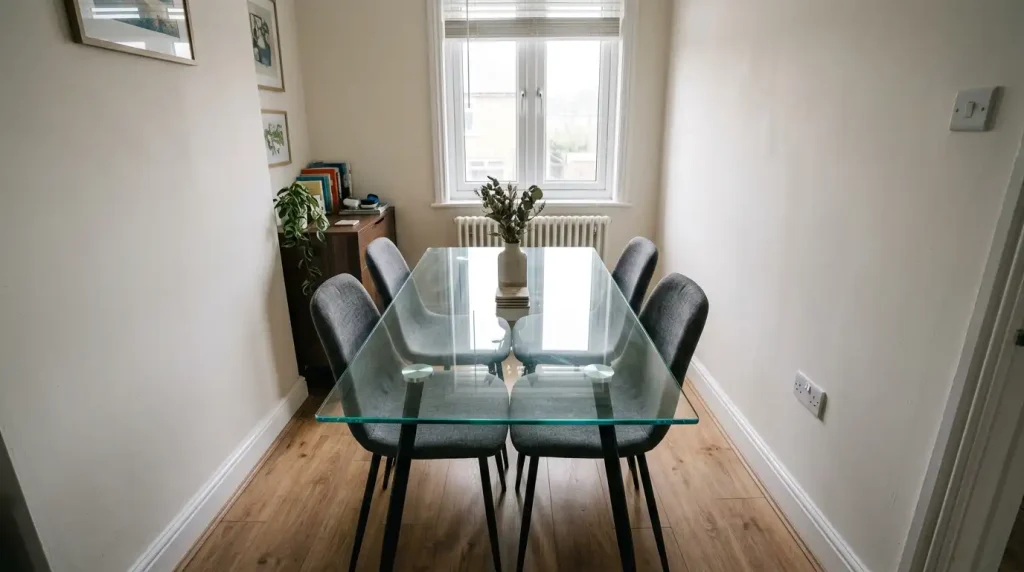
British dining rooms are often smaller than people expect, and light is precious for a lot of the year. This is where glass has a real, measurable advantage over wood.
A clear or tinted glass tabletop barely interrupts a room. The eye travels straight through it to the floor and the chair legs beneath, which makes a dining area feel more open than the same table would in a solid wood finish. This matters most in:
- Narrow terraced houses, where the dining area often sits in a corridor-like space
- Open-plan kitchen diners, where a heavy table can visually cut the room in two
- North-facing rooms, or anywhere natural light is limited
Key note: this effect works best with clear or lightly tinted glass. A very dark, opaque glass tabletop loses most of the “open room” benefit, since it stops reading as transparent from a normal viewing angle.
Wood doesn’t have this advantage, but it isn’t trying to. A solid wood or wood-effect table is meant to feel grounded and present in the room, which suits a larger dining room where you want the table to visually anchor the space rather than disappear into it.
Durability: How Each Material Actually Holds Up
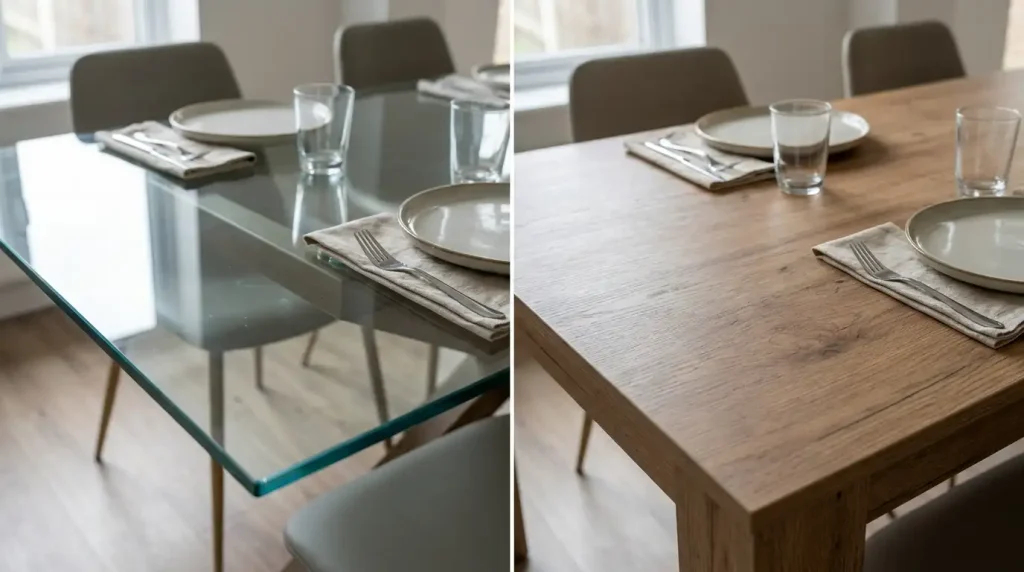
This is the area competitors online tend to gloss over with vague claims like “glass is fragile” or “wood lasts forever.” The reality is more specific than that, and it depends on what kind of glass or wood you’re actually buying.
Glass Dining Tables
Almost every glass dining table sold in the UK today uses tempered (toughened) glass, not standard annealed glass. Tempered glass is heat-treated to be significantly stronger than ordinary glass of the same thickness, and if it does fail, it’s designed to break into small, blunt granules rather than sharp shards. This is covered by British Standard BS EN 12150, which sets out how thermally toughened safety glass must perform.
In daily use, a tempered glass table top resists scratching from cutlery and plates reasonably well, and doesn’t stain from spills the way an untreated wood surface can. It’s less forgiving of a hard, direct impact on an edge or corner, which is the main durability trade-off against wood. Our dedicated guide on tempered glass dining tables explained covers exactly what this glass type means for everyday use, and what to check before you buy.
Wooden Dining Tables
Most affordable wooden dining tables in the UK use an oak-effect or wood-effect melamine-faced finish over an engineered wood core, rather than solid oak, which keeps prices accessible. This finish handles daily knocks well and is genuinely more forgiving of a dropped plate or a chair pushed back too quickly than glass is.
The trade-off is that a wood or wood-effect surface can show watermarks or heat marks if hot dishes are placed directly on it, and scratches, once they happen, are more visible on a matte wood-effect finish than on a glass surface. Neither material is indestructible. Both last for years with sensible daily care, covered in the maintenance section below.
Cleaning and Everyday Maintenance
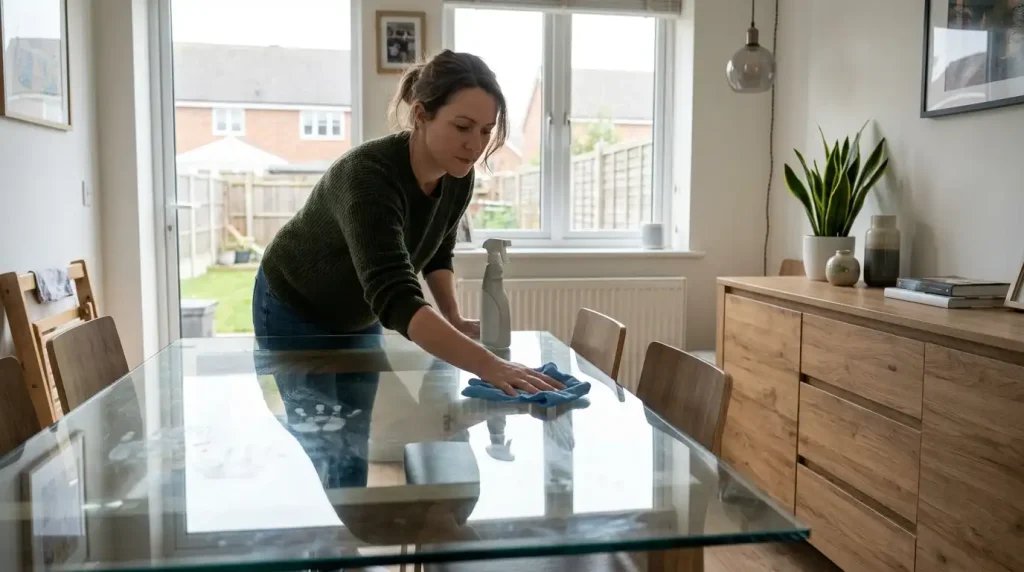
Cleaning routine is one of the most practical differences between the two materials, and it’s worth being honest about before you buy rather than after.
Glass tables wipe clean with a soft cloth and a standard glass cleaner or a mix of warm water and washing-up liquid. Fingerprints and smudges show more visibly on glass than on wood, particularly in direct sunlight, so a glass table generally needs wiping down more often to look its best, even though each wipe takes very little effort. Our full guide on how to clean and maintain a glass dining table covers the specific products and techniques that avoid streaking or scratching the surface.
Wooden and wood-effect tables need a damp cloth rather than a soaking wet one, and benefit from an occasional wipe with a suitable wood cleaner to keep the finish looking fresh. They show fingerprints and everyday dust far less than glass, which suits a household that wants a lower-maintenance daily routine, even if the occasional deeper clean takes slightly longer.
Key note: always use a coaster or table runner under hot dishes on either material. Glass can develop heat marks from very hot cookware placed directly on the surface, and wood-effect laminate can warp or discolour under sustained heat.
Is a Glass Dining Table Safe for Families With Children?
This is one of the most searched questions on this topic, and it deserves a straight answer rather than a vague reassurance.
Genuine UK glass dining tables use tempered safety glass, which is required to meet BS EN 12150 or an equivalent recognised standard. The UK’s General Product Safety Regulations place a legal duty on manufacturers and retailers to ensure that glass used in furniture is safe for its intended use, and enforcement authorities expect toughened safety glass in any table sold to consumers. If this glass does break, it fragments into small, granular pieces rather than long, sharp shards, which is the entire point of the standard.
That said, “safe under the relevant standard” and “ideal for a household with toddlers” aren’t quite the same question. A few practical points genuinely matter:
- Rounded corners reduce the risk of a bump turning into a cut, compared with a sharp 90-degree glass edge
- Table stability matters more than material for young children who might pull themselves up on furniture
- Supervision around any glass surface is sensible with very young children, the same way it would be around any breakable household item
Our dedicated guide on glass dining table safety for families with children goes through this in full, including which shapes and features to look for if this is your main concern. For most households past the toddler stage, a genuine tempered glass table poses no more everyday risk than a wooden one.
Style and How Each Material Reads in a Room
Material affects the overall feel of a dining room as much as it affects practicality, and it’s worth being clear-eyed about which look you actually want to live with.
Glass reads as modern and clean-lined. It suits a monochrome or neutral colour scheme particularly well, and pairs naturally with metal-framed chairs or bold upholstered seating, since the table itself stays visually quiet. A black glass dining table with dark chairs is a popular combination for a contemporary open-plan kitchen diner.
Wood reads as warmer and more traditional, even in a wood-effect finish rather than solid timber. It suits a household wanting the dining area to feel settled and lived-in rather than showroom-sharp, and it tends to pair well with upholstered chairs in a wider range of colours, since the table itself carries more visual warmth on its own.
If you’re torn on shape as well as material, our guide to round versus rectangular dining tables is worth reading alongside this one, since shape and material decisions often get made together.
Chairs: What Actually Pairs Well With Each Table Type
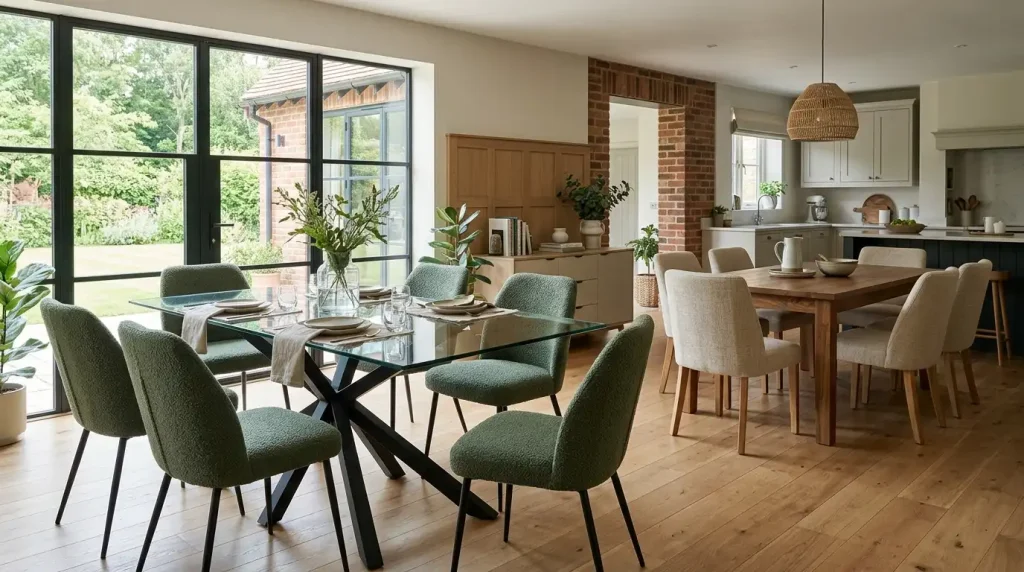
The chairs you choose affect both the practical performance and the overall look of the set as much as the table material itself.
Glass tables generally pair best with chairs that add some visual weight and colour, since the table itself is deliberately understated. Faux leather and velvet chairs both work well here, and a metal-legged chair frame often continues the contemporary look started by the glass top. Our dedicated guide on the best chairs to pair with a glass dining table covers this pairing decision specifically, including which chair colours and materials suit different glass finishes.
Wooden tables have more flexibility, since a wood or wood-effect surface already carries visual warmth, and works well with almost any chair material. Whichever table you choose, chair material itself is worth a proper look before deciding. Our full comparison of faux leather versus fabric dining chairs covers cleaning routines and daily wear in detail, and applies equally whether you end up choosing glass or wood for the table itself.
Price Expectations in the UK Market
Every price in this section was checked directly against live Kosy Koala listings before publishing. Prices can change, so always confirm the current figure on the product page before ordering.
|
Price band |
What you typically get |
| Under £180 | 4 seater glass or wood-effect table with faux leather chairs, tempered glass or melamine-faced finish |
| £180 to £230 | Better chair upholstery, velvet options, larger 4 seater or entry-level 6 seater sets |
| £230 to £280 | 6 seater sets as standard, oak-effect finishes, tufted velvet chairs |
| £280+ | Premium velvet upholstery, larger 6 seater glass or wood sets with more considered detailing |
As a general rule, glass and wood-effect sets sit in a similar price range for an equivalent seat count, so material alone rarely decides your budget. Chair upholstery and overall set size affect price more than whether the tabletop is glass or wood.
Two Worked Examples
Seeing these decisions applied to real rooms makes the choice clearer than a chart alone.
Example one: a young couple in a two-bedroom flat, with a dining area that shares space with the living room, roughly 2.6 by 2.4 metres. Natural light is limited, since the room only has one window. A 4-seater glass table with black or grey faux leather chairs suits this space well, keeping the room feeling open despite its modest size, and the easy-clean surface fits a household without much spare time for furniture upkeep.
Example two: a family of four in a three-bedroom semi, with a dedicated dining room measuring roughly 3.2 by 3 metres, and two children under ten. A 4- or 6-seater wood-effect table with faux leather chairs suits this household better, since the surface is more forgiving of dropped cutlery, spilled juice, and the general wear of daily family meals, without needing constant vigilance around a glass surface.
Neither family needed to compromise on style to make the practical choice. Both simply matched the material to their actual daily routine, not just a photo they liked.
What About a Hybrid Table (Glass Top, Wood Legs or Frame)?
A genuine third option exists, and it’s worth a mention since a fair number of shoppers land here once they’ve compared glass and wood directly. A hybrid table pairs a tempered glass top with a solid wood or wood-effect base and legs, aiming to combine the light, open look of glass with some of the visual warmth wood brings to a room.
In practice, a hybrid table behaves like glass for cleaning and daily wipe-downs, since that’s the surface you actually eat off, but the wooden frame adds a grounded, less minimal look underneath. It suits a household that likes glass practically but finds an all-glass table a little too stark for their room’s overall style. The trade-off is that you’re maintaining two materials rather than one, a wood frame that needs its own occasional care alongside a glass top.
If this sounds appealing, it’s worth applying the same room and household questions from the decision framework below to the table as a whole, rather than treating the glass top and wood base as separate decisions.
Moving House and Long-Term Value
This is a genuinely practical UK consideration that often gets missed. A large proportion of UK renters and homeowners move at least once every few years, and how a table handles that process matters more than it might seem at the point of buying.
Glass tabletops need to be removed from their frame and packed separately for a house move, wrapped and protected against chips or cracks in transit. This adds a small amount of extra care to moving day, though it’s entirely manageable if planned for in advance. Wood and wood-effect tables are generally more forgiving here, since there’s no risk of a cracked or chipped surface from an awkward lift onto a van, even if the table itself is heavier to carry as a single piece.
On resale or handing a table down within the household, a well-kept wood-effect table often shows its age more gracefully, since minor scuffs and light scratches tend to blend into the finish over time. A glass table that develops a scratch or chip tends to show it more starkly, simply because the surface is otherwise perfectly smooth and reflective. Neither point should be a deciding factor on its own, but it’s worth knowing if you expect to move house within the next few years, or if the table is likely to be passed on rather than replaced.
Common Mistakes to Avoid
- Choosing glass purely for looks in a household with very young children, without reading up on rounded-edge options and stability, covered in our glass safety guide
- Assuming all wood-effect tables are equally durable: finish quality varies between products, so check material descriptions rather than assuming
- Placing hot dishes directly on either surface, risking heat marks that are avoidable with a simple coaster or table runner
- Choosing chairs based on colour alone, without checking how the material pairs practically with a glass or wood tabletop, covered in our chair pairing guide
- Not checking the actual toughened glass certification on a very cheap glass table, since genuine UK retailers should be able to confirm compliance with BS EN 12150
A Quick Decision Framework
- Assess your room’s light and size first. A smaller or darker room tips the decision toward glass; a larger, well-lit room gives wood more of an advantage.
- Be honest about your household’s daily routine. Young children, pets, or a generally busy household favour wood’s forgiveness over glass’s fragility around hard knocks.
- Decide your cleaning tolerance. If you want a surface that wipes clean in seconds and don’t mind wiping it more often, glass fits. If you’d rather clean less frequently and can tolerate the odd smudge, wood suits you better.
- Match chairs to your chosen material, using our chair pairing guide for glass tables or our faux leather vs fabric comparison for either material.
- Set your budget using the price bands above, and shortlist within that range rather than starting from material alone.
Delivery and Moving a Table Into Your Home
Both materials arrive flat-packed in the vast majority of cases, but there’s a genuine practical difference worth planning for.
Glass tabletops usually arrive separately from the table frame, packaged flat and well protected, and need careful handling during assembly rather than lifting by the edges alone. Wood and wood-effect tabletops are generally more forgiving during unpacking and assembly, since there’s no risk of a chip or crack from an awkward lift. Whichever material you choose, our general flat-pack dining table assembly guide covers the full process step by step, including how to handle a glass top safely during the build.
Choosing With Confidence, Not Guesswork
There’s no single correct answer between glass and wood. The right choice comes down to your room’s size and light, your household’s daily routine, and how much time you want to spend on cleaning and upkeep. Get those three things right, and either material will earn its place in your home for years.
For the deeper dive into each part of this decision, our guides to glass safety for families, cleaning and maintenance, tempered glass explained, and chairs to pair with a glass table each cover one part of this guide in full depth. When you’re ready to compare real options, browse our glass dining sets and wooden dining sets at Kosy Koala.
Frequently Asked Questions
Is glass or wood better for a dining table?
Neither is objectively better. Glass suits smaller or darker rooms and households wanting an easy-clean, contemporary look. Wood suits larger rooms and households wanting a warmer, more forgiving surface for daily family use.
Is a glass dining table safe for families with children?
Genuine UK glass dining tables use tempered safety glass, meeting BS EN 12150, which breaks into small, blunt granules rather than sharp shards if damaged. Rounded corners and general supervision around young children are still sensible, the same as with any breakable item in the home.
Do glass dining tables scratch easily?
Tempered glass resists everyday scratching from cutlery and plates reasonably well, though a hard, direct impact on an edge is more likely to cause damage than on a wood-effect surface.
How do you clean a glass dining table?
A soft cloth with a standard glass cleaner, or warm water and washing-up liquid, keeps a glass tabletop streak-free. Our full cleaning guide covers the specific technique in more depth.
Which lasts longer, a glass or wooden dining table?
Both last for many years with sensible daily care. Wood tolerates knocks and daily wear slightly better, while glass resists staining and shows less long-term surface wear from cleaning.
Do wooden dining tables need much maintenance?
An occasional wipe with a suitable wood cleaner and a damp cloth for daily use is generally enough for a wood-effect finish. They need less frequent wiping than glass, since fingerprints and dust show far less.
What is tempered glass, and is it the same as normal glass?
Tempered, or toughened, glass is heat-treated to be significantly stronger than standard glass, and is designed to break into small, blunt pieces rather than sharp shards if it ever fails. Our tempered glass explained guide covers this in full detail.
5 Kosy Koala Dining Sets Worth Considering
Every price below was checked directly on our site before this guide was published. Prices can change, so always confirm the current figure on the product page before ordering.
Black Glass Dining Table Set With 4 Black Chairs
Price: £179.99. Table: tempered black glass. Chairs: faux leather, wipeable finish.
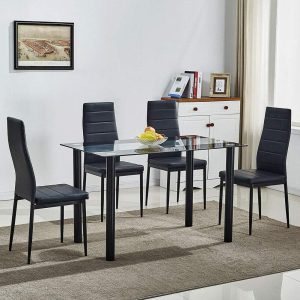
Best Budget Glass A genuinely affordable route into a 4 seater glass set, with practical, easy-clean chairs suited to daily use.
Shop: Black Glass Dining Table Set With 4 Black Chairs
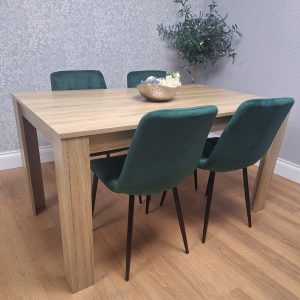
Dining Set of 4 Oak Effect Dining Table With 4 Green Velvet Chairs
Price: £179.99 (was £199.99). Table: oak-effect melamine finish. Chairs: green velvet.
Next Day Delivery – 14
Best Budget Wood A warm, traditional alternative at the same price point as our budget glass pick above, with a softer upholstered chair finish.
Shop: Dining Set of 4 Oak Effect Dining Table With 4 Green Velvet Chairs
Dining Table And 4 Chairs Grey Round Table With 4 Grey Velvet Chairs
Price: £179.99. Table: round tempered glass. Chairs: grey velvet.
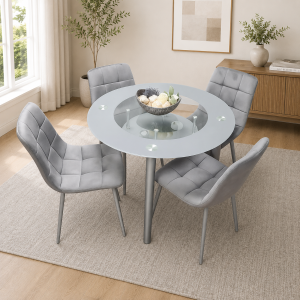
Best for Small Rooms A round glass top keeps a compact dining area feeling open, paired with softer velvet seating for everyday comfort.
Shop: Dining Table And 4 Chairs Grey Round Table
Arrow Charcoal Dining Table Set With 6 Grey Velvet Chairs
Price: £244.99. Table: charcoal wood-effect finish. Chairs: grey velvet.
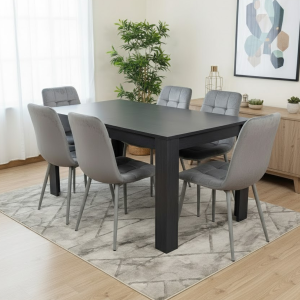
Best Family Wood Set A full 6 seater wood-effect set with a forgiving finish, suited to a busy household seating six people daily.
Shop: Arrow Charcoal Dining Table Set With 6 Grey Velvet Chairs
Black Glass Dining Table Set With 6 Black Velvet Chairs
Price: £305.99. Table: tempered black glass, 6 seater. Chairs: black velvet.
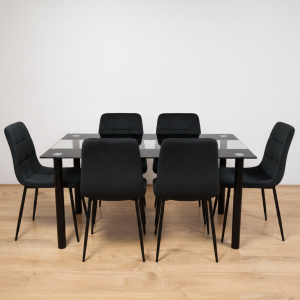
Best Statement Glass Set A premium 6 seater glass option for a household that wants the contemporary glass look at full family scale.
Shop: Black Glass Dining Table Set With 6 Black Velvet Chairs
Browse the full ranges at glass dining sets and wooden dining sets, or see every option in our dining table sets collection.
About the author
This article was written by the Kosy Koala Team. We create practical furniture guides to help UK shoppers understand key buying considerations, compare options, and choose furniture that suits their home. Have a question about any product on this page? Get in touch through our About Us page.


 Dining Tables
 Dining Chairs

 Bed Frames
 Mattresses
 Bunk Beds
 Sofa & Sofa Beds


