

Blog
Hosting at Home: Choosing a 6 Seater Set for Dinner Parties

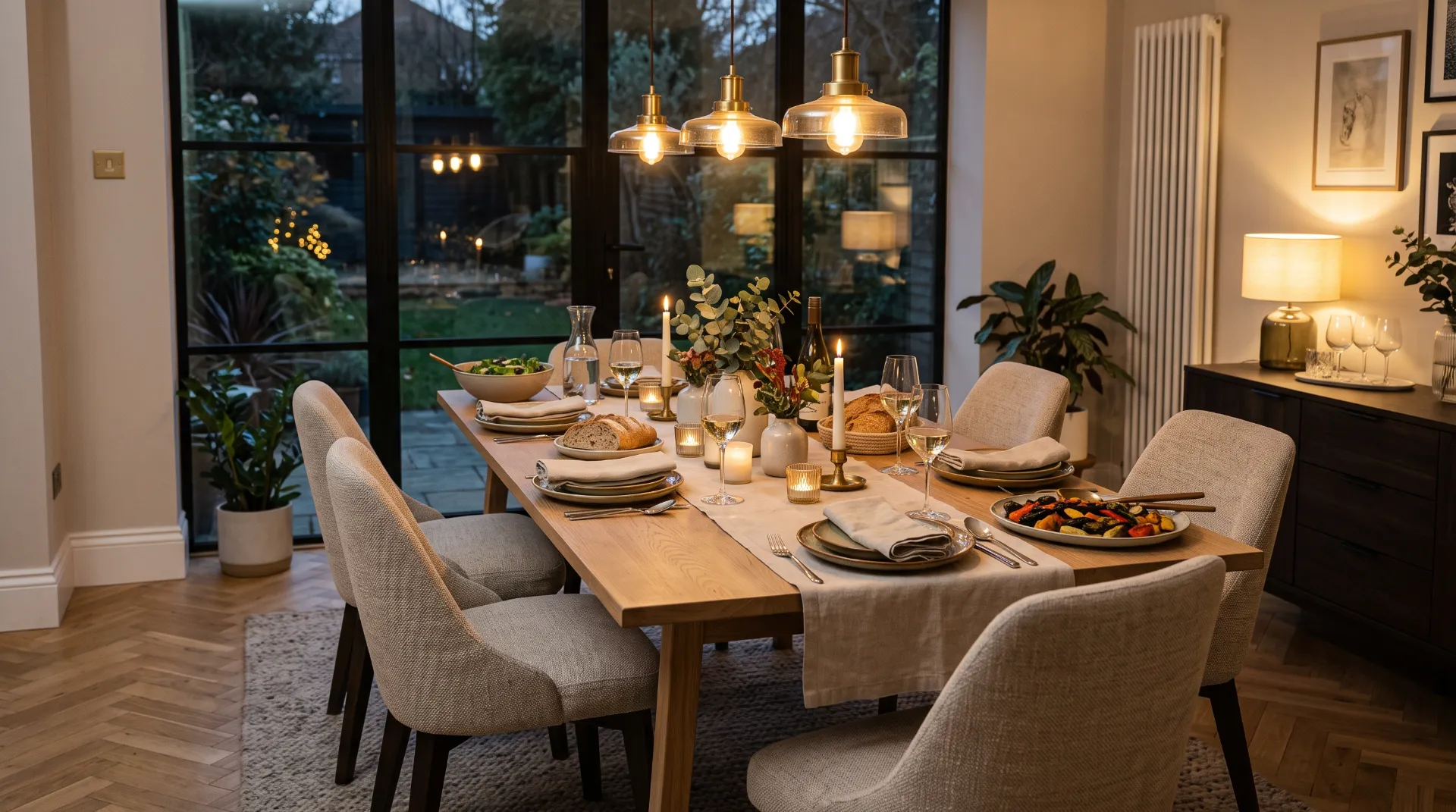
An everyday table and a table built for entertaining are asked to do different jobs. One handles a quick weekday meal. The other holds a table for three hours, carries several courses, and needs to feel just as good at the start of the evening as it does after the last course is cleared.
This guide focuses specifically on that second job: choosing a 6 seater set that genuinely works for hosting, not just for daily family meals. If you have not yet settled on the basics of size and shape, our complete 6 seater buying guide covers those foundations. This article picks up from there, focused purely on what changes when the table is set for guests.
Quick answer: for genuine entertaining, prioritise a rectangular table with enough depth for serving dishes alongside place settings, comfortable chairs with proper back support rather than a bench, and an easy-clean material that can handle wine and candle wax without lasting marks. A little extra breathing room between guests, closer to 65 to 70cm per person rather than the everyday 60cm minimum, makes a genuine difference over a longer evening.
Why Entertaining Changes the Sizing Maths
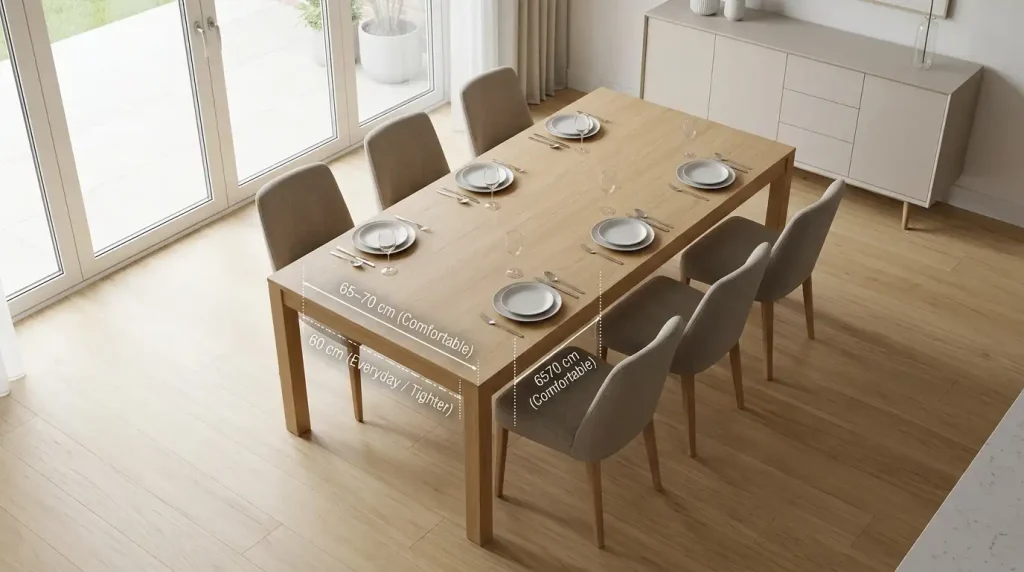
Everyday dining and hosting a dinner party use the same table very differently, and it is worth understanding why before choosing based on daily use alone.
A weekday meal is quick. Plates go down, the meal happens, plates come up. A dinner party runs for hours, with drinks before the meal, several courses during it, and often coffee or dessert lingering well past the main course. Guests lean back, gesture while talking, and generally occupy more space around the table than they would during a fifteen-minute weekday dinner.
This is why the standard 60cm per-seat spacing covered in our dining table dimensions guide is worth stretching slightly for genuine entertaining. Aim for 65 to 70cm per person where your table length allows it, rather than the tighter minimum that works perfectly well for a quick family meal.
Serving Space: The Detail Everyday Meals Do Not Need
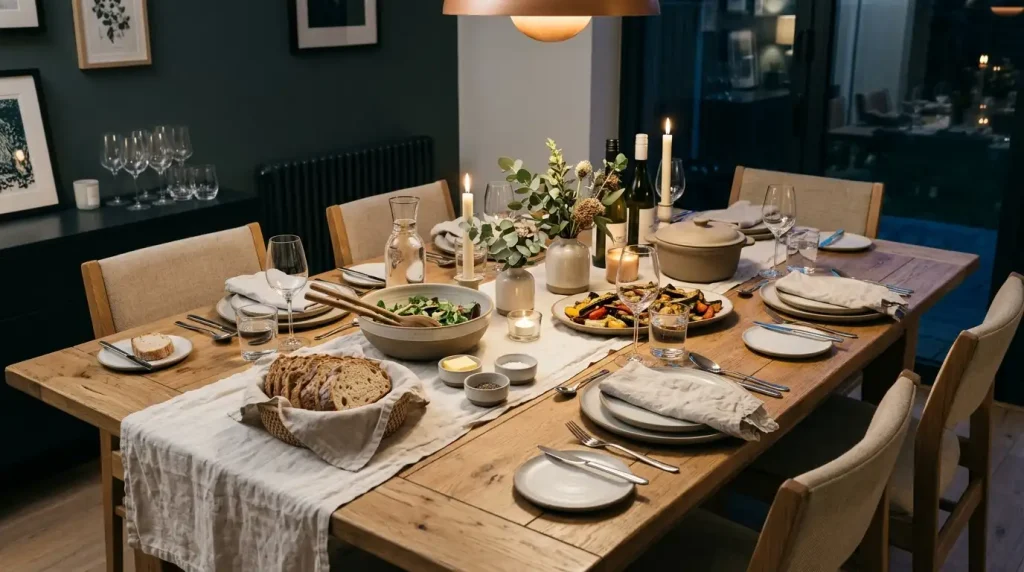
This is one of the clearest differences between an everyday table and one built for hosting. A quick family meal rarely needs much beyond individual plates and glasses. A dinner party genuinely does, serving dishes, a centrepiece, extra glasses, bread, condiments, all competing for space alongside six individual place settings.
As covered in our dining table dimensions guide, each place setting needs roughly 40cm of depth from the table’s edge toward the centre. For entertaining specifically, the centre space left over after both sides’ place settings matters more than it does for everyday use, since this is where serving dishes actually sit. A table at least 85 to 90cm wide, rather than the 70 to 80cm that works fine for daily meals, gives this centre space genuine breathing room during a multi-course dinner.
Chair Spacing for Longer, More Relaxed Meals
A chair that feels perfectly adequate for a twenty-minute weekday meal can feel noticeably tighter three hours into a dinner party, once guests have leaned back, crossed their legs, or simply settled in for a longer conversation.
This is less about the chair itself and more about the spacing around it. The extra 5 to 10cm of per-person width covered earlier gives guests room to shift position without their elbow meeting the next person’s throughout a long evening. It is a small adjustment, but it is the kind of detail that separates a dinner party that feels relaxed from one where guests are quietly wishing for a bit more room by the second course.
Shape and Conversation: Round vs Rectangular for Guests
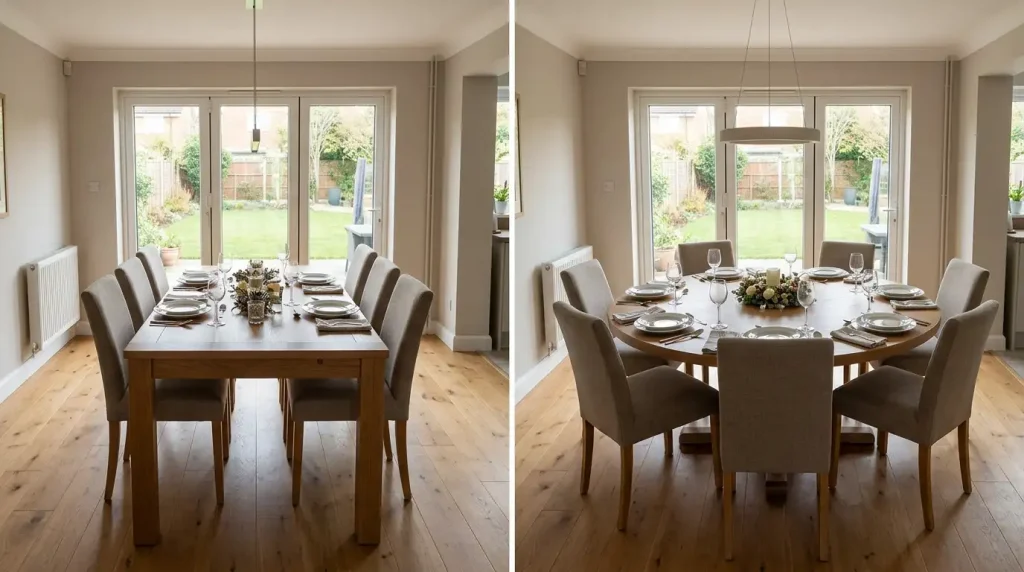
Shape genuinely affects how a dinner party feels, not just how the table fits the room. A rectangular table, the standard choice for six guests, creates a natural flow of conversation along each side, with the ends often becoming the more prominent seats at the table. This suits a dinner party with a clear host and a slightly more structured feel to the evening.
A round table, though less common at six seats due to the diameter it requires, removes this structure entirely. Every guest sits at an equal distance from the centre, with no natural head of the table, which tends to suit a more relaxed, egalitarian dinner party where conversation flows more freely across the whole group rather than concentrating along two long sides. Our round vs rectangular comparison, written for the 4 seater size, covers the underlying reasoning behind this effect in more depth, and the same principles apply at six seats, though a round table this size needs considerably more floor space to accommodate.
For most UK homes hosting six guests, a rectangular table remains the more practical choice simply due to the space a genuinely large round table demands, but it is worth knowing what you are trading away in atmosphere by choosing practicality over the round table’s more relaxed feel.
Material That Survives a Dinner Party
Entertaining brings a specific kind of mess that everyday family meals rarely produce in the same volume: wine, candle wax, and richer food that stains more readily than a typical weekday meal. Material choice matters more here than it does for daily use.
Tempered glass and melamine laminated MDF both wipe clean easily, including wine and wax, which can be lifted from a hard, non-porous surface far more easily than from an absorbent material. Our black glass rectangle dining table with six black chairs shows this practicality well, giving a genuinely elegant look for entertaining without the anxiety a more delicate surface can bring during a lively dinner.
Our full comparison of faux leather versus fabric dining chairs covers this same trade-off for seating specifically, worth reading if you are deciding between practicality and the softer, more elevated feel fabric brings to an entertaining setup.
Lighting for Evening Entertaining
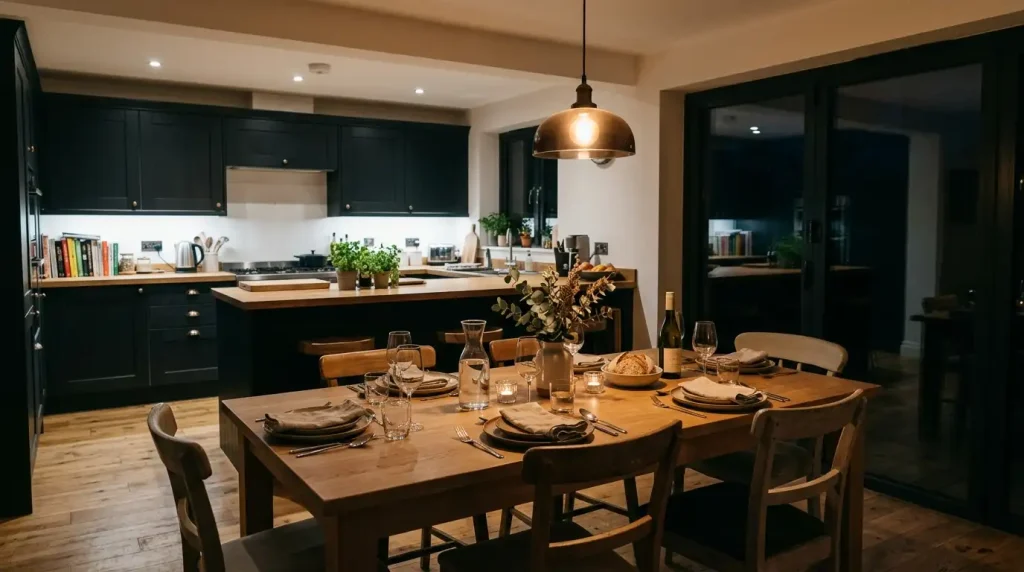
A dinner party is overwhelmingly an evening occasion, which makes lighting a genuinely important part of choosing how the table will actually be used, separate from the table itself.
A dimmable pendant light, hung at the standard 70 to 80cm above the tabletop, lets you shift the mood from bright and functional during the meal’s early stages to soft and relaxed once dessert and coffee arrive. A warmer light temperature generally suits an evening dinner party better than a cool white, since it flatters both food and faces over a longer, more sociable evening. If your table sits within an open-plan kitchen diner, dimming the dining zone separately from the kitchen’s own task lighting helps the two areas feel genuinely distinct once guests are seated.
Bench or All Chairs for Guests
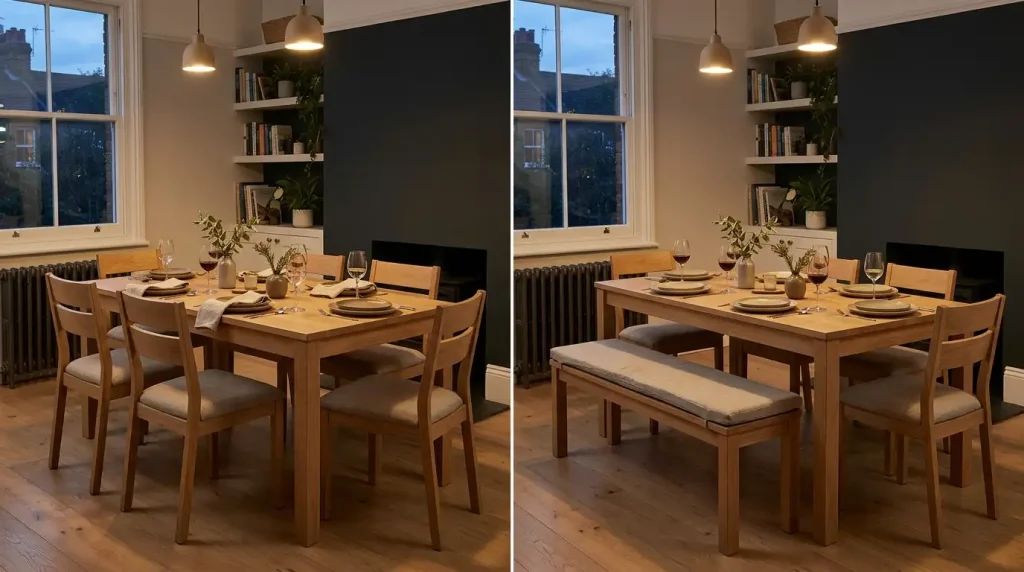
This decision matters more for entertaining than it does for everyday use. A bench, covered in full in our 6 seater sets with a bench guide, suits a casual, family-style dinner party well, but it asks more of guests than individual chairs do, no back support, and less independence to get up and move around during a longer evening.
For a more formal dinner party, six individual chairs generally serve guests better, giving everyone equal comfort and the ability to leave the table without disturbing others nearby. For a relaxed, casual gathering among close friends, a bench on one side can add a comfortable, informal feel that suits the occasion just as well. Our dark grey dining table with four blue velvet chairs and a bench works well for this more relaxed style of hosting, giving four proper seats for guests staying longest at the table alongside a flexible bench.
Noise and Comfort Over a Long Evening
A detail rarely mentioned in buying guides, but genuinely noticeable during a lively dinner party: chair legs scraping against a hard floor every time someone shifts position or leaves the table. Adjustable protective feet, standard on most well-built dining chairs, reduce this considerably and are worth checking for specifically if your dining area sits on a hard floor rather than carpet.
Comfort over a long evening also comes down to the chair’s own proportions, covered in our dining table and chairs buying guide. A seat height and table height matched correctly, as most genuine 6-seater sets already are, prevents the kind of low-level discomfort that only becomes noticeable after guests have been seated for an hour or more.
The Multi-Course Reality: Clearing and Resetting
A dinner party rarely stays static from start to finish. Starters arrive and clear. The main course brings more dishes to the table. Dessert resets the surface again. This constant movement of plates and serving dishes is worth considering when choosing a table, separate from how it looks laid for a single course in a product photo.
A table with the extra centre depth covered earlier in this guide handles this far more comfortably than a narrower table, since incoming dishes have somewhere to go without immediately displacing what is already on the table. This is one of the more practical, if less glamorous, reasons a slightly wider table genuinely earns its place for a household that hosts regularly.
Styling the Table Between Courses
A dinner party table rarely stays in one configuration all evening, and a little planning here goes further than most hosts expect. Before guests arrive, lay the table with only what the first course needs, plus a simple centrepiece, rather than every serving dish at once. This keeps the table looking considered rather than cluttered from the start, and leaves genuine room to bring in main course dishes as the meal progresses.
Keep a clear spot, even a small one, near the centre of the table for a shared dish or two to land temporarily while plates are being served, rather than trying to fit everything permanently alongside six place settings. This single habit does more to keep a table feeling spacious throughout a multi-course meal than almost any furniture choice alone.
A Worked Example
Consider a household that hosts a dinner party for six roughly once a month, alternating between close friends and slightly larger family gatherings. Their dining area sits within an open-plan kitchen diner, comfortably fitting a standard 140cm table with room to spare on most sides.
For this household, a rectangular table with six individual chairs makes more sense than a bench configuration, since their gatherings often run three hours or more, well past the point where a lack of back support becomes noticeable. A glass or laminated finish suits their frequency of hosting, since wine and richer food are a near-monthly reality rather than a rare occasion. Investing in a dimmable pendant light above the table, a modest one-off cost, pays off every single time they host, letting the space shift from a bright family dinner earlier in the evening to a softer, more relaxed atmosphere once dessert arrives.
This is the kind of household where the extra considerations in this guide, beyond the basic sizing covered in our main buying guide, genuinely earn their place, since entertaining is frequent enough to make each of these small decisions add up over a year of regular use.
Common Mistakes When Choosing a Table for Entertaining
- Sizing purely for everyday use, without considering the extra breathing room and serving space genuine entertaining actually needs.
- Choosing a bench for a formal dinner party, when guests may prefer the comfort and independence individual chairs provide over a longer evening.
- Overlooking material practicality, choosing a delicate fabric or finish without considering wine, candle wax, and richer food that entertaining specifically brings.
- Ignoring lighting entirely, missing the chance to shift the table’s mood across a long evening with something as simple as a dimmable pendant.
- Forgetting chair leg noise on hard flooring, a small detail that becomes genuinely noticeable during a lively, sociable dinner party.
A Quick Decision Framework
- How often do you genuinely host?
- If entertaining is a regular, not occasional, part of your life, size and material choices matter more than they would for rare use.
- Formal or casual?
- A formal dinner party favours individual chairs and a rectangular table. A casual gathering can comfortably suit a bench and a more relaxed layout.
- Does your table have enough centre depth for serving dishes?
- Check this specifically, beyond the standard per-seat spacing covered in our dimensions guide.
- Is the material practical for wine and rich food?
- Glass and laminated finishes handle this far more comfortably than a delicate surface.
- Have you thought about lighting?
- A dimmable pendant light does genuine work in shifting the table’s atmosphere across a long evening.
Frequently Asked Questions
How much space should I allow per guest for a dinner party, compared to everyday meals?
Aim for 65 to 70cm per person for entertaining, slightly more than the standard 60cm minimum that works well for quick, everyday meals.
Is a round or rectangular table better for hosting six guests?
Rectangular is more practical for most UK homes, since a round table wide enough for six comfortably needs considerably more floor space. Round tables do offer a more relaxed, equal conversation dynamic where space allows.
Should I choose a bench or all chairs for a dinner party?
Individual chairs generally suit a more formal dinner party better, giving every guest equal comfort and independence. A bench works well for a casual, informal gathering among close friends.
What table material is most practical for entertaining?
Tempered glass and melamine-laminated MDF both wipe clean easily, including wine and candle wax, making them more practical than a delicate or highly absorbent surface for regular hosting.
Does lighting really make a difference when entertaining?
Yes. A dimmable pendant light lets you shift the table’s mood from bright and functional during the meal to soft and relaxed for dessert and coffee, genuinely changing how an evening feels.
How much serving space do I need on the table itself?
A table at least 85 to 90cm wide gives comfortable centre space for serving dishes alongside place settings, more generous than the narrower widths that suit everyday meals well.
How should I lay the table before guests arrive for a multi-course meal?
Set out only what the first course needs, plus a simple centrepiece, rather than every serving dish at once. Keep a small clear space near the centre for dishes to land as the meal progresses.
Is it worth buying a separate table specifically for entertaining?
Generally not necessary. A well-chosen 6-seater set that follows the guidance in this article, with adequate depth, practical material, and comfortable chairs, handles both everyday meals and genuine entertaining without needing a second table.
Setting a Table That Works All Evening
A table built for entertaining does more than seat six people. It holds up through hours of conversation, several courses, and the particular kind of mess a good dinner party brings. Choose a little extra breathing room per guest, a material that shrugs off wine and wax, and lighting that can shift with the evening, and the table earns its place at the centre of the occasion rather than quietly working against it.
For the fuller picture on choosing your 6-seater set from the ground up, our complete buying guide and our guide to faux leather versus fabric chairs both cover decisions that matter just as much for hosting as for daily use. When you are ready to compare options for your own entertaining style, browse the full 6-seater dining set range at Kosy Koala.
Five Kosy Koala 6 Seater Sets for Entertaining
Every price below was checked directly on our site before this guide was published. Prices can change, so always confirm the current figure on the product page before ordering.
Black Clear Glass Dining Table With 6 Black Velvet Chairs
Price: £249.99 (was £279.99) Best for a Formal Dinner Party
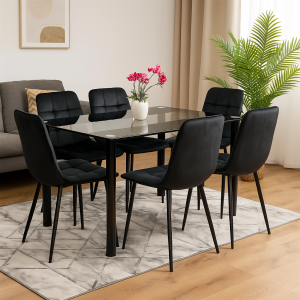
Genuinely comfortable velvet seating on all six chairs, paired with an easy-clean glass top that handles wine and rich food without lasting marks.
Shop: Black Clear Glass Dining Table With 6 Black Velvet Chairs
Oak Effect Dining Table With 6 Grey Velvet Chairs
Price: £264.99 (was £299.99) Best for a Warm, Relaxed Gathering
A wood-effect finish that suits a longer, more settled evening, paired with tufted velvet chairs for genuine comfort across a multi-course meal.
Shop: Oak Effect Dining Table With 6 Grey Velvet Chairs
Dark Grey Dining Table With 4 Blue Velvet Chairs and 1 Bench
Price: £239.99 Best for Flexible, Casual Hosting
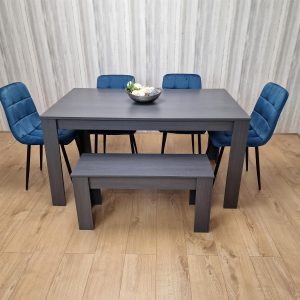
A relaxed configuration suited to informal entertaining among close friends, with proper chairs for guests staying longest and a bench for easy, flexible seating.
Shop: Dark Grey Dining Table With 4 Blue Velvet Chairs and 1 Bench
Grey Glass Dining Table With 4 Grey Chairs and Grey Bench
Price: £194.99 Best Value for Regular Entertaining
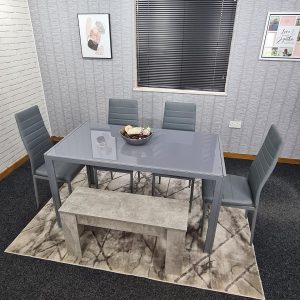
An accessible price point for a household that hosts often, with a wipeable glass top and easy-clean chairs built for repeated use.
Shop: Grey Glass Dining Table With 4 Grey Chairs and Grey Bench
Black Glass Rectangle Dining Table With 6 Black Velvet Chairs
Price: £254.99 (was £289.99) Best Statement Piece
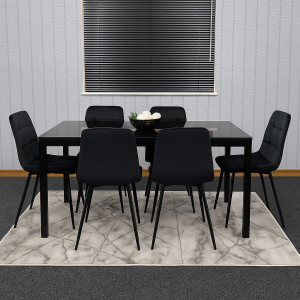
A bold, monochrome look with genuine presence, suited to a household that wants their table to feel like an occasion in itself.
Shop: Black Glass Rectangle Dining Table With 6 Black Velvet Chairs
Browse the full range at Kos Ykoala 6-seater-dining set.
About the author
This article was written by the Kosy Koala team. We design and source furniture for UK homes, with a focus on practical details that actually matter once a piece is in your room. Have a question about any product on this page? Get in touch through our About Us page.


 Dining Tables
 Dining Chairs

 Bed Frames
 Mattresses
 Bunk Beds
 Sofa & Sofa Beds


