

Blog
Is a Glass Dining Table Safe for Families With Children?

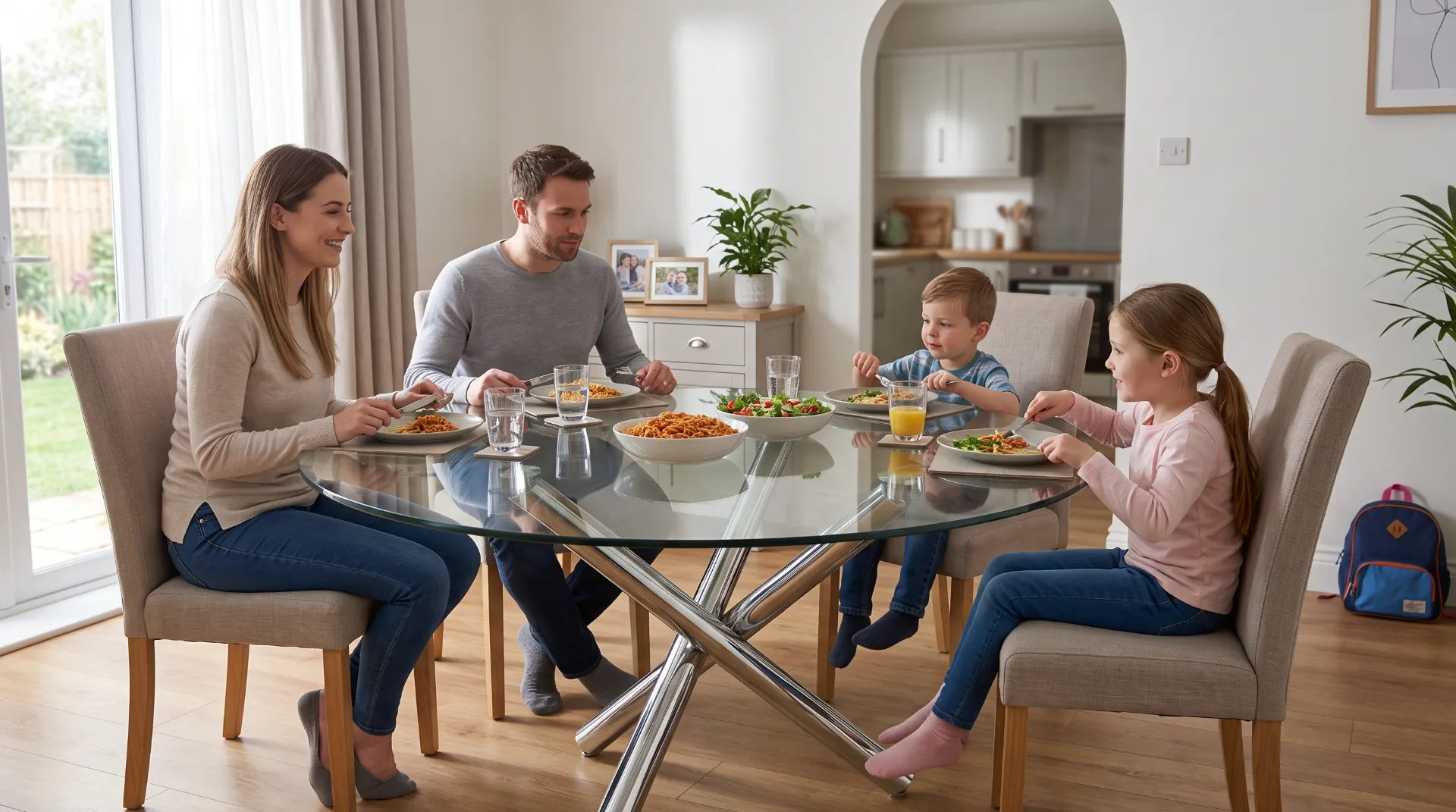
Is a glass dining table safe for kids? It’s one of the first questions parents ask before buying one, and it deserves a straight, honest answer rather than a vague reassurance from a sales page. The short version is yes, a genuine UK glass dining table is safe for most families, provided it uses proper tempered glass and you take a few sensible precautions around very young children.
This guide goes further than that short answer. It covers what the relevant UK standards actually require, how table shape and glass colour affect the real, practical risk, and what changes as your children get older. If you’re still deciding between materials altogether, our glass vs wooden dining table guide covers that wider decision in full.
Quick answer: genuine UK glass dining tables use tempered safety glass, which is required to meet BS 7376 for glass in tables and BS EN 12150 for the toughening process itself. This glass is significantly stronger than ordinary glass, and if it ever does fail, it breaks into small, blunt granules rather than sharp shards. Past the toddler stage, a properly specified glass table carries no more everyday risk than a wooden one. For households with children under three, a round table with no sharp corners, and a stable, well-secured base, is the safer configuration.
Is a Glass Dining Table Safe for Kids? What the Standards Actually Say
This is worth answering properly rather than with a marketing line, since it’s the question that actually matters before you buy.
In the UK, glass used in furniture falls under the General Product Safety Regulations 2005, which place a legal duty on manufacturers and retailers to make sure any product sold to consumers is genuinely safe for its intended use. For dining tables specifically, this is backed by two more specific standards. BS 7376 covers the inclusion of glass in the construction of tables, and BS EN 12150 sets out how thermally toughened safety glass must perform once it’s manufactured. Genuine tempered glass carries an etched mark, usually on a corner or edge, confirming it meets this standard.
Put simply, a UK retailer selling a dining table with a glass top has a legal obligation to use glass that meets these standards. This is very different from an unbranded or unclear import, where that guarantee may not hold.
Key note: if you’re ever unsure whether a table uses genuine tempered glass, a reputable UK retailer should be able to confirm this directly. It’s a reasonable question to ask before you buy, not an unusual one.
What Tempered Glass Actually Means for Family Safety
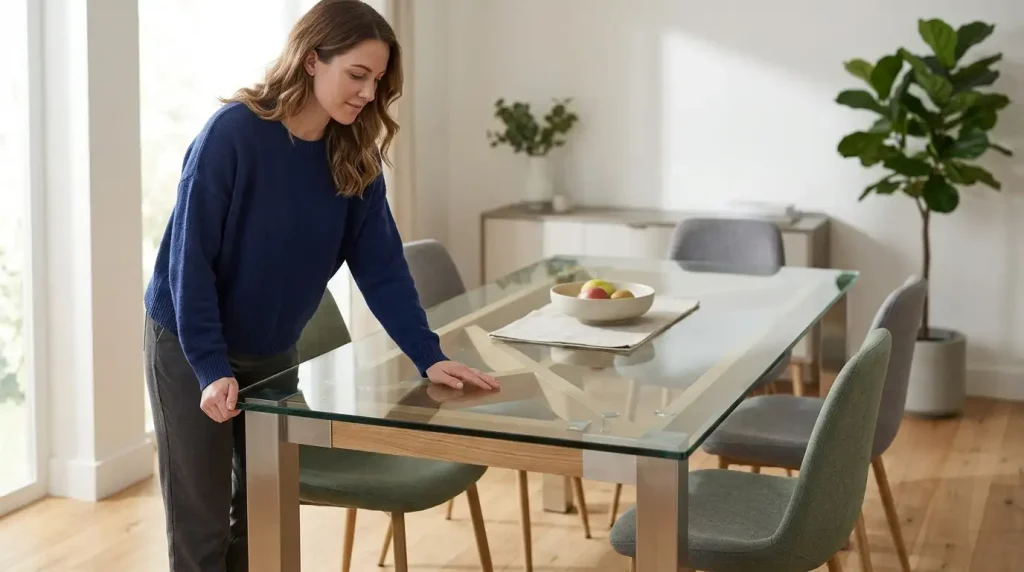
Tempered, or toughened, glass isn’t just “stronger glass.” It’s manufactured through a specific heating and rapid cooling process that changes how the glass behaves under stress. This is what makes it suitable for a family dining table in the first place.
Under normal daily use, tempered glass resists everyday impacts, knocks, and the general wear of family meals far better than standard glass would. If it does fail under a genuinely severe impact, which is rare, it’s designed to break into small, blunt granules rather than long, sharp shards. This is the entire point of the toughening process, and it’s the main reason tempered glass is considered appropriate for dining tables at all.
Our full guide on tempered glass dining tables explained goes into more depth on this process and what to check before you buy, if you’d like the fuller picture beyond the safety angle covered here.
Round vs Rectangular: Does Table Shape Change the Risk?
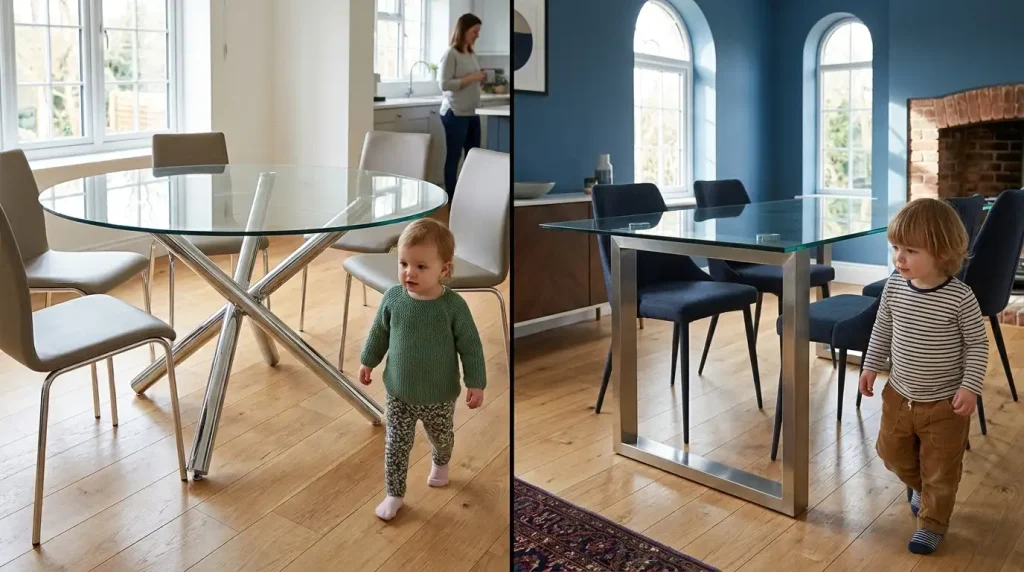
This is one of the most practical decisions a parent can actually make, and it’s more useful than most general safety advice.
A rectangular or square glass table has corners, and a corner sits at a genuinely awkward height for a toddler or young child moving quickly through a room. A round or oval table removes this specific risk entirely, since there’s no corner to catch a head or a hip during normal, everyday movement around the table.
This doesn’t mean a rectangular table is unsafe. It simply means a round table removes one specific, avoidable risk, which matters more in a busy household with children under about five. Our Dining Table And 4 Chairs Grey Round Table With 4 Grey Chairs, priced at £159.99, is a genuine example of this shape at an accessible price, and it’s worth considering for exactly this reason if you have young children at home.
Key note: even on a rectangular table, some manufacturers round off the actual corners rather than leaving them sharp. This is worth checking on a product page or by asking the retailer directly, since it’s a small detail with a real practical benefit.
Clear vs Tinted Glass: A Visibility Point Most Guides Miss
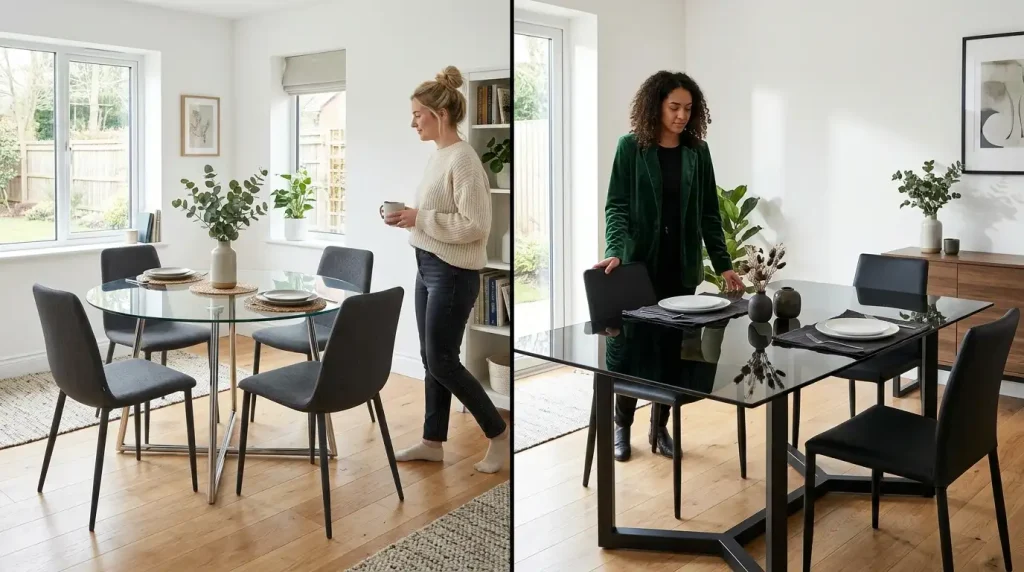
Here’s something most safety guides don’t mention, and it’s genuinely useful. Fully clear glass can be harder for a young child, or frankly an adult, to perceive as a solid object at speed, compared with black or tinted glass.
A black or smoked glass tabletop reads clearly as a solid surface from across a room. A completely clear glass top can, in the wrong light, be harder to register at a glance, which slightly increases the chance of a child misjudging the table’s edge while running or playing nearby. This isn’t a formal safety requirement anywhere, but it’s a genuine, practical point worth factoring in alongside shape and stability.
If this resonates with your household, our Black Glass Dining Table Set With 4 Black Velvet Chairs, priced at £209.99, uses a solid black glass top that stays clearly visible from any angle in the room, while still giving you the light, easy-clean surface that makes glass appealing in the first place.
The Frame and Base Matter As Much As the Top
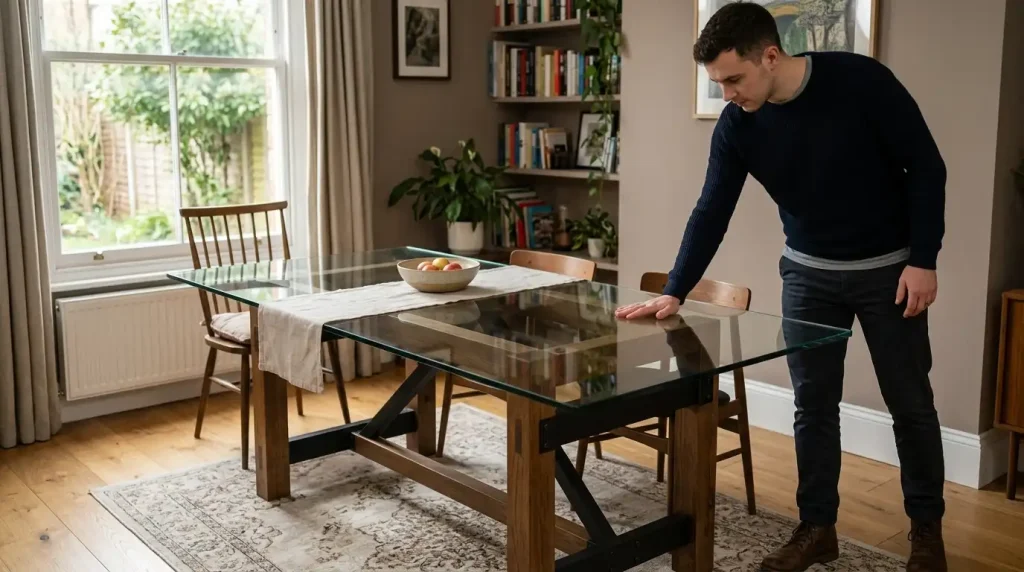
It’s easy to focus entirely on the glass itself and forget that the frame underneath is doing just as much work. A wobbly or poorly secured base is arguably a bigger everyday risk than the glass, since a child leaning, pulling, or climbing on an unstable table is a genuine hazard regardless of what the top is made from.
Check that the glass sits securely on its frame, generally through a fitted recess or proper fixing points, rather than simply resting loose on top. A table that shifts noticeably when you press down on one corner is worth avoiding, whatever the glass itself is rated for. Metal-framed tables tend to feel particularly stable underfoot, since the frame itself doesn’t flex the way some wood-effect bases can over time.
If you’re assembling a new set yourself, our flat-pack dining table assembly guide covers how to fit a glass top correctly and securely, which matters more for family safety than almost any other single step in the build.
Age by Age: What Actually Changes as Children Grow
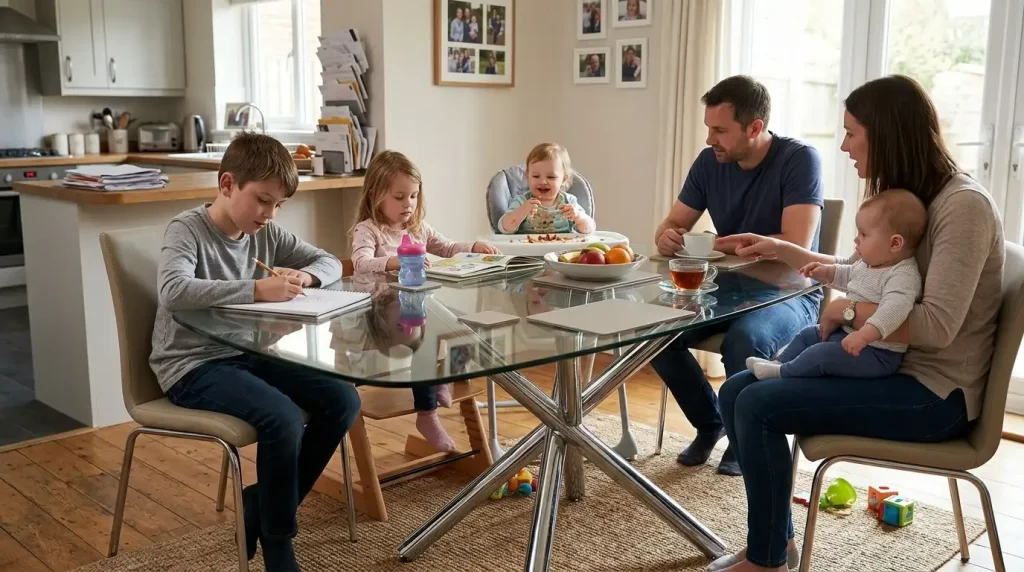
Most general advice treats “children” as one single risk category, which isn’t especially useful. The real picture changes significantly as children get older.
Babies and early toddlers (under 18 months): the main risk at this age is pulling up on furniture to stand, and a young child grabbing a table edge for support. A stable, secure base matters most here, more than the glass itself.
Toddlers (18 months to 3 years): this is the age range most safety concerns genuinely apply to. Children at this stage move quickly, don’t yet judge speed or distance reliably, and are prone to bumping into furniture during normal play. A round table, a stable base, and supervision around mealtimes all matter most here.
Preschool age (3 to 5 years): children are steadier on their feet and better at judging distance, but still benefit from a round table shape and a genuinely stable base, particularly in a busy household.
School age and older: from around five or six, most children navigate furniture with the same care an adult would. At this stage, a genuine tempered glass table carries no more everyday risk than a wooden one, and the decision comes down to style, cleaning routine, and household preference rather than safety.
Key note: every household is different, and some children are more cautious or more boisterous than others regardless of age. Use these ranges as a general guide, not a strict rule.
A Checklist for Buying a Glass Table With Children in Mind
- Confirm the glass is genuinely tempered, ideally with a visible etched mark or explicit confirmation from the retailer
- Choose a round or oval shape if you have children under about five, to remove sharp corners entirely
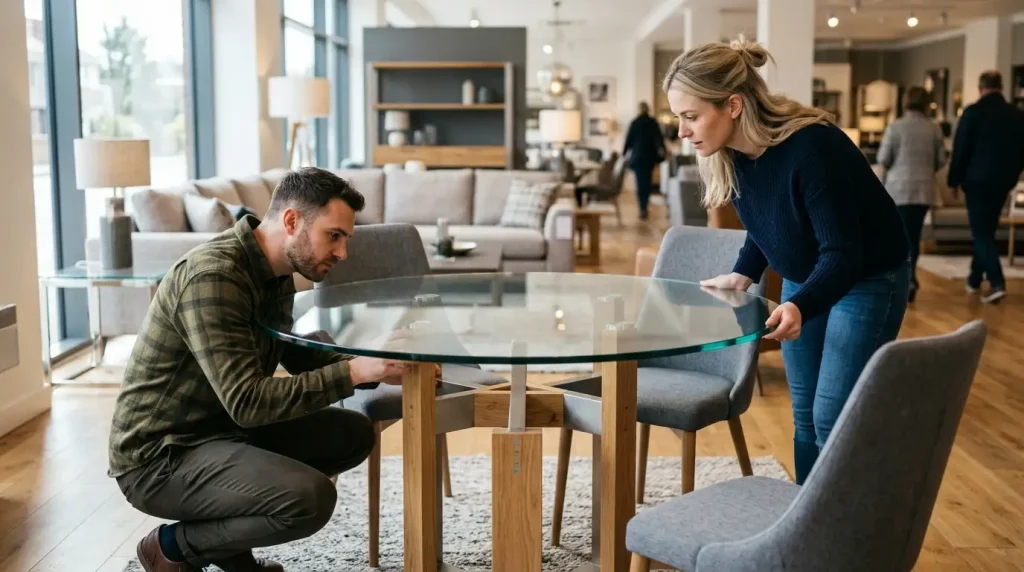
- Check the base for stability, pressing down on one edge to feel for any noticeable movement
- Consider a darker or tinted glass top if visibility at speed is a genuine concern in your household
- Read the product description for glass thickness, since a genuinely substantial tempered top, rather than a very thin one, adds an extra margin of everyday durability
Browsing our full glass dining sets collection lets you compare shape, colour and price side by side using exactly these criteria.
Chairs Matter for Safety Too
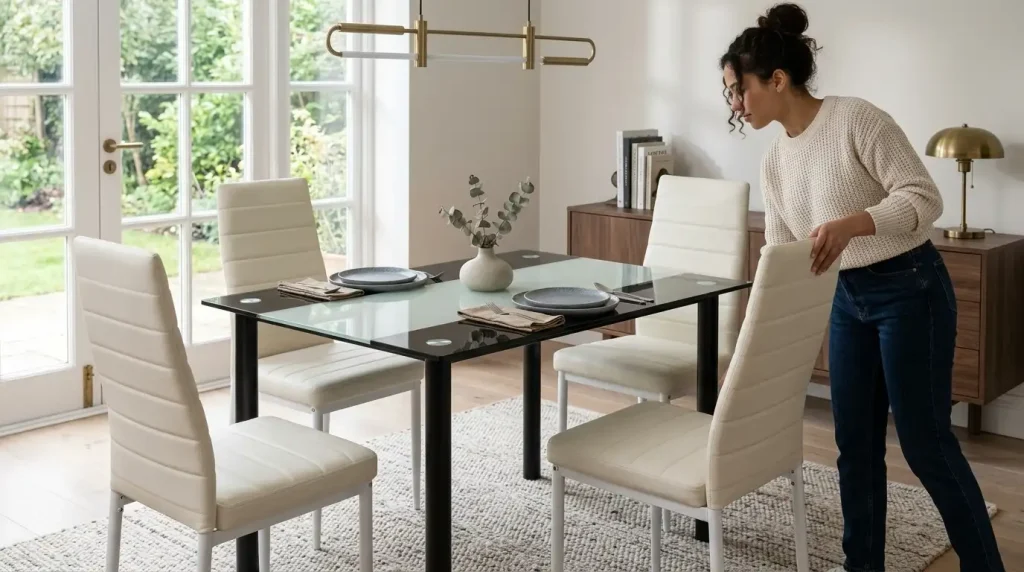
Safety around a dining table isn’t only about the tabletop. Chairs tip, and a chair tipping backwards is a genuinely common cause of a bumped head in a family home, regardless of what the table itself is made from.
Look for chairs with a stable, wide base and a reasonable weight to them, rather than anything that feels light or easily rocked. Faux leather and velvet chairs both work well here, and neither material affects stability on its own, since that comes down to the frame and legs. Our dedicated guide on the best chairs to pair with a glass dining table covers this pairing decision in more detail, including which styles suit a family household specifically.
Keeping a Glass Table Safe Day to Day
A safe table on delivery day stays safe with a small amount of ongoing care. Wipe up spills straight away, since a wet glass surface is more slippery underfoot than a dry one, and this matters more with small children moving around the table. Our full guide on how to clean and maintain a glass dining table covers the right products and method in detail.
Check the table occasionally for any chips or cracks, particularly near an edge, since this can affect the strength of tempered glass over time. If you ever notice a chip or a crack forming, stop using the table and contact the retailer, rather than continuing to use it as normal.
Common Myths About Glass Dining Tables and Children
Myth: any glass table is dangerous with kids in the house. In reality, genuine tempered glass meeting UK standards is designed specifically to be used safely in a family home, provided the base is stable and the shape suits your household.
Myth: glass shatters into sharp shards if it breaks. Genuine tempered glass does the opposite. It’s specifically designed to break into small, blunt granules rather than sharp pieces, which is the entire purpose of the toughening process.
Myth: wood is always safer than glass for families. Wood is more forgiving of scratches and knocks, but a wooden table with sharp corners and a wobbly base is arguably less safe than a round, stable, genuine tempered glass table. Shape and stability matter more than material alone.
Myth: you need to avoid glass entirely until children are at school age. Plenty of families use a glass dining table successfully with much younger children, by choosing a round shape, checking the base, and applying normal supervision around mealtimes, the same as with any other furniture.
A Worked Example
Consider a family with a two-year-old and a five-year-old, moving into a new home and choosing a dining table. Given the younger child’s age, they prioritise a round table shape to remove sharp corners entirely, and they check the base carefully in the showroom before buying, confirming it feels genuinely stable under pressure. They choose a solid black glass top rather than fully clear, partly for the visibility benefit and partly because it suits their kitchen’s colour scheme.
Within a few months, the two-year-old has bumped into the table edge a handful of times during normal play, exactly as they would with any other furniture, but with no injury beyond the odd minor knock. The five-year-old treats the table with the same care they show any other furniture in the house. Two years later, both children navigate the table without a second thought, and the family’s original shape and stability choices turn out to have mattered far more than the fact the top happened to be glass.
Frequently Asked Questions
Is a glass dining table safe for kids?
Yes, provided it uses genuine tempered glass meeting BS 7376 and BS EN 12150, and the base is stable. For children under about five, a round table with no sharp corners is the safer shape choice.
What happens if tempered glass breaks?
It breaks into small, blunt granules rather than sharp shards, which is the specific purpose of the toughening process used to manufacture it.
Is round or rectangular safer for a family with young children?
Round or oval tables remove sharp corners entirely, which is a genuine, specific benefit for households with children under about five. Rectangular tables are just as safe structurally, but the corners sit at an awkward height for a toddler.
How do I know if a glass table is genuinely tempered?
Look for an etched mark on a corner or edge of the glass, or ask the retailer to confirm directly. A reputable UK retailer should be able to answer this clearly.
At what age is a glass dining table no longer a safety concern?
Most of the specific concerns around shape and visibility matter most for children under about five. From school age onward, a genuine tempered glass table carries no more everyday risk than a wooden one.
Does the colour of the glass actually affect safety?
It can affect visibility. A black or tinted glass top is easier to perceive as a solid object at a glance than fully clear glass, which may slightly reduce the chance of a fast-moving child misjudging the table’s edge.
Should I avoid glass tables entirely until my children are older?
Not necessarily. Many families use a glass dining table successfully with young children, by choosing a round shape, confirming a stable base, and applying normal supervision around mealtimes.
Five Kosy Koala Glass Dining Sets for Family Homes
Every price below was checked directly on our site before this guide was published. Prices can change, so always confirm the current figure on the product page before ordering.
Dining Table And 4 Chairs Grey Round Table With 4 Grey Chairs
Price: £159.99. Table: round tempered grey glass. Chairs: grey faux leather.
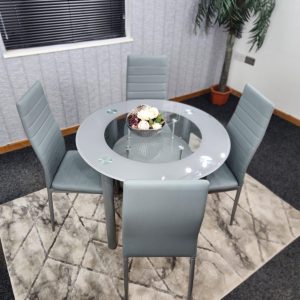
Best for Younger Children A genuinely round shape with no sharp corners, at an accessible price for a family just starting out with a glass table.
Shop: Dining Table And 4 Chairs Grey Round Table With 4 Grey Chairs
Black Glass Dining Table Set With 4 Black Velvet Chairs
Price: £209.99. Table: solid black tempered glass. Chairs: black velvet.
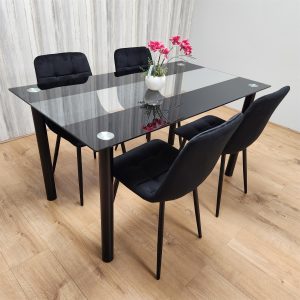
Best for Visibility A fully black glass top that stays clearly visible from any angle, suited to households wanting the visibility benefit covered above.
Shop: Black Glass Dining Table Set With 4 Black Velvet Chairs
Black Clear Glass 4 Faux Leather Padded White Chairs
Price: £214.99. Table: tempered black glass. Chairs: white faux leather, wipeable finish.
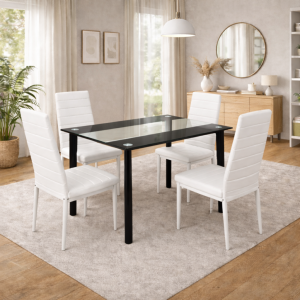
Best for Easy Cleaning Wipeable chairs alongside a genuine tempered glass top, suited to a household managing daily spills and sticky fingers.
Shop: Black Clear Glass 4 Faux Leather Padded White Chairs
Black Clear Glass 4 Gem Pattern Faux Leather Padded Black Chairs
Price: £239.99. Table: tempered black glass. Chairs: black faux leather with detailed stitching.
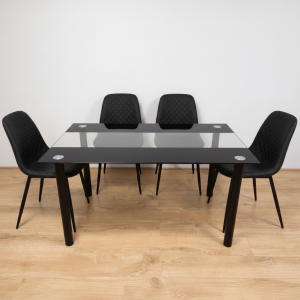
Best for a More Formal Look A step up in chair detailing for a family that entertains often, without giving up any of the practical safety features covered in this guide.
Shop: Black Clear Glass 4 Gem Pattern Faux Leather Padded Black Chairs
Black Glass Dining Table Set With 6 Black Faux Leather Chairs
Price: £184.99. Table: tempered black glass, 6-seater. Chairs: black faux leather.
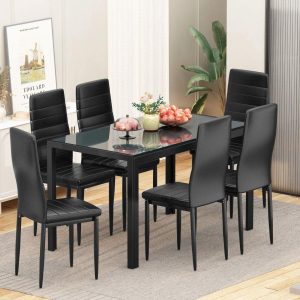
Best for Larger Families A full six-seat set for a bigger household, with the same stable frame and genuine tempered glass covered throughout this guide.
Shop: Black Glass Dining Table Set With 6 Black Faux Leather Chairs
Browse the full range in our glass dining sets collection, or see how glass compares with wood in our glass vs wooden dining table guide.
Making a Confident, Informed Choice
A glass dining table is a genuinely safe choice for most UK families, provided it uses real tempered glass meeting BS 7376 and BS EN 12150, and you choose a shape and base suited to your children’s age. The details in this guide, round versus rectangular, glass colour, base stability, and simple day-to-day care, matter far more than the material itself.
Read the official General Product Safety Regulations 2005 guidance if you’d like the full legal detail behind the standards covered in this guide.
About the author
This article was written by the Kosy Koala Team. We create practical furniture guides to help UK shoppers understand key buying considerations, compare options and choose furniture that suits their home. Have a question about any product on this page? Get in touch through our About Us page.


 Dining Tables
 Dining Chairs

 Bed Frames
 Mattresses
 Bunk Beds
 Sofa & Sofa Beds


