

Blog
Dressing Table With Stool: What to Check Before You Buy

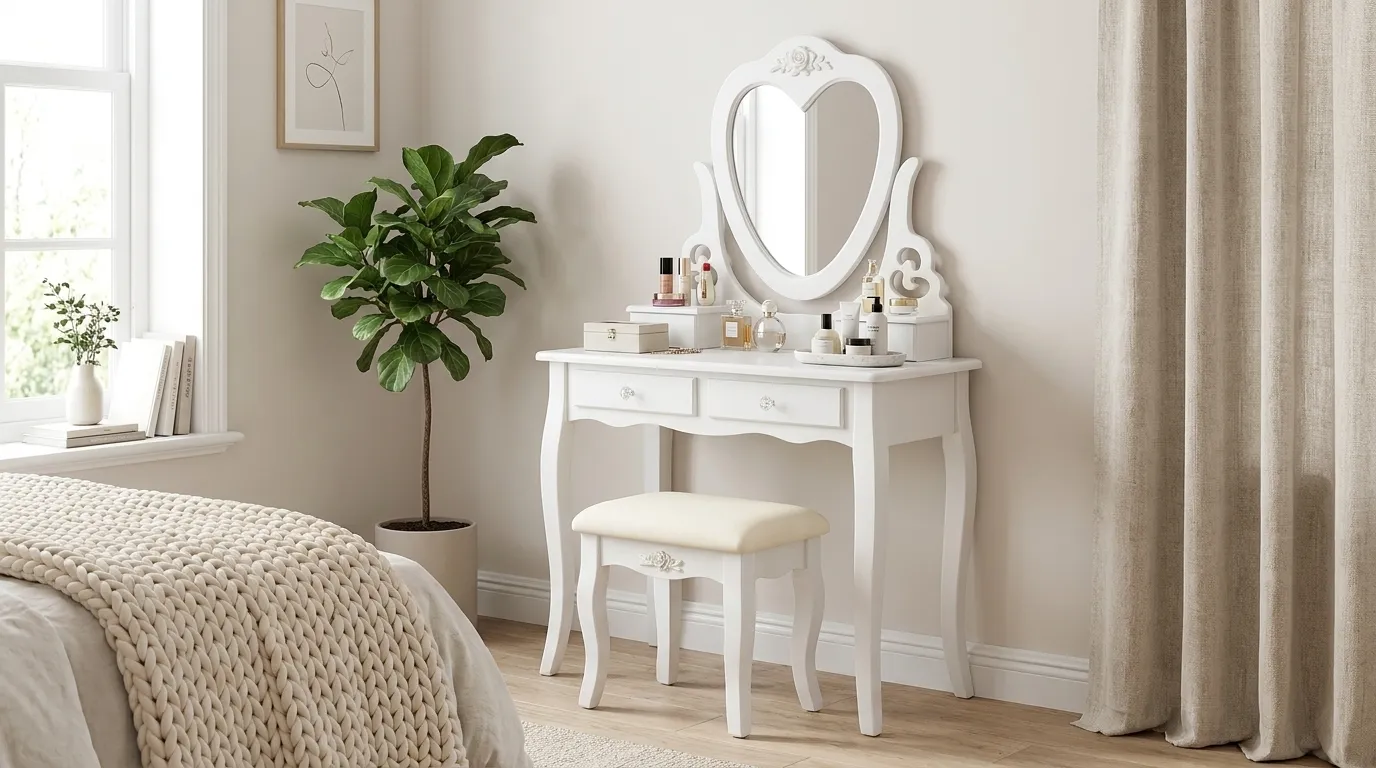
The stool gets far less attention than the mirror or the drawers. Yet it is the part you actually sit on every single day. Get the height wrong, the seat wrong, or the build quality wrong, and you feel it within a week.
Most buying guides focus on the table. This one focuses on the stool. We cover height matching, weight capacity, materials, storage, and the small build details that separate a stool you use daily from one that gets pushed under the table and forgotten.
If you have not yet chosen the table itself, our complete dressing table with mirror buying guide covers mirror type, storage and space in full. This guide picks up from there, focused purely on the seat.
Quick answer:
The safest choice for most buyers is a dressing table sold as a matched set with the stool included. This removes the guesswork of matching height, style and proportion yourself. If you do buy separately, check three things before you order. First, the seat height should sit around 25 to 30cm below the tabletop for comfortable knee clearance. Second, check the declared weight capacity, not just the style. Third, check that the base is reinforced at the leg joints, since this is where cheap stools fail first.
Why the Stool Matters as Much as the Table
A dressing table looks finished in a photo the moment a stool sits in front of it. But looks are not the test that matters. Comfort over time is.
Think about how you actually use the table. You sit for ten or fifteen minutes most mornings. You lean forward to apply makeup. You twist slightly to reach a drawer. A stool that is too low forces you to hunch. A stool that is too high pushes your knees up under the table edge. Neither is comfortable for more than a few minutes at a time.
This is why the stool is not a minor accessory. It is the part of the setup your body actually interacts with the longest. A beautiful table with the wrong stool still results in an uncomfortable daily routine.
Included Stool vs Buying Separately
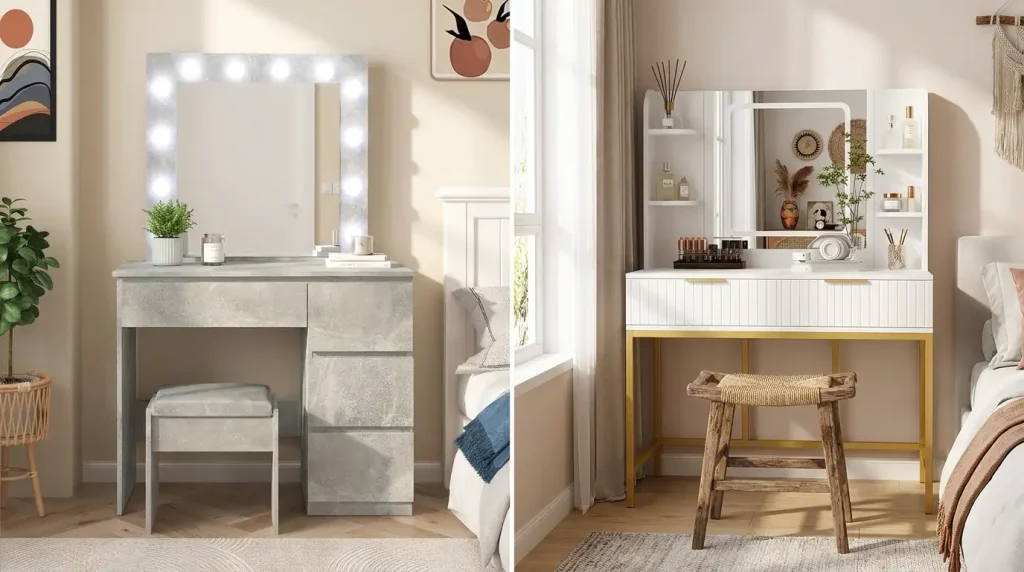
This is the first real decision, and it shapes everything else.
Buying a matched set means the table and stool were designed together. Height, width and visual style are already coordinated. You do not need to check compatibility yourself, since the manufacturer has already done that work.
Buying separately gives you more flexibility. You might already own a chair at the right height. You might prefer a more substantial upholstered piece over a small stool. You might want to reuse a stool from a previous dressing table.
The risk with buying separately is real, though. Seat height, seat depth, and overall proportion all need to be checked independently, and getting even one of these slightly wrong makes the table noticeably less comfortable to use.
Key note: if you are unsure, choose a matched set. Our Hollywood dressing table with mirror and stool is a good example of this approach. Table and stool are sold together, with proportions calculated at the design stage rather than assembled from separate purchases.
The Height Match: Getting the Sums Right
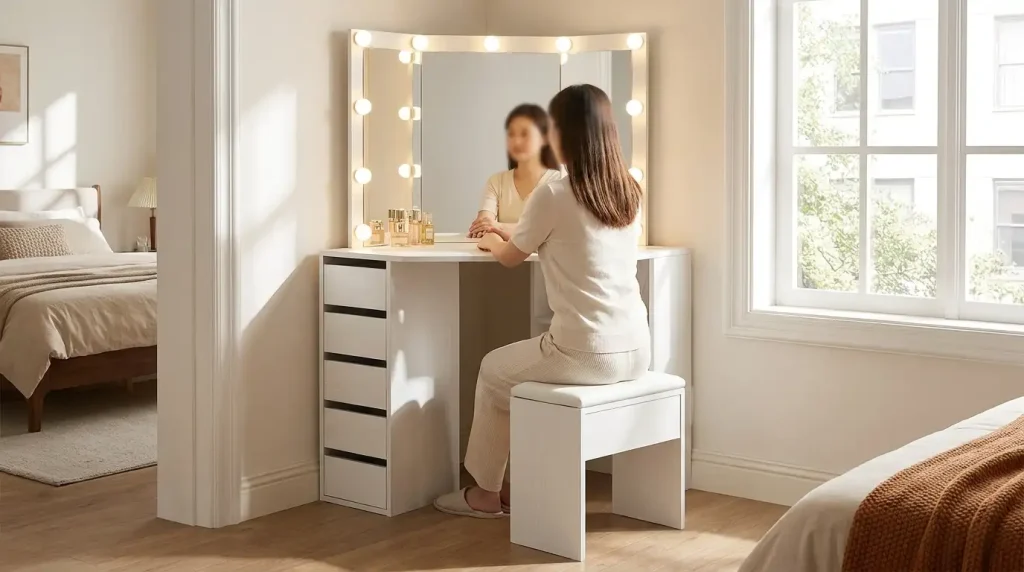
Most seating comfort problems come down to one simple mismatch: the gap between the seat and the tabletop.
The general rule is straightforward. The tabletop height, minus the stool seat height, should sit somewhere between 25cm and 30cm. This gap gives your knees enough clearance under the table, while keeping your arms at a natural working height on the surface itself.
Here is why this range matters. Too small a gap, and your knees hit the underside of the table. Too large a gap, and your arms sit too high above the surface, forcing your shoulders up as you work.
| Tabletop height | Comfortable stool seat height |
| 74cm | 44 to 49cm |
| 76cm | 46 to 51cm |
| 79cm | 49 to 54cm |
If you already own a stool and are choosing a table separately, measure your stool’s seat height first. Then use this table to check which tabletop heights will actually suit it, rather than guessing based on the product photo alone.
Checking Seat Height Before You Buy
If a product listing does not clearly state seat height, do not assume it will work. Here is how to check properly before ordering.
- Measure the seat height of a chair or stool you already sit on comfortably at a desk or table.
- Compare that measurement against the stool’s stated seat height in the listing.
- If no seat height is listed, check the product images for a stated dimension diagram, which most UK retailers include for flat-pack furniture.
- If you are still unsure, contact the retailer directly and ask for the exact seat height in centimetres before ordering.
This single check prevents the most common disappointment buyers report after their dressing table arrives: a stool that looks right in the photo, but sits awkwardly low or high once assembled.
Weight Capacity and Safety Standards
This detail rarely appears in product photos, but it matters for genuine daily use, especially if the stool will be used by more than one person in the household.
Domestic seating sold in the UK is generally expected to meet recognised safety standards covering strength and durability. EN 12520, the European standard for domestic seating, sets minimum requirements for strength and durability, based on testing for adult users. Reputable UK furniture retailers reference compliance with recognised safety standards as part of general product safety regulation, which is worth checking for on a product listing before you buy, particularly from a lesser-known retailer.
In practical terms, this means:
- Check whether a maximum user weight is stated in the product description.
- Be cautious of very cheap stools with no stated weight capacity at all.
- If the stool will regularly be used by more than one person in the household, choose a capacity comfortably above the heaviest expected user, not just at the minimum stated figure.
None of this should put you off buying online. It simply means reading the full product description rather than judging on the photo alone, the same basic check worth applying to any piece of seating furniture.
The Wobble Test and Build Quality Checks
You cannot physically test a stool before it arrives when buying online. But a few checks on the listing itself tell you a lot about build quality before you commit.
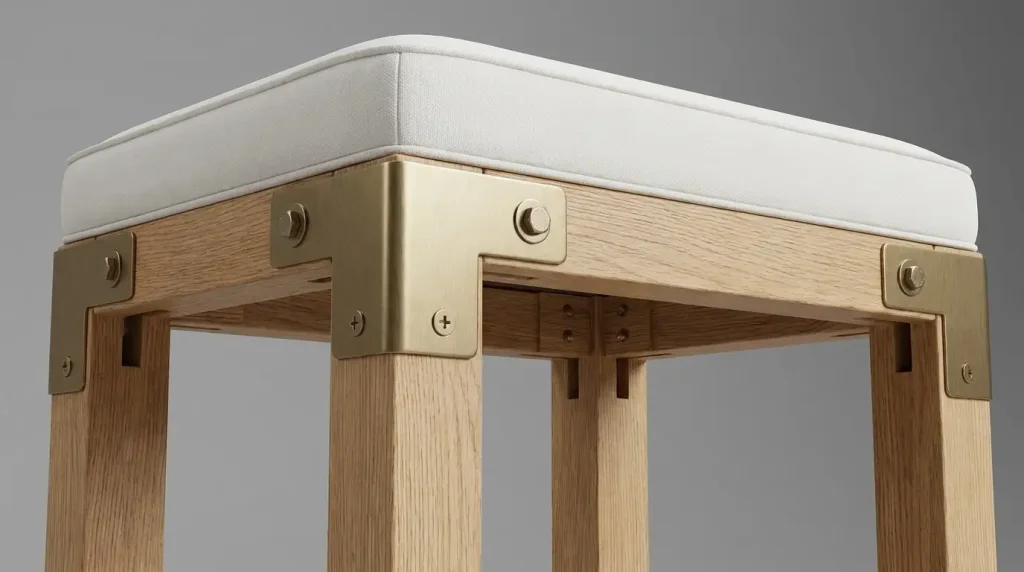
- Look at how the legs meet the seat. Reinforced corner brackets or a cross brace between the legs generally indicate a sturdier base than four legs attached with simple screws alone.
- Check the base material. Solid wood legs generally resist wobble better over time than hollow metal tube legs on a very lightweight stool.
- Read recent reviews specifically for mentions of wobble or instability. This is one of the most reliable signals in genuine customer feedback, since it is something buyers notice immediately after assembly.
- Once assembled, gently rock the stool side to side. A well-built stool should feel solid, with no visible flex in the legs or joints.
If a stool does wobble slightly after assembly, check that every fixing bolt has been fully tightened before assuming the product itself is faulty. Loose fixings are the most common cause of wobble in flat-pack furniture, and are usually simple to correct.
Materials: Wood, Upholstered, Faux Leather and Velvet
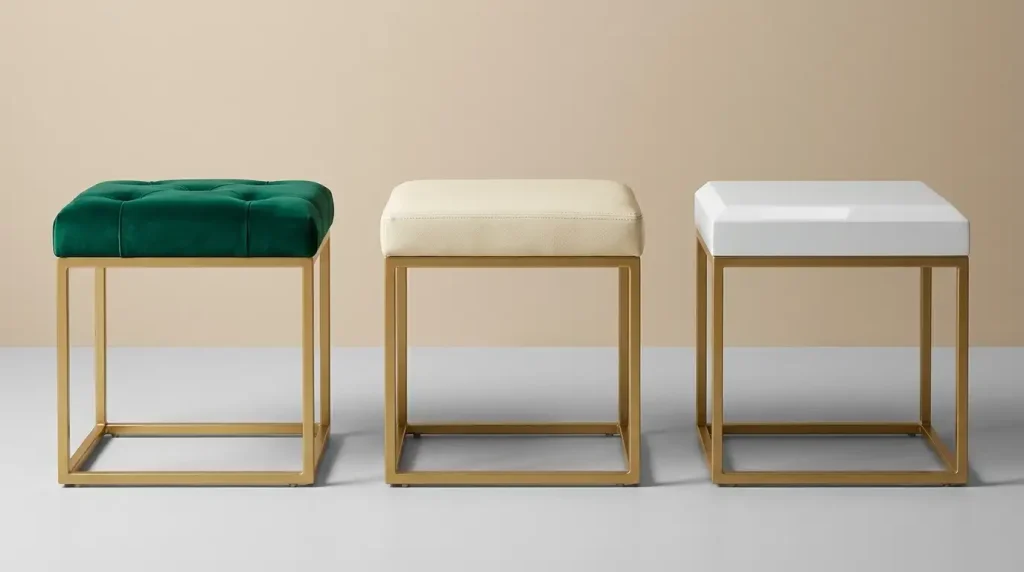
The material affects comfort, durability and cleaning far more than most buyers expect before living with a stool day to day.
Solid wood or painted MDF seats are the simplest option, with no fabric to wear or stain. They suit a minimal, easy-clean setup, though they offer less cushioning for longer routines.
Upholstered fabric seats, often velvet or a soft weave, add genuine comfort and a warmer visual tone. Velvet in particular pairs well with Hollywood-style mirrors and gold hardware, giving a coordinated, glamorous look. The trade-off is that fabric needs more regular care, particularly if cosmetics or hair products are used nearby.
Faux leather seats offer a middle ground. They wipe clean easily, resist spills better than fabric, and hold their shape well over time, though they can feel less soft than a genuine fabric seat during longer use.
A quick care note for each: vacuum fabric seats regularly and treat spills immediately rather than letting them set. Wipe faux leather with a damp cloth rather than harsh cleaning products, which can dry out and crack the surface over time. Dust wood or painted seats with a dry cloth, and avoid excess moisture that can cause warping.
Storage Stools: What You Actually Get
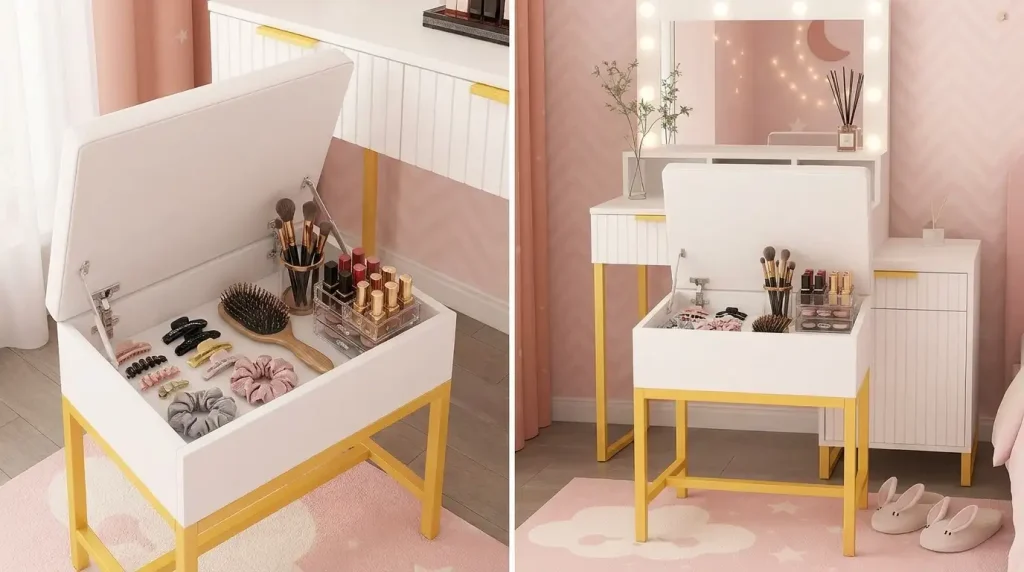
Many dressing table stools include a lift-up seat with hidden storage underneath. This sounds like a useful extra, and it often is, but it is worth understanding what it realistically holds before it becomes a deciding factor in your purchase.
Storage stools typically hold small, flat items well: hair accessories, a spare makeup bag, or a few folded scarves. They are not a substitute for proper drawer storage in the table itself, and the storage capacity is usually modest rather than generous.
Key note: if storage is a genuine priority, prioritise drawer count in the table over storage capacity in the stool. Our guide on organising a dressing table covers how to make the most of whatever storage you do have, in the table and the stool together.
Backless vs Stools With a Backrest
This is a simple decision that comes down to how you actually use the table, and it is worth making deliberately rather than by accident.
Backless stools tuck away neatly under the table when not in use, keeping the room looking tidy. They suit shorter routines, or a bedroom where floor space is genuinely tight and every centimetre of visible clutter matters.
Stools or chairs with a backrest offer more support for longer sessions, particularly if your routine regularly runs beyond ten or fifteen minutes. The trade-off is a larger visual footprint, and a piece that generally cannot tuck fully away under the table when finished.
Pick whichever matches your actual daily habits, rather than whichever looks better in a single photo. A stool used for two minutes each morning has very different requirements to one used for a full hair and makeup routine most evenings.
Foldable and Space-Saving Stools for Small Rooms
In a small bedroom, a stool that takes up permanent floor space competes directly with everything else in the room. A folding or fully tuck-away stool solves this without giving up seating altogether.
Look for a stool that either folds flat for storage elsewhere, or has a low enough profile to slide completely under the table when not in use. This matters more in a genuinely tight room than most buyers expect until they are actually living with the furniture day to day.
Our guide to the best dressing table for a small bedroom covers table shape and floor space in more depth, including how much clearance a stool realistically needs to be pulled out and used without hitting a bed or wardrobe.
Matching Style and Finish to the Table
The stool should belong to the same visual family as the table, without needing to match it exactly piece for piece.
A neutral fabric seat, in grey, beige or white, works comfortably with almost any table finish, from painted MDF to solid pine. A bolder choice, such as a velvet seat in a deeper colour, suits a table with some existing richness in tone, such as our white and gold Hollywood dressing table set, where the stool’s cushioned seat is designed specifically to coordinate with the table’s gold detailing.
If buying separately, aim for a stool that shares at least one visual detail with the table, such as leg colour or general shape, rather than a piece that looks entirely unrelated once placed side by side.
Assembly and Flat-Pack Considerations
Almost all UK dressing table stools arrive flat-packed, and assembly quality genuinely affects how sturdy the finished piece feels.
- Lay out all parts and fixings before starting, and check nothing is missing against the included parts list.
- Tighten every fixing fully before testing the stool’s stability, since a loose fixing at this stage is the most common cause of early wobble.
- Follow the assembly order given in the instructions, rather than skipping ahead, particularly for the leg and cross-brace fixings, which affect overall stability the most.
- If a fixing feels stripped or will not tighten fully, contact the retailer for a replacement part rather than forcing it, since a stripped fixing rarely holds securely afterwards.
Matched sets, where the table and stool are designed and packaged together, tend to have more consistent fixings and a clearer combined instruction sheet than pairing two separately sourced items from different manufacturers.
Delivery and Fit: A Detail Worth Checking Early
This is easy to overlook until delivery day itself. A boxed stool is usually small enough to move through most UK doorways and up most staircases without issue. Larger upholstered stools or benches are the exception, so it is worth checking the packaged dimensions against your own doorway and staircase width before ordering, particularly in older properties with narrower hallways.
If you are buying a full set, such as a corner dressing table with stool included, check the delivery details for how many boxes the set arrives in, since larger sets are sometimes split across more than one parcel, arriving on different days.
Common Mistakes When Buying a Dressing Table With Stool
- Buying the table and stool from different sources without checking height compatibility first: This is the single most common cause of an uncomfortable finished setup.
- Ignoring the weight capacity entirely: Especially relevant if more than one person in the household will use the stool.
- Choosing style over comfort for a stool used daily: A striking design that is uncomfortable after five minutes will not get used, regardless of how well it photographs.
- Assuming all stools tuck fully under the table: Check the tuck-away depth against your table’s underside clearance, particularly for stools with a backrest.
- Skipping the wobble check after assembly: A loose fixing is simple to correct immediately, but easy to miss if you do not test the stool properly before regular use.
- Overlooking fabric care: A beautiful velvet stool that stains within the first month is a common regret, easily avoided with basic care from day one.
Quick Checklist Before You Buy
- Decide whether a matched set or a separately sourced stool suits your situation better.
- Check the seat height against your table’s tabletop height, aiming for a 25 to 30cm gap.
- Check the declared weight capacity, not just the style or photo.
- Check how the legs are reinforced, and read reviews for any mention of wobble.
- Choose a material that suits your actual routine and how much daily wear the seat will see.
- Check whether the stool tucks fully under the table if floor space is tight.
- Confirm delivery dimensions fit your doorway and staircase before ordering.
Frequently Asked Questions
What is the ideal seat height for a dressing table stool?
This depends on your table’s height, but as a general rule the seat should sit around 25 to 30cm below the tabletop. For a table at 74 to 79cm, that generally means a stool seat height of 44 to 54cm.
Is it better to buy a dressing table and stool as a set, or separately?
For most buyers, a matched set is the safer choice, since height, style and proportion are already coordinated by the manufacturer. Buying separately works well if you already own a stool at the correct height or have a specific style preference.
How much weight can a dressing table stool typically hold?
This varies by product, so always check the stated weight capacity in the listing rather than assuming. Domestic seating sold in the UK is generally expected to meet recognised strength and durability standards for adult use.
Do dressing table stools come with storage?
Many do, typically a lift-up seat with a shallow compartment underneath. This suits small, flat items such as hair accessories, but is not a substitute for proper drawer storage in the table itself.
Should I choose a backless stool or one with a backrest?
Backless stools tuck away more neatly and suit shorter routines or tighter rooms. Stools with a backrest offer more support for longer sessions but generally cannot tuck fully under the table.
How do I stop a dressing table stool from wobbling?
Check that every fixing was fully tightened during assembly first, since this is the most common cause. If the wobble persists after retightening, contact the retailer, since this may point to a manufacturing fault.
Can I use a dressing table stool as general bedroom seating?
Yes, in most cases, though comfort for extended sitting will depend on the specific design. A stool with a backrest and cushioned seat generally suits general seating better than a small backless stool designed for short daily use.
Getting the Stool Right, Not Just the Table
The stool is easy to treat as an afterthought, chosen last and thought about least. But it is the one part of the setup you physically sit on, every single day, for as long as you own the table. Getting the height right, checking the build quality, and choosing a material that suits your actual routine matters just as much as choosing the right mirror or the right amount of storage.
For the fuller picture on choosing the table itself, our dressing table with mirror buying guide and our guide to LED mirror lighting both cover the wider decision in more depth. If your room is on the smaller side, our guide to the best dressing table for a small bedroom covers floor space and stool clearance specifically. When you are ready to compare options, browse the full dressing table range at Kosy Koala.
Dressing Tables With Stool to Consider at Kosy Koala
A short shortlist of sets where the stool is included and matched to the table from the start, each covered in more depth earlier in this guide.
Hollywood Dressing Table With Mirror and Stool, Stone Grey
Stool: L40 x W24 x H40cm, backless, padded seat. Best for: buyers who want a coordinated, simple set with no separate stool decision to make.
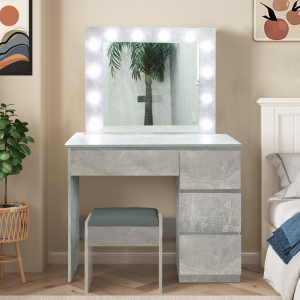
Shop: Hollywood Dressing Table With Mirror and Stool, Stone Grey
White Dressing Table With LED Mirror, Drawers and Stool
Stool: L40 x W24 x H40cm, backless, padded seat. Best for: low-light rooms where the LED mirror and matched stool both matter equally.
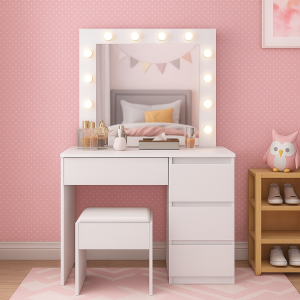
Shop: White Dressing Table With LED Mirror, Drawers and Stool
Corner Dressing Table With Mirror, Drawers and Storage Shelf
Stool: L40 x W26 x H38cm, backless, padded seat. Best for: small bedrooms needing both a matched stool and a full corner storage solution.
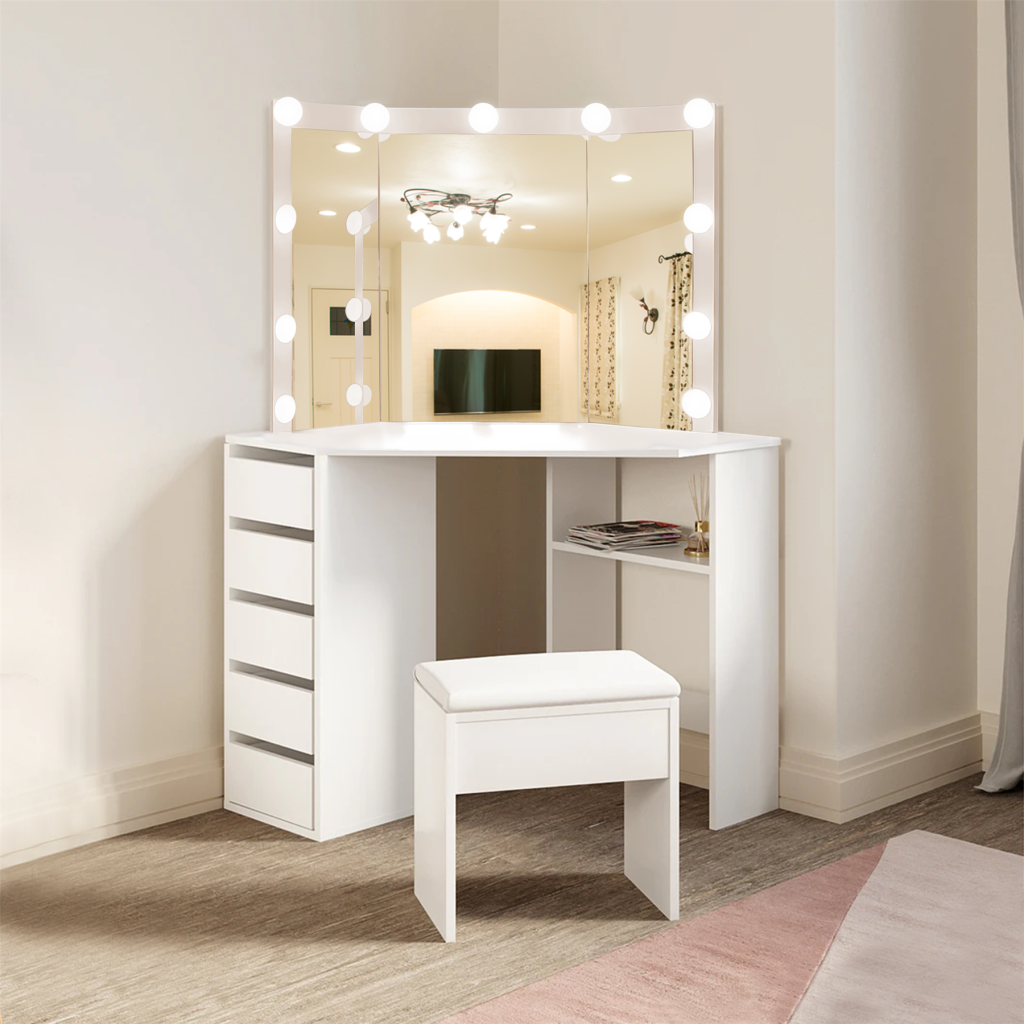
Shop: Corner Dressing Table With Mirror, Drawers and Storage Shelf
White Corner Dressing Table With 3 Mirrors and Stool
Stool included, matched to the table’s white finish. Best for: buyers prioritising maximum storage alongside a coordinated stool.
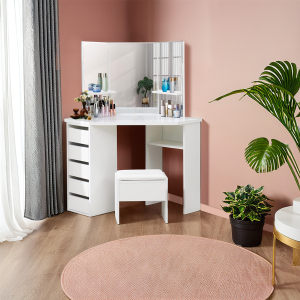
Shop: White Corner Dressing Table With 3 Mirrors and Stool
White and Gold Hollywood Dressing Table Set
Stool: W40 x D26 x H45cm, cushioned seat with gold legs. Best for: a coordinated, glamorous stool designed specifically around the table’s gold detailing.
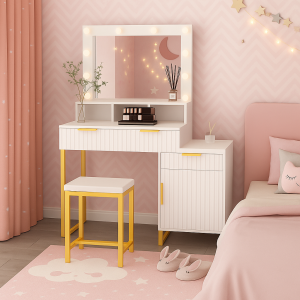
Shop: White and Gold Hollywood Dressing Table Set
Browse the full range, all sold with a matched stool included, at Kosy Koala Dressing Tables.
Recommended Supporting Articles
- Dressing Tables With Mirror: The Complete UK Buying Guide
- Best Dressing Table for a Small Bedroom
- LED Mirror Dressing Tables Explained: Bulbs, Brightness & Power
- Corner Dressing Tables: Ideas for Awkward Bedroom Spaces
- How to Organise a Dressing Table (Storage Tips That Work)
- Dressing Table vs Vanity Desk: Is There Really a Difference?
About the author
This article was written by the Kosy Koala team. We design and source bedroom furniture for UK homes, with a focus on practical details that actually matter once a piece is in your room. Have a question about any product on this page? Get in touch through our about us page.


 Dining Tables
 Dining Chairs

 Bed Frames
 Mattresses
 Bunk Beds
 Sofa & Sofa Beds


